What If Pyrography Was Just the Beginning?
I’ve been working on some changes to Trail Side Post, shifting it toward a more stationery-focused collection. There will still be art, nature, and the little discoveries that make the outdoors so interesting, but I’ve been exploring how to bring those things together through paper goods that feel personal, tactile, and connected to the way I create.
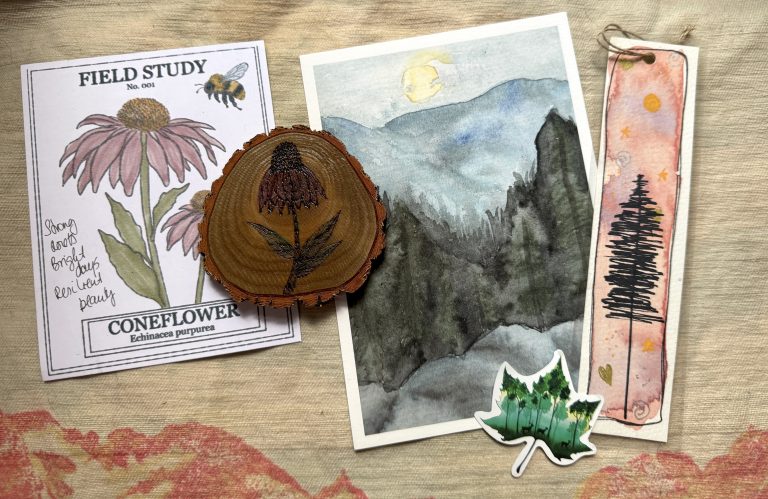
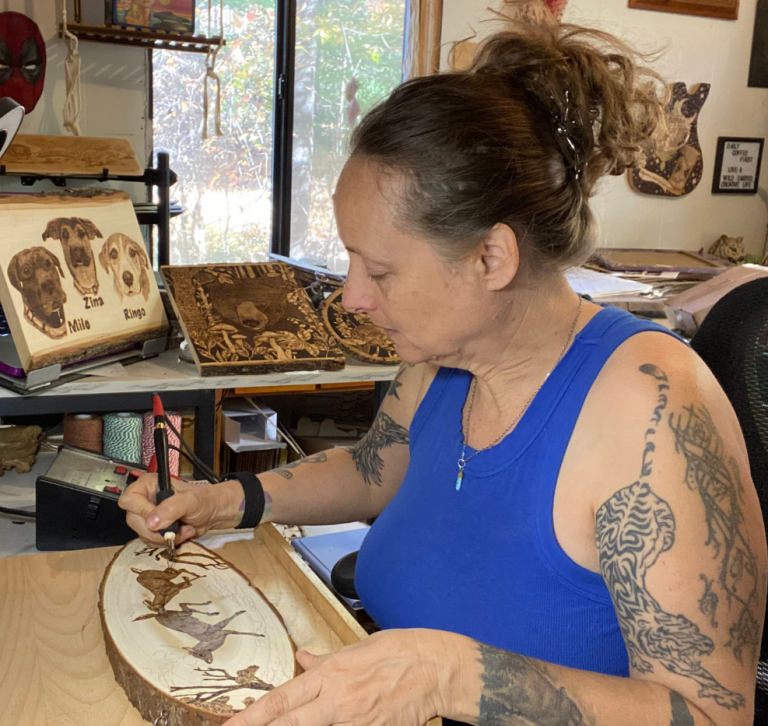
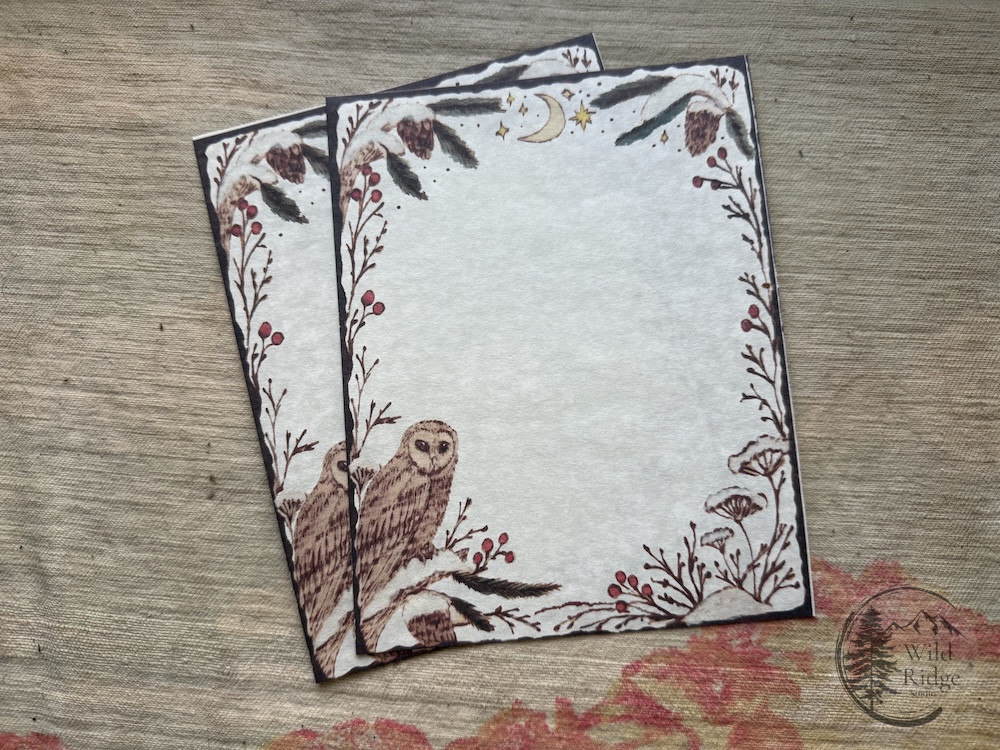
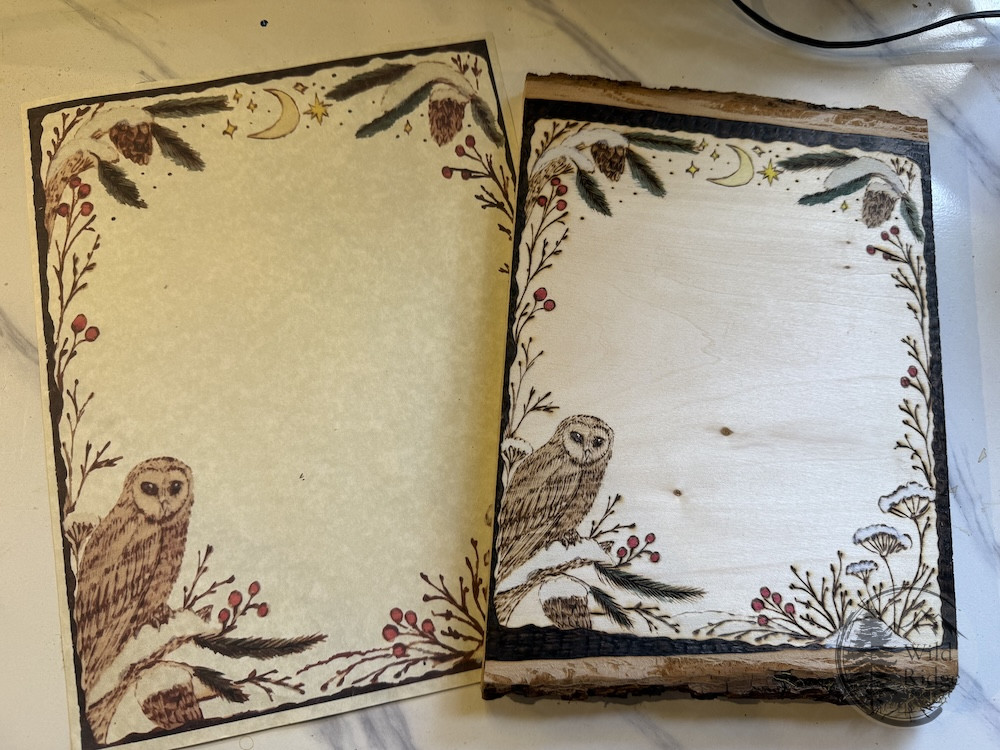
Somewhere in the middle of all that planning, I had one of those what-if moments. What if I wood-burned the design first? What if I used pyrography as the starting point for my stationery, rather than creating the artwork digitally from the beginning? I could burn a decorative frame into wood, scan it, and turn it into something I could use on paper. The original wood-burned frame could become part of a larger piece, with a scene burned inside it, while the scanned design could appear on stationery, greeting cards, bookmarks, and other paper goods.
The more I thought about it, the more I wanted to try it. And now that I’ve gone through the process, I couldn’t be more pleased with the idea, the experience, or the outcome.
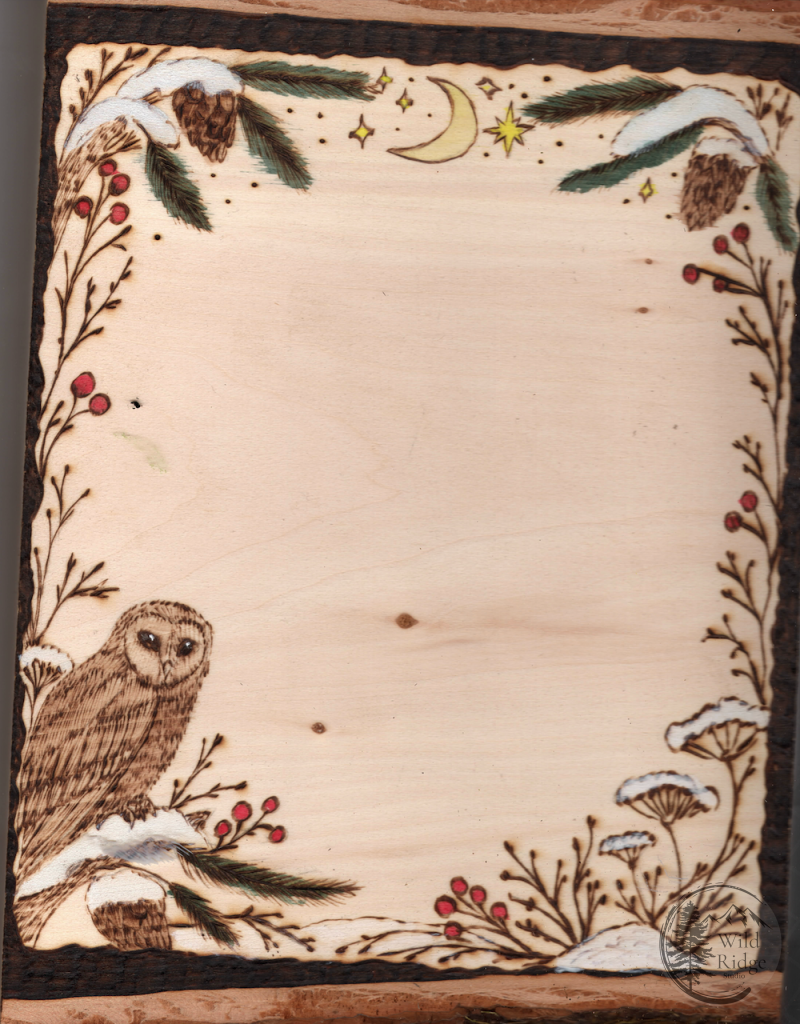
Of course, getting from wood to paper takes a bit of patience. The biggest challenge is separating the burned design from the wood itself. The grain, natural markings, and color variations must be removed without compromising the character of the original artwork. It’s tedious work, especially when I’m zoomed in on tiny details, but I love what remains when the editing is finished. The lines have subtle variations in darkness, texture, and shape that result from working with a burning tool rather than a stylus. They carry something of the original process, even when the wood is no longer visible.
Seeing those lines on stationery for the first time was one of those moments when an idea comes together better than I imagined. Something that began as a piece of pyrography had found another purpose, and I hadn’t lost what made the original artwork interesting in the first place.
This experiment also connects to something I’ve been exploring through The Resourceful Artist Society: One Artwork, Five Possibilities. I’ve been thinking about how we can take one piece of artwork and explore what else it might become. Not because every creative project needs to turn into five products, but because there’s value in looking beyond the first thing we make.
As artists, we often define our work by the medium we use. A painter creates paintings, an illustrator creates illustrations, and a pyrography artist burns designs into wood. Those descriptions are useful, but they can also shape how we think about what’s possible. We get comfortable with the idea that a particular medium leads to a particular outcome, and we don’t always consider what might happen if we carried the work into another form.
I’ve been doing a lot of that reconsidering lately. With pyrography, surface pattern design, illustration, and now stationery all being part of my creative life, I’ve sometimes felt as though I were working in several different directions. Each medium seemed to have its own process, purpose, and place in my work. I enjoyed all of them, but I wasn’t always sure how they fit together.
I love wood-burning. I’ve spent years learning how to work with different woods, develop shading, control the heat, and create detail with a burning tool. But finished wood-burned art comes with its own practical considerations. There are materials to purchase, pieces to store, and physical limitations to what I can create and ship. As my interests in illustration and surface design grew, I started wondering whether I needed to move further away from pyrography to make room for those other possibilities.
This stationery experiment changed how I was looking at that question. Maybe pyrography was never the limitation I thought it was. Maybe it was the gateway to so much more.
I don’t have to choose between wood-burning and digital illustration when one can become part of the other. The skills I’ve developed through pyrography can influence the designs I create for paper, fabric, and other surfaces. The artwork doesn’t have to stop at the edge of a wooden panel, and the techniques I’ve spent years practicing don’t have to remain tied to a single finished product.
There’s something exciting about allowing those creative interests to overlap instead of keeping them separate. One piece of artwork might lead to several interpretations, each with its own purpose and personality. Some might stay close to the original, while others could become something entirely different. I like the idea of following those possibilities without knowing exactly where they’ll lead.
And I think that’s what I’ve been trying to explore with One Artwork, Five Possibilities all along. It’s not about finding five things to sell every time I make something. It’s about recognizing the potential in what I’ve already created and being willing to experiment with it.
What I love about this is that it wasn’t the result of sitting down to develop a new product strategy. I was working on Trail Side Post, thinking about the stationery I wanted to create, and wondering whether I could bring my wood-burning into the process. I didn’t know whether it would work, but the idea interested me enough to give it a try.
That’s something I’ve been thinking about more as I explore what it means to be a resourceful artist. Not every creative decision needs to begin with a plan for what the finished work will become. Sometimes curiosity is enough of a reason to start, and the possibilities reveal themselves through the work.
It also feels fitting for Trail Side Post. I’ve been building it around nature, observation, art, and the small details we might otherwise overlook. The idea of using a slow, hands-on art form to create stationery that encourages writing, noticing, and spending time outdoors feels connected to what I want the collection to become.
I’m finding that resourcefulness has as much to do with how we think as it does with the materials we use. We can learn new techniques, explore new mediums, and develop new ideas without leaving behind the skills that brought us here. Sometimes the next direction grows out of something we’ve been doing for years, but we haven’t looked at it from quite the right angle.
I don’t know yet how far I’ll take this process or how many designs I’ll create this way. I know that I enjoyed the experiment, that I’m pleased with the outcome, and that it has changed how I think about the relationship between my pyrography and my other creative work.
For a while, I thought wood-burning might be limiting my possibilities. Now I’m looking at the same medium and seeing opportunities I hadn’t considered before. I don’t need to abandon what I’ve learned to make room for something new. I can build on it, experiment with it, and see where it takes me.
And it all started with a simple question: What if?