The Things We Almost Walk Past
On familiar trails, small discoveries, and how much we miss when we’re not really looking.
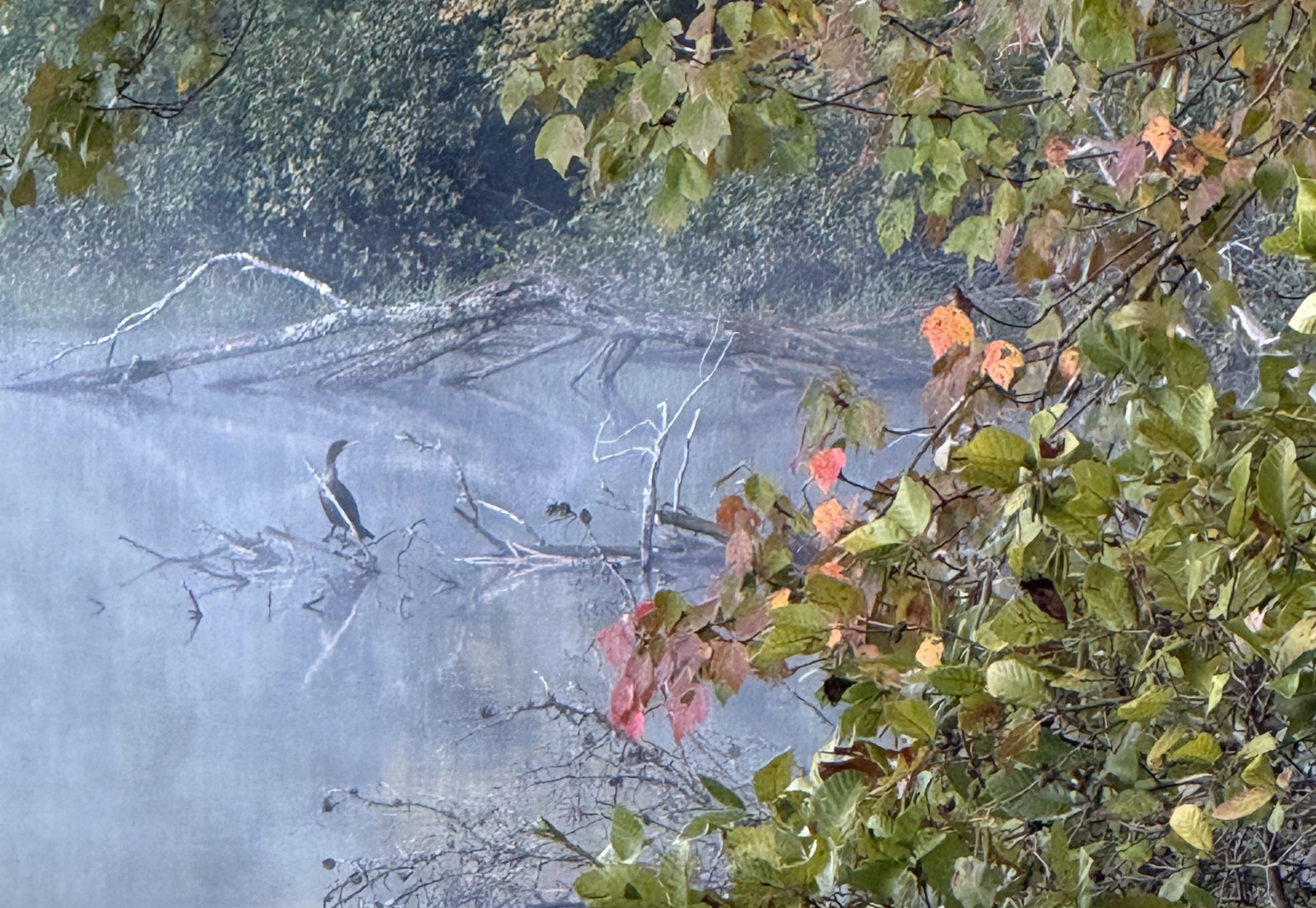
I walk a lot. Between taking the dogs out every morning, wandering around the woods, walking other people’s dogs, and heading off on the occasional longer hike, I probably spend more time on trails than the average person. And you’d think that with all those hours outside, I’d have a pretty good handle on what’s growing, crawling, flying, and generally going about its business around me. But the more time I spend outdoors, the more I realize just how much I don’t know.
There are trails I’ve walked dozens of times, sometimes even several days in a row, and I still manage to discover something I hadn’t noticed before. It might be a particular patch of moss growing along the side of a fallen tree, a strange formation on a rock, or a plant I’ve passed repeatedly without ever wondering what it was. Occasionally, I’ll stop to investigate something, take a few photographs, and make a mental note to look it up when I get home. Of course, by the time I get home, I’ve usually forgotten what I was supposed to be looking up, which is why my phone contains an impressive collection of unidentified plants, fungi, and other woodland mysteries.
I suppose that’s part of what I enjoy about being outside. There’s always something going on, whether we’re paying attention to it or not. Entire little ecosystems go about their daily business while we walk past, thinking about what we’re going to make for dinner or mentally reorganizing our to-do lists. And while I love a good view from the top of a mountain as much as anyone, I’ve found that some of the most interesting things happen much closer to the ground.
The Problem With Familiarity
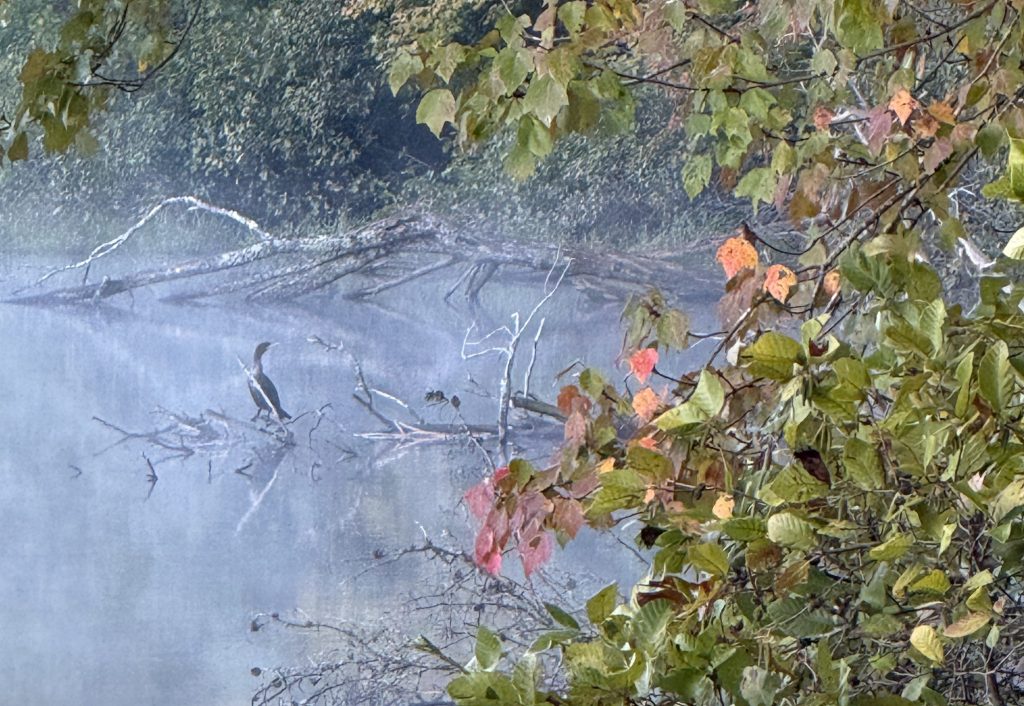
There’s something funny about how quickly we stop noticing things once they become familiar. We can walk the same route every morning, pass the same trees, cross the same little streams, and eventually stop really seeing any of it. We know where the trail turns, which sections get muddy after rain, and where the dogs are likely to find something particularly fascinating to sniff. Our brains seem perfectly happy to file the whole experience under been there, seen that, even though the landscape is constantly changing. And there are several trails I can walk in the dark – maybe even with my eyes closed.
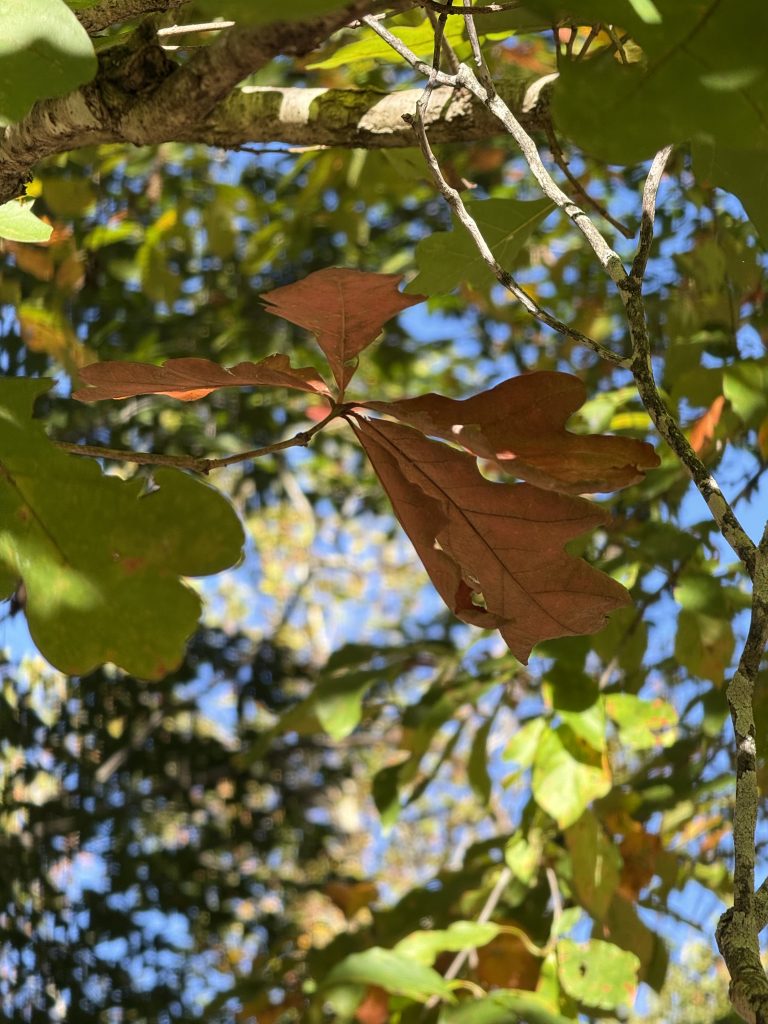
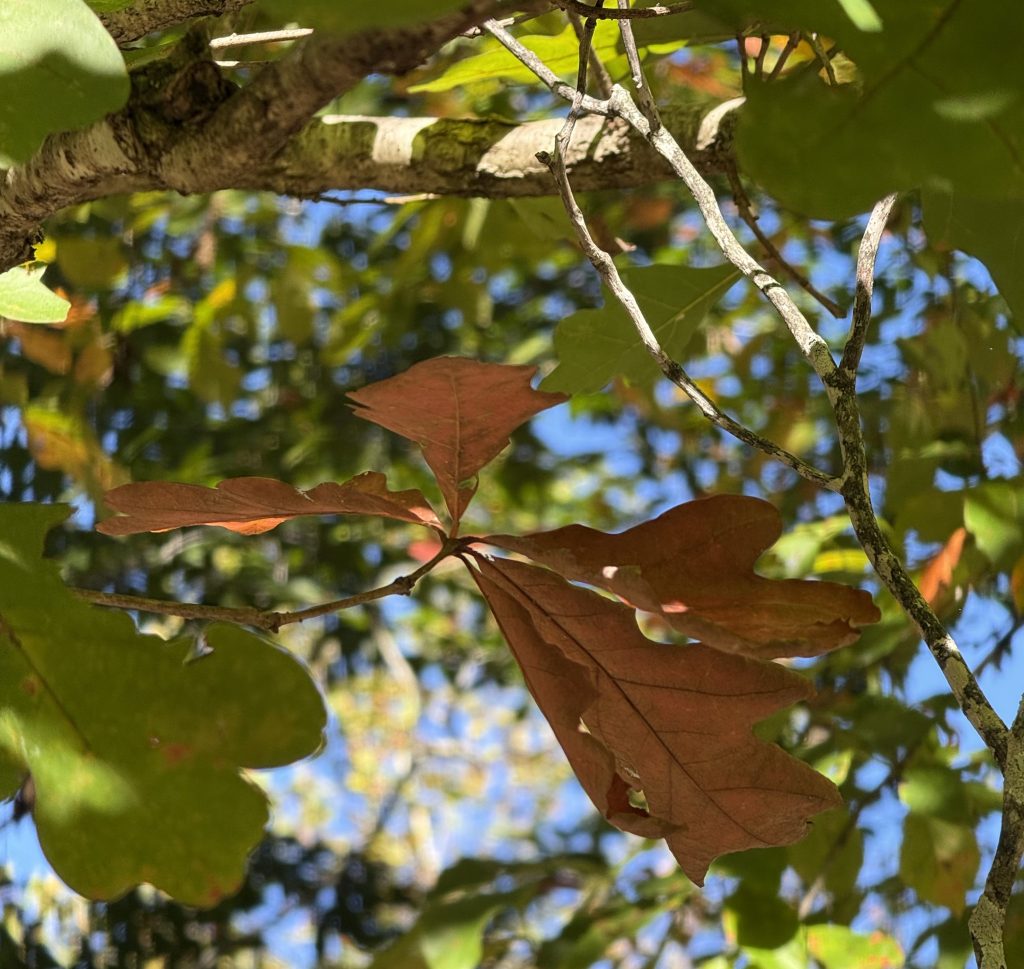
I notice this in my own yard, too. We have an oak tree next to the house that has been particularly enthusiastic about producing acorns this year. And by enthusiastic, I mean it sounds like someone is periodically throwing handfuls of gravel at the roof. There are acorns everywhere, and I’ve spent a fair amount of time stepping over them, listening to them fall, and wondering how one tree could possibly produce so many.
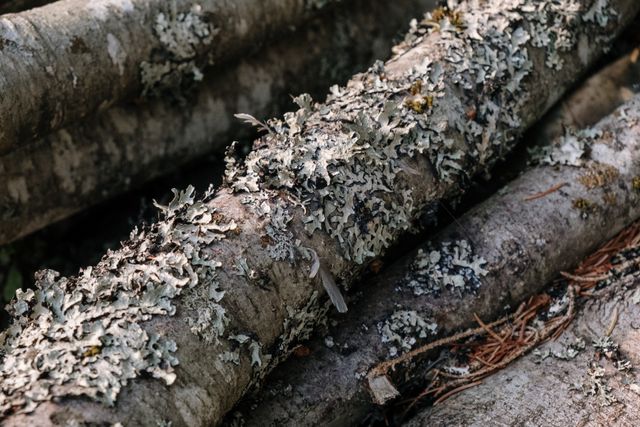
But somewhere between dodging falling acorns and thinking about how much the squirrels must be enjoying themselves, I started paying closer attention to the tree itself. The different shapes of the leaves, the way the acorns grow, the little details that distinguish one oak species from another, and the surprising number of creatures that depend on these trees. That curiosity eventually became the inspiration for my Acorns + Oaks Field Study, which I recently finished creating.
What started as a mildly ridiculous number of acorns landing around the house turned into an entire illustrated exploration of oak trees and their place in the natural world. I hadn’t gone looking for a new project. The tree was simply doing what oak trees do, and eventually I became curious enough to investigate.
There’s a Lot Happening Down There
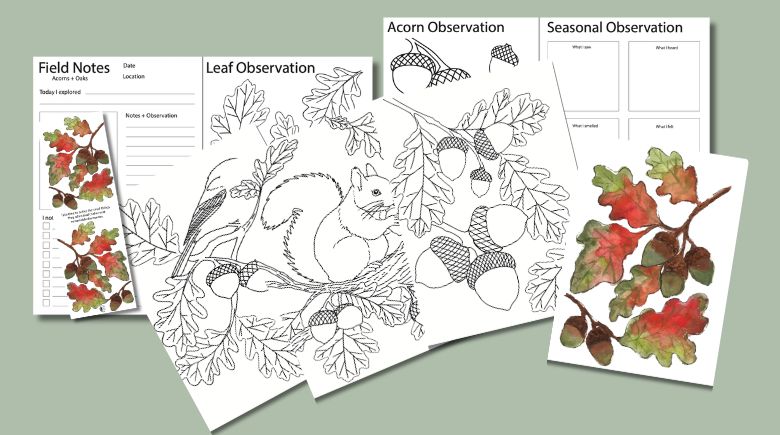
One of the things I’ve been particularly interested in lately is the world of mosses and lichens. They’re everywhere once you start looking for them, although they’re remarkably easy to ignore if you’re focused on getting somewhere. Moss covering the base of a tree can look like a soft green carpet, while lichens create all sorts of interesting shapes and colors on bark, rocks, and old fence posts. Some look like tiny branching shrubs, others form crusty patches, and a few have shapes that seem almost too strange to be real.
What makes them even more interesting is how different they are from what we might assume. Mosses are plants, but they don’t have the same vascular systems as trees or flowering plants. Lichens, meanwhile, aren’t plants at all. They’re partnerships involving fungi and photosynthetic organisms, usually algae or cyanobacteria. They’re also remarkably good at surviving in places where many other organisms would struggle, which explains why you can find them clinging to exposed rocks and tree bark in all sorts of conditions.
I find that sort of thing fascinating, partly because it’s a reminder of how much is happening right in front of us without demanding our attention. You don’t have to travel somewhere exotic to find something unusual. Sometimes you just need to crouch down next to a tree and take a closer look, preferably without startling whatever creature happens to be living underneath it.
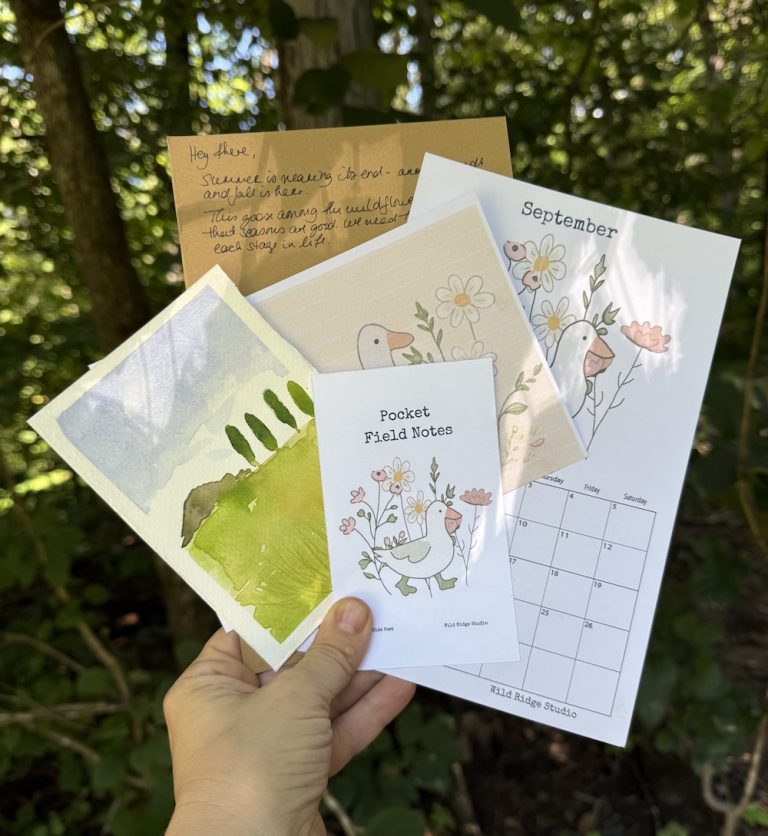
This growing fascination with mosses and lichens is also finding its way into my next Wild Ridge Field Study. I’ve been collecting ideas for illustrations, observations, and little investigations that encourage people to look more closely at these often-overlooked organisms. And I suspect that once I’ve finished putting it together, I’ll never look at an ordinary patch of moss quite the same way again.
What This Has to Do With Making Art
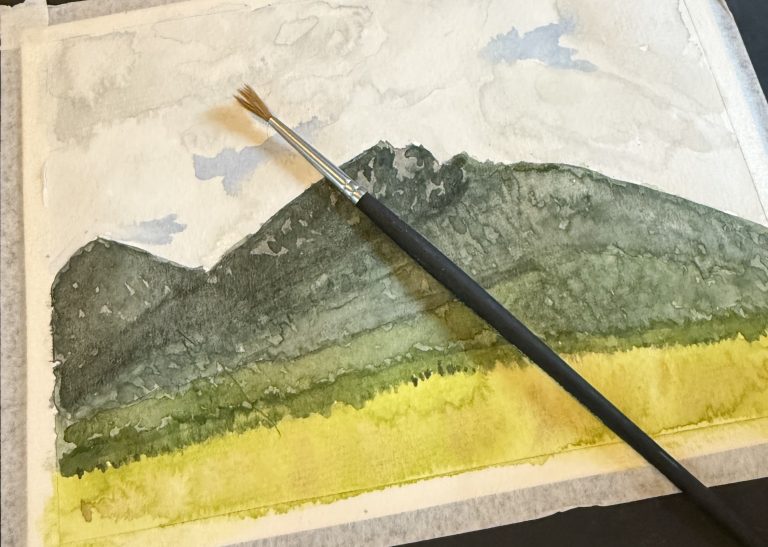
I’ve noticed that spending more time observing things outdoors has started to change how I approach my artwork. When I’m drawing something from nature, I can’t rely entirely on what I think it looks like. I have to pay attention to the actual shapes, textures, and proportions, including the details my brain would otherwise simplify or overlook.
An oak leaf, for example, isn’t just a generic leaf with a few rounded edges. Different species have different shapes, and even leaves from the same tree can vary quite a bit. Mushrooms have their own structures and textures, tree bark changes with age and species, and the colors we associate with a particular plant often turn out to be far more complicated when we really look at them.
That’s one of the reasons I enjoy working from my own photographs and observations. It gives me something more interesting to work with than the simplified version of an object I carry around in my head. I can study the way a leaf curls, how a branch grows, or the irregular patterns on a piece of bark, and then decide which details I want to bring into an illustration. Sometimes that leads to a fairly realistic study, and other times it becomes something more stylized, but the observation is still part of the process.
It’s also made me more comfortable with not knowing what I’m looking at. I don’t need to identify every plant or understand every ecological relationship to appreciate something. Sometimes I simply like the shape of a seedpod or the color of a lichen growing on a rock. The curiosity might lead me to research it later, but it doesn’t have to. There’s something enjoyable about encountering something unfamiliar and allowing it to remain a mystery for a while.
Not Every Walk Needs to Become Something
Of course, there’s a slightly ridiculous side to all this, particularly when you’re an artist constantly coming up with new ideas. It’s entirely possible for me to go outside for a perfectly ordinary walk and come home with enough photographs and observations to inspire three new illustrations, a surface pattern collection, and another project I probably don’t have time to start.
I’ve had to remind myself that not everything I notice needs to become artwork. I can appreciate an interesting plant without drawing it, photograph a mushroom without turning it into a pattern, and enjoy a walk without feeling obligated to produce something from the experience. As much as I love bringing nature into my creative work, I don’t want every moment outside to become another item on my already overcrowded project list.
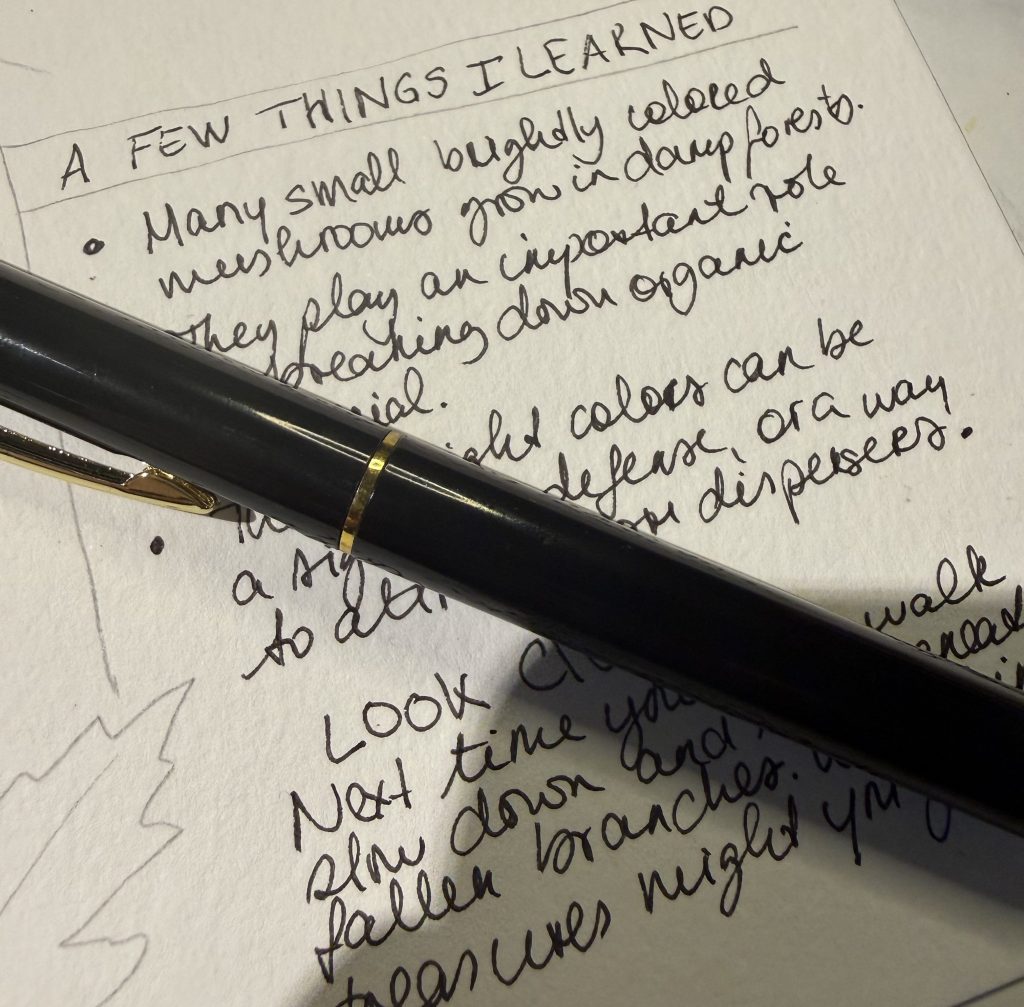
That’s part of what I’ve been exploring through In the Wild Margins, my illustrated nature journal project. It’s an opportunity to document the little things that catch my attention, learn more about the natural world, and share some of those discoveries without necessarily having to turn them into products. Some observations might eventually inspire larger pieces of artwork, while others will remain exactly what they are: small moments recorded because I found them interesting.
And I think there’s value in that, particularly when so much of our daily lives revolves around getting things done. We’re constantly measuring progress, planning the next task, and trying to make the most efficient use of our time. Even our hobbies can start to feel like something we need to accomplish rather than something we simply enjoy. Going outside and paying attention to whatever happens to be there is one of the few things that doesn’t really require an outcome.
A Different Way of Looking
I’m not suggesting that everyone needs to start carrying a sketchbook into the woods or develop an encyclopedic knowledge of native plants. Although, if you happen to find yourself getting excited about identifying different types of moss, I’d be delighted to know I’m not the only one.
What I am suggesting is that there’s an extraordinary amount of interesting stuff happening in places we consider ordinary. The tree in the yard, the plants growing along the driveway, the patches of lichen on an old stone wall, or the tiny mushrooms that appear after several days of rain are all worth a second look. You don’t need a particular destination, special equipment, or even much time to discover something you haven’t noticed before.
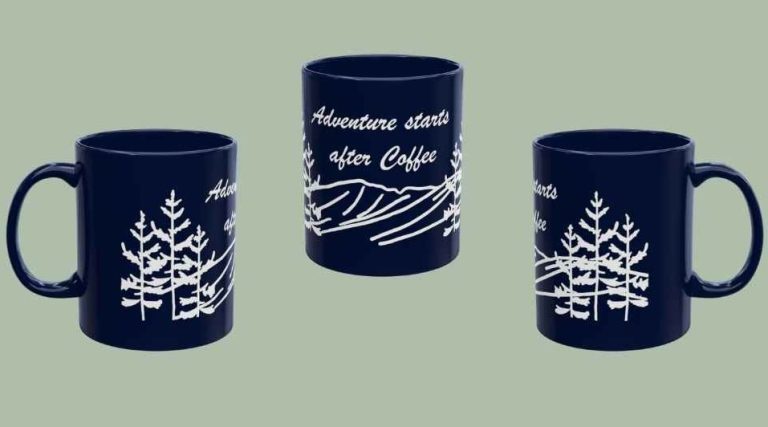
I still enjoy the bigger adventures, of course. Give me a mountain trail, a few hours to wander, and a decent cup of coffee afterward, and I’m perfectly happy. But I’ve also come to appreciate how much there is to discover close to home, especially in places I thought I already knew.
The oak tree outside our house hasn’t changed, even though I started paying more attention to it. It’s still dropping acorns everywhere, and I’m fairly certain it’s determined to keep doing so until the entire yard is covered. The moss growing along the trail doesn’t care whether I notice it, and the lichens on the rocks will continue doing their thing regardless of whether I ever learn their names.
But my experience of those familiar places has changed a little, and that’s been interesting in itself.
So the next time you’re outside, whether you’re hiking through the woods, walking the dog, or simply heading out to collect the mail, take a look at something you’ve probably passed a hundred times before. Not because you need to learn anything or turn it into a creative project, but because you might find something interesting.
And if you happen to discover something particularly strange growing on a tree, I’d love to hear about it. My collection of unidentified woodland mysteries could always use some company.