Acorns + Oaks: An Entire World Beneath One Tree
The first Wild Ridge Studio Nature Study is here, and we’re starting with something that’s been right in front of us all along.
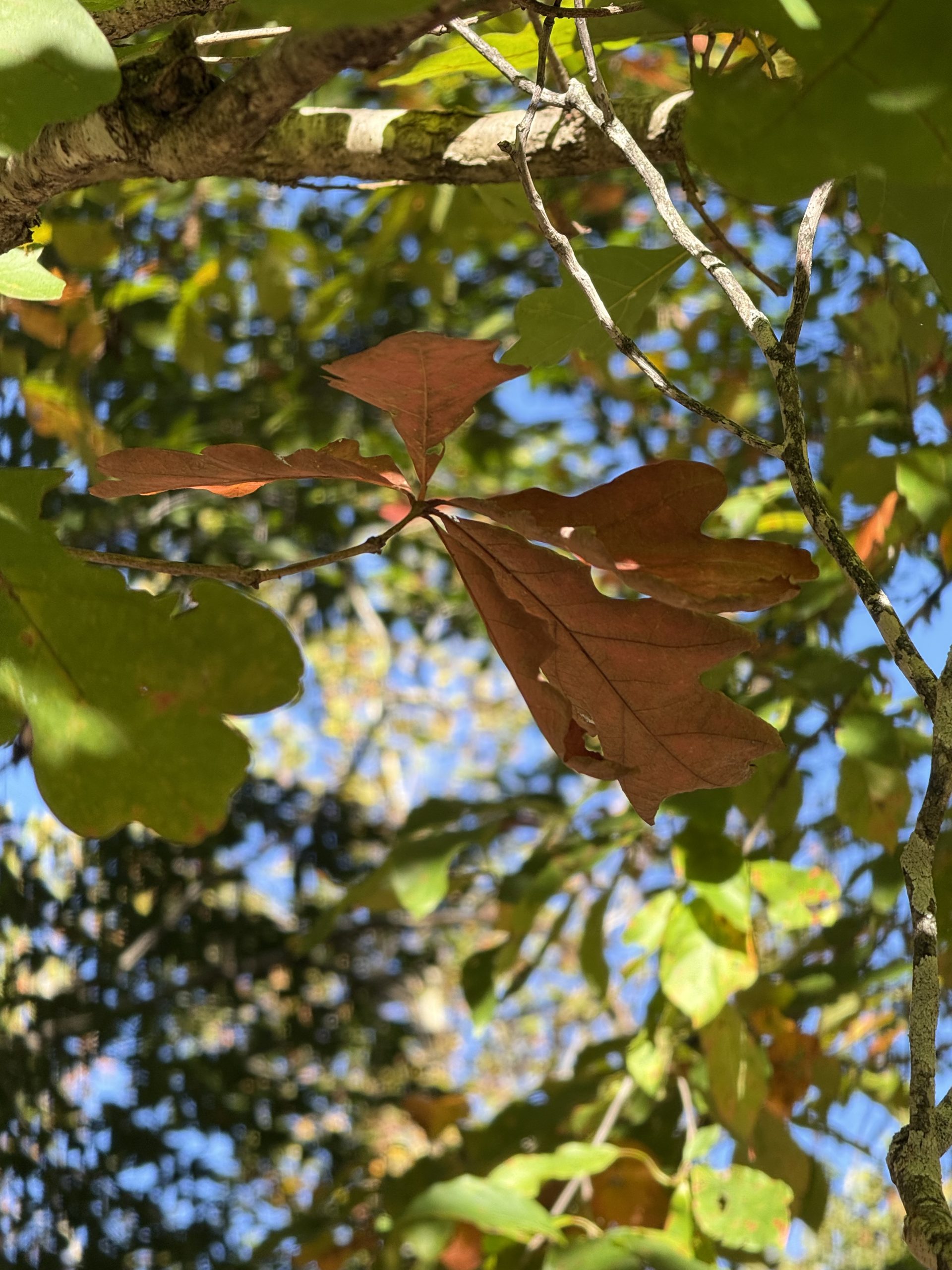
I’ve always been fascinated by the things we walk past without giving them much thought. Not because they’re particularly difficult to notice, but because they’re so familiar that we’ve stopped paying attention. Oak trees are a perfect example. They’re everywhere around here in Virginia, standing along roadsides, scattered through the woods, towering over trails I’ve walked more times than I can count, and right next to my home. I can recognize an oak tree, appreciate its shade, and admire its changing leaves without necessarily stopping to consider just how much is happening in and around it.
And there’s quite a lot happening.
An oak tree is practically an entire neighborhood. Squirrels are busy collecting acorns, birds are searching the branches for insects, caterpillars are munching their way through leaves, and countless other creatures are going about their business in the bark, roots, and surrounding soil. Some of those relationships are obvious, while others are easy to miss unless you slow down and look a little closer.
That curiosity is what inspired Acorns + Oaks, the first release in my Wild Ridge Studio Nature Studies collection.
It Started With a Simple Idea
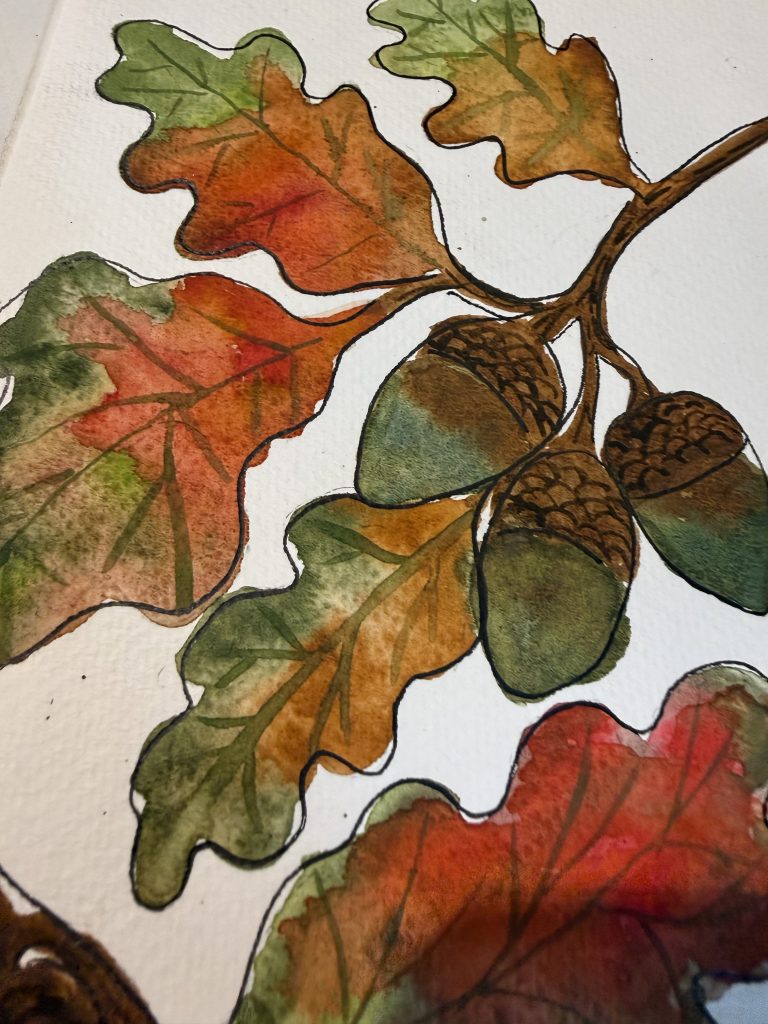
I’ve been thinking a lot about how I want to bring my love of art and the natural world together. Not just through the illustrations and patterns I create, but through something that encourages people to get outside, investigate their surroundings, and perhaps discover a few things they didn’t know before.
I’ve always enjoyed learning through exploration. Give me a trail, a sketchbook, and something interesting growing beside the path, and there’s a good chance I’ll end up researching it later. Sometimes that curiosity leads to an illustration, sometimes it turns into a whole collection, and sometimes I just learn something fascinating about a plant or creature I previously knew very little about.
The trouble is that it’s easy to assume we need to go somewhere extraordinary to have those experiences. We imagine distant mountains, remote forests, or some spectacular natural wonder when, quite often, there’s an entire world waiting in the backyard.
An oak tree seemed like a particularly good place to begin.
Not only are oaks beautiful subjects to draw, but they’re also wonderfully complicated living things. Their leaves vary in shape, their acorns come in different sizes, and the wildlife associated with them could keep a curious person occupied for a very long time. They’re also a reminder that the natural world isn’t made up of isolated objects. Everything is connected, even when we can’t immediately see how.
More Than Just an Acorn
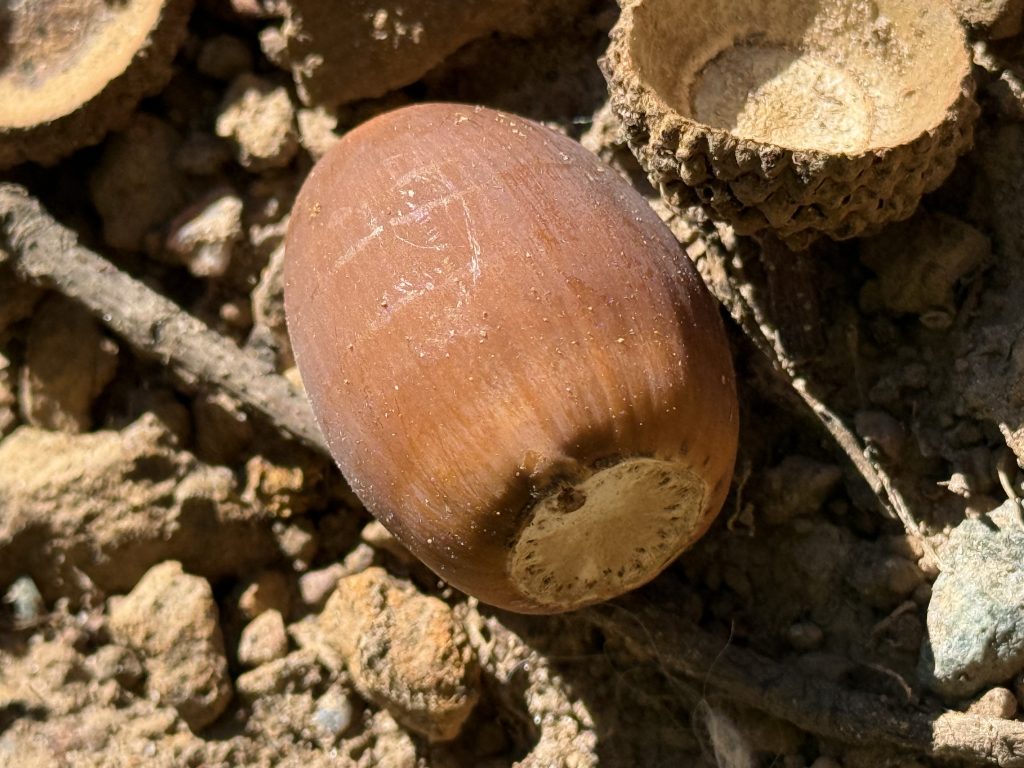
I think acorns are rather remarkable little things. We tend to associate them with squirrels and autumn decorations, but each one is a seed with the potential to become an enormous tree that may live for centuries.
Of course, most acorns never get that far. They’re eaten by wildlife, damaged, or simply land in places that aren’t suitable for growing. But those that do germinate begin a process that can eventually create habitat and food for an astonishing variety of living things.
Oak trees support hundreds of insect species, including many caterpillars that serve as food for nesting birds. Their acorns feed squirrels, deer, turkeys, jays, and other wildlife. Their branches provide nesting places, their bark offers shelter, and fallen leaves contribute to the forest floor as they decompose.
Even after an oak tree dies, it can continue to support life through standing deadwood, fallen branches, and decaying logs.
There’s something fascinating about the idea that one tree can play so many different roles throughout its lifetime. And the more I learn about those relationships, the more I find myself wanting to document them through my artwork.
Bringing Art Into the Investigation
One of the things I wanted to accomplish with the Nature Studies collection was to make observation and creativity feel like natural companions.
You don’t have to be an experienced artist to enjoy drawing something you’ve discovered outdoors. In fact, I think some of the most interesting sketches happen when you’re simply trying to understand what you’re looking at rather than worrying about whether the finished drawing is any good.
Take an oak leaf, for example. At first glance, it’s just a leaf. But when you sit down to draw it, you start noticing the shape of its lobes, the way the veins branch outward, whether the edges are rounded or pointed, and how one leaf can differ from another on the same tree.
Drawing encourages you to pay attention to details you might otherwise overlook.
That’s the approach I’ve taken with Acorns + Oaks. Rather than creating another collection of pretty botanical illustrations, I wanted to develop something that combines learning, observation, and creative exploration.
Something you can use at your kitchen table, take outside with a clipboard, or return to whenever curiosity strikes.
And because I believe creative learning should be enjoyable, there’s no expectation that you need to complete everything in one sitting or work through the pages in a particular order.
What’s Inside Acorns + Oaks?
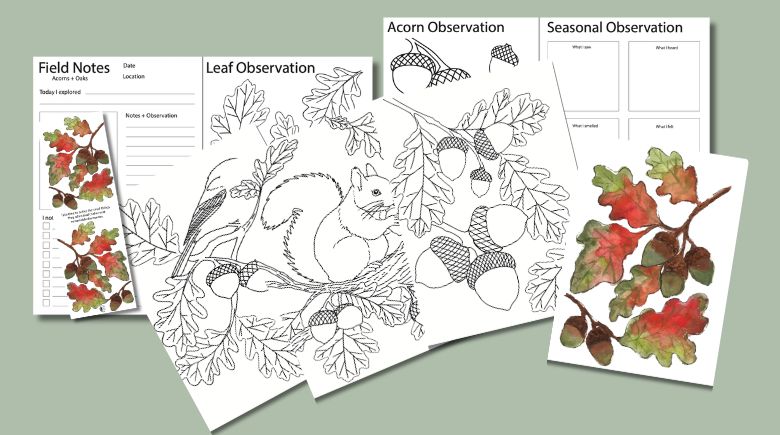
Acorns + Oaks is an illustrated, self-guided field study designed to help you become better acquainted with oak trees and the living world surrounding them.
Inside, you’ll find opportunities to explore oak leaves and acorns, learn more about the wildlife that depends on these trees, and engage with the subject through observation and creative activities.
There are illustrations to enjoy, things to investigate, and invitations to make your own art along the way. You might find yourself comparing leaves, studying the structure of an acorn, or heading outside to see whether you can identify the oak trees growing near your home.
The idea isn’t to turn a walk in the woods into homework. It’s to give you a few interesting things to look for and see where your curiosity takes you.
You can work through the study on your own, share it with your children, or use it as inspiration for nature journaling and sketchbook sessions. It’s meant for curious beginners just as much as people who already spend a considerable amount of time outdoors.
And if the only thing you accomplish is learning to recognize a different kind of oak leaf, I’d consider that time well spent.
A New Collection Rooted in Curiosity
Acorns + Oaks is also the beginning of something I hope to continue developing through Wild Ridge Studio.
The Nature Studies collection will explore different plants, wildlife, and natural subjects through illustrated, self-guided experiences. Some studies may focus on a familiar tree or flower, while others might investigate insects, fungi, or the smaller details of an ecosystem that rarely get much attention.
My intention is to bring together the things I enjoy most: illustration, learning, nature, and the freedom to explore without feeling like everything must be a serious undertaking.
I also want these studies to be something you can return to. Nature isn’t static, and neither is our understanding of it. An oak tree looks different in spring than it does in autumn. The wildlife around it changes throughout the year. Even the same trail can reveal something entirely new depending on when you visit and how closely you’re paying attention.
There’s always more to discover.
Your Next Adventure Might Be Right Outside
You don’t need to plan a major hiking trip to begin exploring. Find an oak tree in your neighborhood, at a nearby park, or along a favorite walking trail. Look at its leaves, examine the acorns scattered beneath it, and pay attention to what’s happening around the trunk and branches.
You might notice a squirrel carrying off an acorn, a bird investigating the bark, or a leaf with an unusual shape or pattern. You might discover that the tree you’ve walked past for years isn’t quite the species you thought it was.
Or you might simply enjoy spending a little time outside with something interesting to look at.
That’s really what I hope Acorns + Oaks encourages. A little more curiosity, a little more creativity, and perhaps a greater appreciation for the remarkable things happening in the places we already know.
Acorns + Oaks is now available as the first Wild Ridge Studio Nature Study. If you’d like to explore oak trees through illustration, observation, and hands-on creative activities, I’d love for you to join me.
Explore Acorns + Oaks at Wild Ridge Studio
And the next time you find an acorn on the ground, consider picking it up and taking a closer look. There’s quite a story tucked inside that little shell.