Moss + Lichen: Discovering the Tiny Worlds Beneath Our Feet
There’s something fascinating about a moss-covered log, especially when you take the time to look at what’s actually growing on it. What initially appears to be a simple patch of green can turn out to be a miniature landscape filled with soft moss cushions, branching lichens, tiny organisms, and an incredible variety of shapes and textures. It’s the kind of world that’s easy to overlook when you’re walking through the woods, particularly when your attention is drawn toward towering trees, distant mountain views, or whatever happens to be moving through the underbrush.
But the closer you look, the more interesting these little landscapes become. Mosses and lichens often grow alongside one another, covering fallen branches, weathered rocks, and old tree trunks, yet they’re remarkably different organisms with fascinating ways of surviving in their environments. That combination of beautiful textures, unusual biology, and easily overlooked details inspired Moss + Lichen, the second illustrated nature study in my Wild Ridge Studio collection. I wanted to create something that would encourage people to get curious about the smaller parts of the natural world while bringing a little art and creativity into the experience.
Two Very Different Worlds Growing Side by Side
One of the most interesting things about mosses and lichens is that, despite their similar appearances and growing environments, they’re not closely related. Mosses are small, nonvascular plants that absorb water across their surfaces rather than relying on the complex internal transport systems found in many larger plants. They can grow in dense cushions, sprawling carpets, or delicate upright clusters, and their ability to retain moisture makes them important parts of many woodland habitats.
Lichens, on the other hand, are formed through a remarkable partnership involving a fungus and one or more photosynthetic organisms, usually algae or cyanobacteria. Some spread across rocks like colorful crusts, others develop leafy structures, and some form intricate branching shapes that resemble miniature shrubs. They can grow in places where many plants struggle to survive, and their slow growth makes them particularly interesting to observe over time. Once you begin recognizing their different forms, it’s difficult to walk past an old stone wall or tree trunk without wondering what might be growing there.
The Artwork: A Little Woodland World
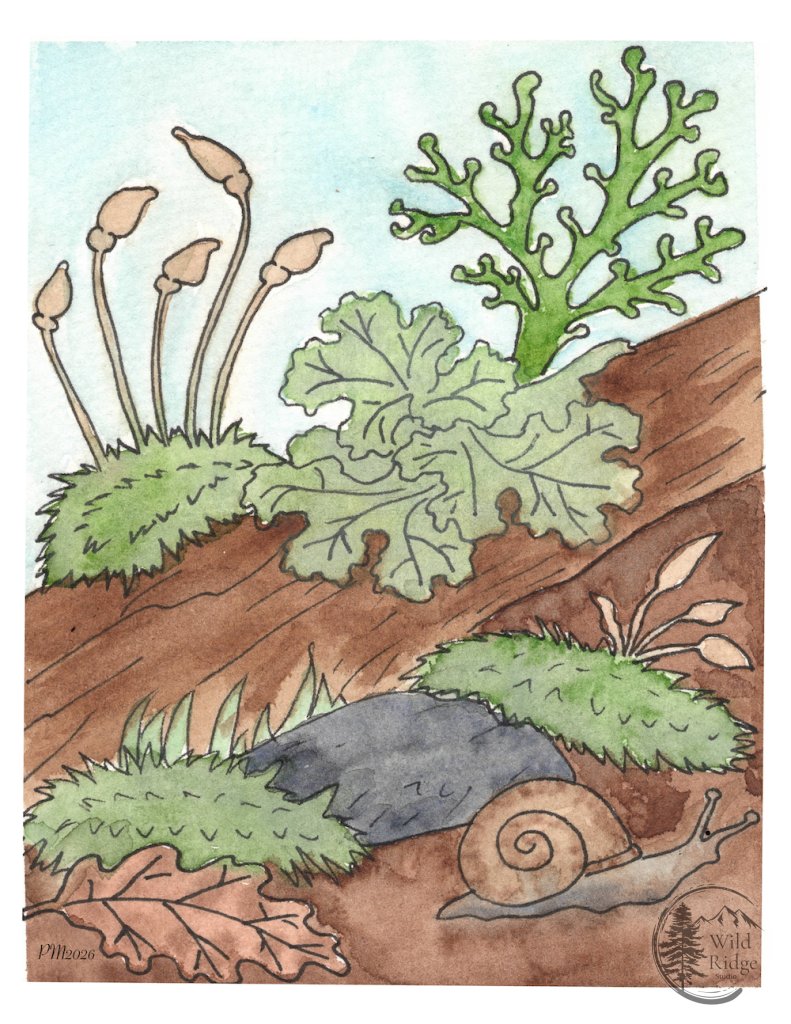
When I started creating the artwork for this study, I wanted to capture the feeling of discovering a miniature woodland landscape tucked into an ordinary fallen log. The illustration brings together soft green moss cushions, leafy and branching lichens, delicate stalks rising above the moss, weathered wood, and a little snail making its way through the scene. Each element adds another layer to the story, showing how much visual interest can exist in a relatively small patch of forest floor.
I particularly enjoyed working with the different textures and shapes. Moss has this wonderfully soft, almost inviting appearance, while lichens can be irregular, branching, ruffled, or surprisingly intricate. The muted greens, earthy browns, and gentle watercolor textures reflect the colors I associate with damp woodland mornings and quiet walks beneath the trees. There’s something satisfying about creating artwork inspired by things that don’t follow neat patterns or perfect symmetry, and mosses and lichens certainly provide plenty of opportunities to explore that.
Taking the Curiosity Outside
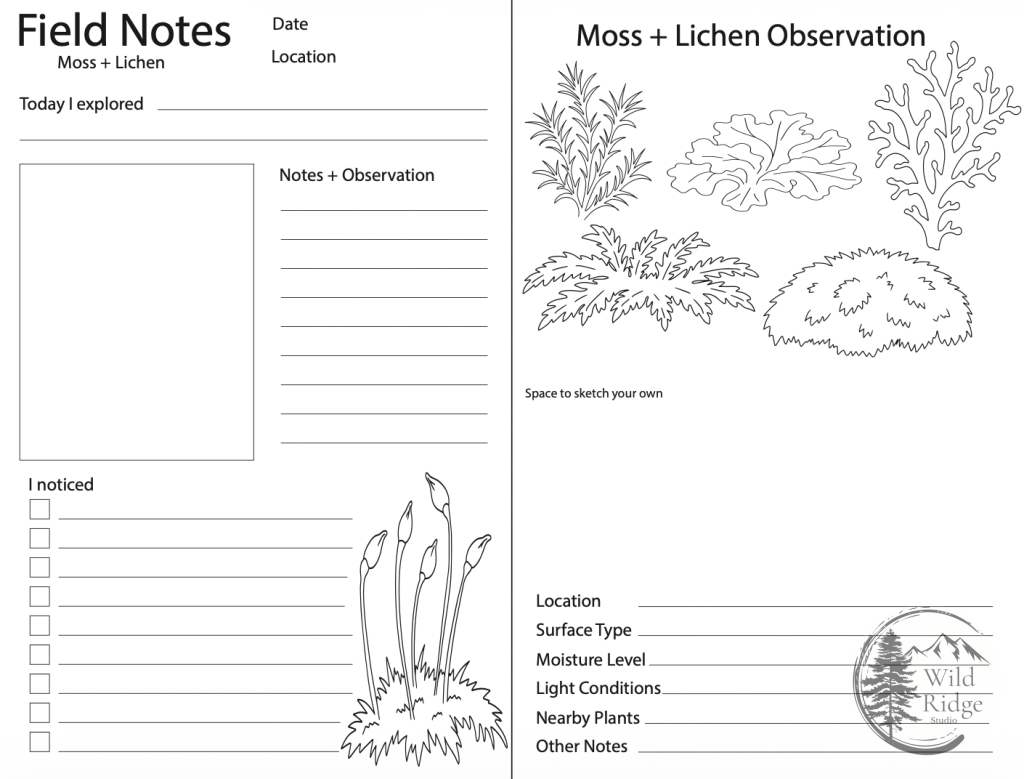
The artwork is only one part of this field study, as I also wanted to encourage people to take their curiosity outside and explore what they can find in their own surroundings. You don’t need to visit a national park or hike miles into the wilderness to discover mosses and lichens. They might be growing on a tree in your backyard, along a shaded garden wall, between stones, or on a fallen branch beside a familiar walking trail. The interesting part is slowing down enough to notice them and to begin asking questions about what you’re seeing.
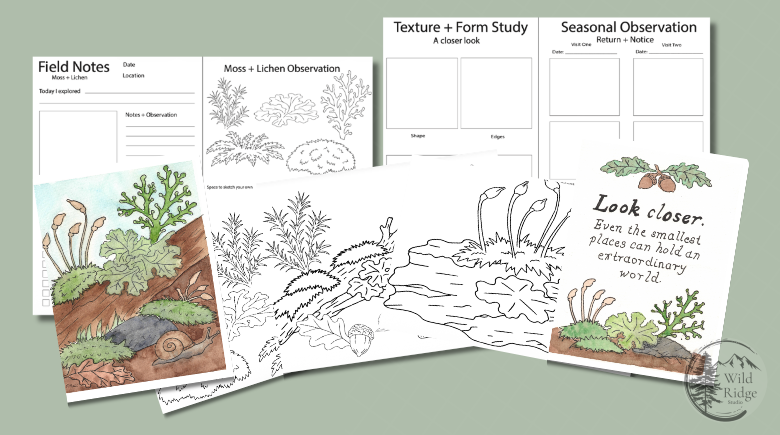
The printable observation pages provide space to record where you explored, the surfaces where mosses and lichens were growing, the surrounding moisture and light conditions, and the details that caught your attention. There’s also a texture and form study for examining shapes, edges, colors, and patterns, along with a seasonal observation activity that encourages you to return to the same location and notice what has changed. These aren’t assignments with right or wrong answers. They’re simply tools for paying closer attention, recording discoveries, and developing a deeper appreciation for the natural world around you.
Making Art from What We Discover
Nature observation and creativity have always felt connected to me because the more closely I study something, the more interesting it becomes to draw. A patch of moss that initially looks like a fuzzy green shape begins revealing individual stems, overlapping textures, and subtle variations in color. Lichens offer an entirely different collection of shapes, from delicate branching structures to broad, ruffled forms that almost resemble leaves. There’s no shortage of inspiration once you start looking beyond the overall shape and noticing the smaller details.
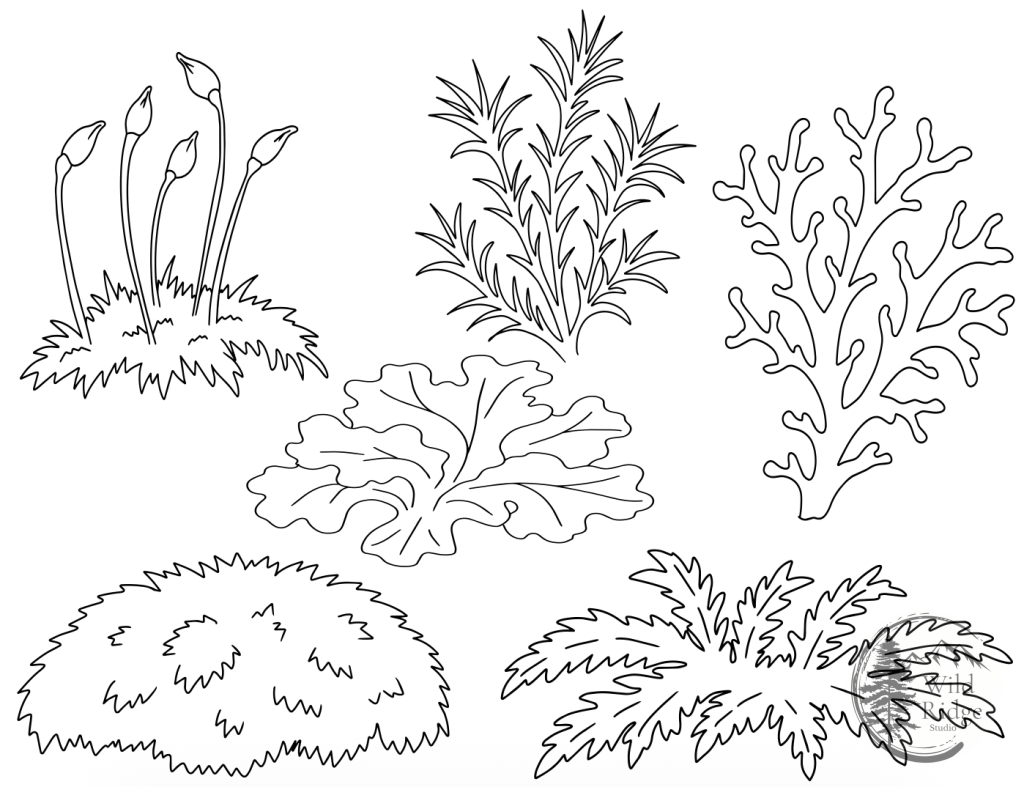
For the creative portion of this study, I included original black-and-white coloring illustrations inspired by these miniature woodland environments. They’re an opportunity to spend a little time experimenting with color, exploring textures, and enjoying the process of making something without worrying about whether the finished result is botanically accurate. You might choose colors inspired by the mosses and lichens you’ve observed outside, or create an entirely imaginary woodland scene. Either approach is perfectly fine because the goal isn’t to produce a scientific illustration. It’s to enjoy the creative process and perhaps notice something new along the way.
A Little Reminder to Look Closer
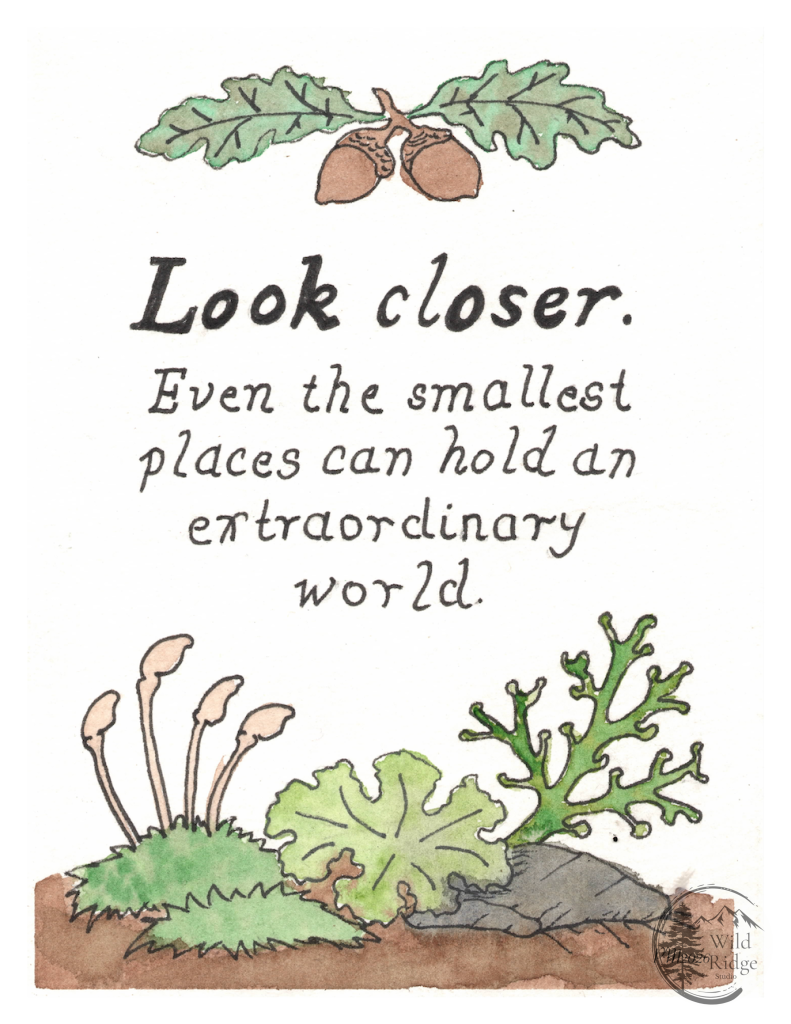
One of the illustrated pieces I created for this collection includes a reminder that sums up the entire idea behind the study: “Look closer. Even the smallest places can hold an extraordinary world.” It’s a sentiment that feels especially appropriate for mosses and lichens because they’re so easy to overlook, even though they’re quietly contributing to the ecosystems around us. Mosses can provide moisture-rich habitats for tiny creatures, while lichens contribute to ecological processes and create their own fascinating communities.
We often associate outdoor adventures with big landscapes, mountain overlooks, waterfalls, and miles of hiking trails, but there’s just as much opportunity for discovery in the places we pass every day. An old log, a shaded rock, or a patch of green growing along a familiar path can become the beginning of an interesting afternoon if we’re willing to stop and investigate. I think that’s one of my favorite things about nature study. It doesn’t require an elaborate plan or a special destination, just a little curiosity and the willingness to pay attention.
Explore Moss + Lichen at Your Own Pace
Moss + Lichen is Study 002 in the Wild Ridge Studio Nature Studies collection, following our first exploration, Acorns + Oaks. Each illustrated study brings together original watercolor artwork, outdoor observation invitations, curiosity-driven investigations, and creative activities designed to help you explore the natural world at your own pace. The studies are self-guided, which means you can follow whichever questions interest you, spend as much time as you like investigating a particular discovery, and return to the activities whenever inspiration strikes.
The Moss + Lichen Field Study is available as an individual digital purchase and is also included in the Wild Ridge Field Study Club, our $9/month nature-study membership featuring a new illustrated exploration each month. Whether you prefer to explore one subject at a time or enjoy having a new reason to get curious about nature every month, the idea is the same: make room for observation, creativity, and a little more wonder in everyday life.
I hope this particular study encourages you to look a little more closely the next time you’re outside, especially at the things you might ordinarily walk right past. You never know what interesting shapes, unusual organisms, or tiny woodland communities you might discover when you take a few moments to investigate. Sometimes an entire world is waiting in a patch of moss no bigger than your hand.
Look closer. Learn something. Make something.