When the Thing You Worked Hardest On Isn’t the Thing That Takes Off
There is something strangely frustrating about watching my illustrations and surface designs sell more easily than my wood-burnings ever did. Not because I don’t love creating them. I absolutely do. In fact, I feel more creatively at home than I have in years. But every now and then, I find myself looking back at the countless hours I spent with a wood burner in my hand and thinking, Really? This is the thing people are buying without me having to fight for every sale? It’s an odd feeling because I’m genuinely grateful, yet there’s a part of me that still wants to defend the years I spent building my business around pyrography.
For a long time, wood-burning wasn’t simply what I made. It was who I was as an artist. I poured years into learning the craft, figuring out how to create depth with nothing more than heat and patience, and accepting that every mark I burned into the wood was permanent. There was no undo button. Every finished piece represented hours of concentration, countless decisions, and a willingness to keep improving one board at a time. Looking back now, I realize I wasn’t only creating artwork. I was building confidence, developing my eye, and learning how to tell stories through images.
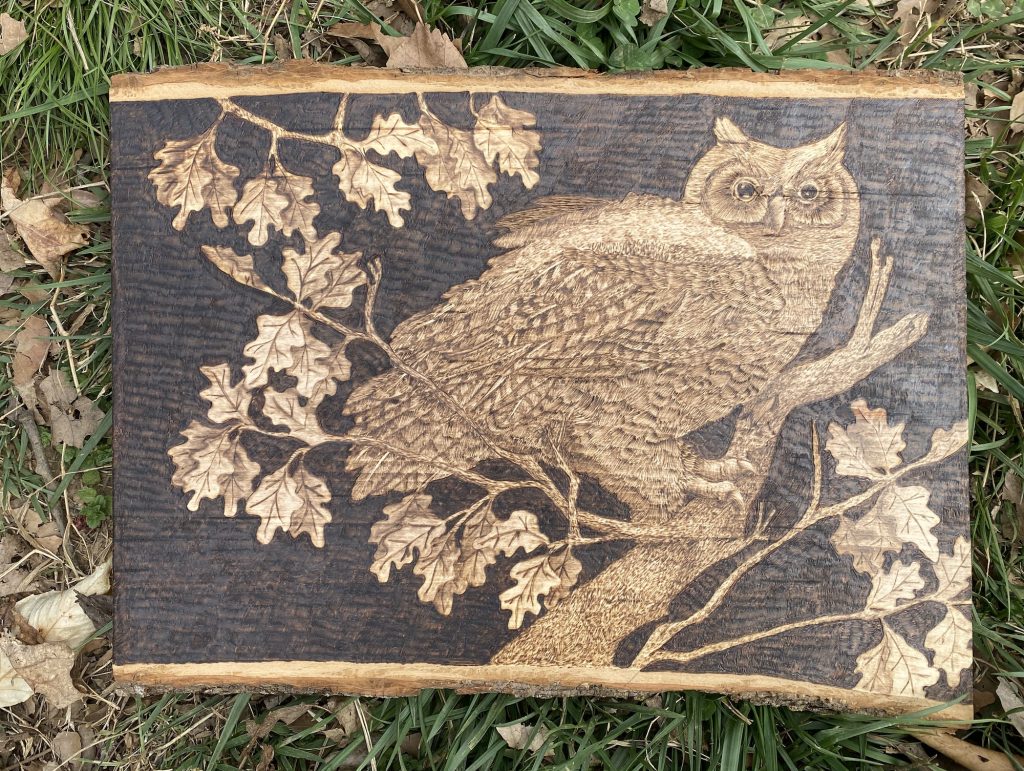
The interesting part is that pyrography was never the problem. Whenever I sold my work in person, people understood it immediately. They would stop at my booth, pick up a piece, trace the grain with their fingertips, and ask how it was even possible to create those details by burning wood instead of painting it. They could see the craftsmanship because it was right in front of them. The conversations were easy, and more often than not, they turned into sales. There was something about seeing the work in real life that photographs simply couldn’t replicate.
Online, though, everything changed. A photo flattened all of the texture, all of the subtle details, and all of the hours that went into each piece. Suddenly I wasn’t just selling art. I felt like I was constantly explaining why it deserved the price it carried. Every listing had to educate people. Every sale felt as though it required persuasion before it required appreciation. While I certainly made sales, it often felt like I was swimming upstream, putting enormous amounts of energy into convincing people to value something they couldn’t fully experience through a screen.
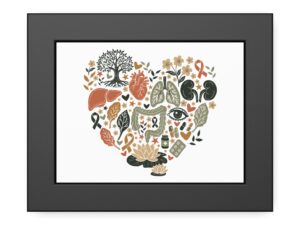
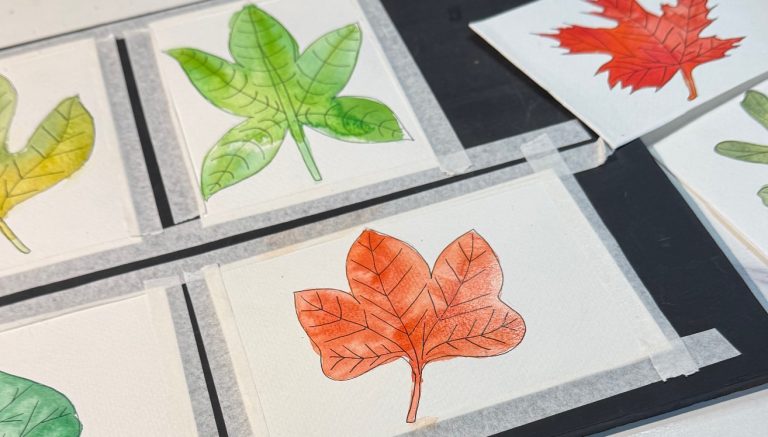
Now my work looks very different. Most days you’ll find me sketching in Procreate, creating illustrations, building seamless patterns, or designing collections that eventually become mugs, calendars, art prints, stationery, stickers, and other products inspired by the Blue Ridge Mountains and the trails I wander with my dogs. I’m still creating from the same place. I’m still telling stories about nature. I’m still paying attention to the tiny details that most people walk past. The medium has changed, but the heart behind the work really hasn’t.
What has changed is how people respond to it. Instead of feeling like I have to explain why someone might want my work, people seem to understand it almost immediately. They can picture themselves drinking coffee from the mug, hanging the calendar in their kitchen, or framing the print in their home. The artwork fits naturally into their lives in ways that a one-of-a-kind wood-burning often didn’t. It’s not that the illustrations are somehow more meaningful than the pyrography. They’re simply easier for people to imagine owning, and that makes a tremendous difference.
I’ll admit there are moments when that realization still annoys me. There’s a little voice that quietly reminds me how much harder the wood-burning was, how many years I spent mastering the technique, and how much physical effort every piece required. Part of me wants the marketplace to reward difficulty. I want all those hours of practice to count for something tangible because, emotionally, that feels fair.
The truth is, though, the marketplace has never worked that way. People don’t buy art because it took the longest to create. They buy art because it connects with them, fits into their lives, solves a problem, evokes a feeling, or simply makes them smile. That’s not a criticism of handcrafted work, nor is it a statement that one medium is better than another. It’s simply an observation about how people make decisions, especially when they’re shopping online.
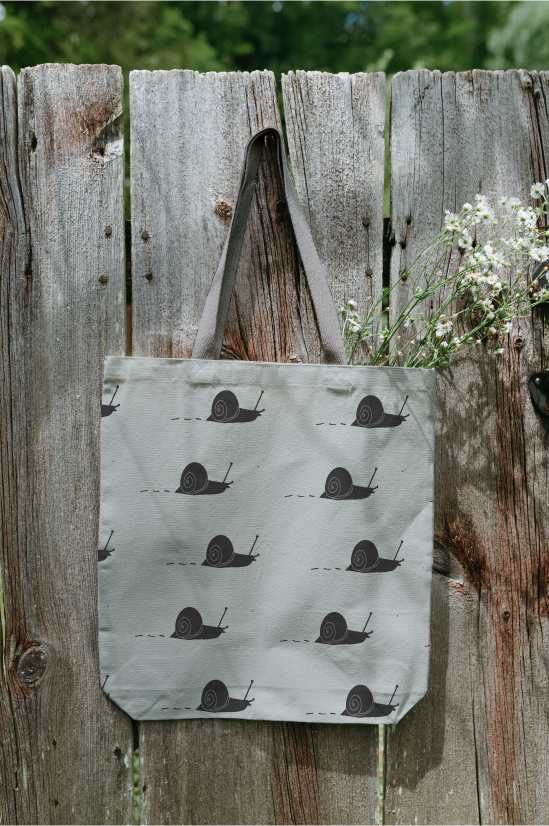
Realizing that has shifted something in me. Instead of asking why my pyrography wasn’t selling as easily as I hoped, I’ve started asking a different question. Where does my creativity naturally meet the way people already want to buy? That’s a much more productive question because it isn’t rooted in frustration. It’s rooted in curiosity. Rather than forcing the market to adapt to me, I’ve begun paying attention to where my skills, my interests, and the market naturally overlap.
Ironically, none of this would be possible without the years I spent burning wood. Pyrography taught me patience long before digital illustration did. It taught me composition, storytelling, texture, balance, and the importance of slowing down long enough to really observe the world around me. Those lessons didn’t disappear when I picked up an Apple Pencil. If anything, they’re visible in every illustration I create today. The medium changed, but the artist didn’t.
I think that’s the part I’ve finally made peace with. Those years weren’t wasted simply because they weren’t the most commercially successful chapter of my career. They were an apprenticeship. They gave me the artistic foundation I stand on today, even if the work I’m creating now looks completely different from what I imagined five or ten years ago. Sometimes the path we spend years walking isn’t the destination at all. Sometimes it’s simply preparing us for the place where our creativity, our experience, and the marketplace finally meet.
So yes, there’s still a part of me that laughs and thinks, Well… that’s a little annoying. But it’s no longer disappointment. It’s appreciation mixed with hindsight. Because if my wood-burning career taught me anything, it’s that no season of creating is ever wasted. Every sketch, every burn mark, every failed experiment, and every successful piece quietly shaped the artist I am today. Looking back, I wouldn’t trade those years for anything, even if the road I ultimately ended up on looks very different from the one I originally set out to follow.