How to Start a Simple Leaf Study on Your Next Fall Walk
One of the things I’ve been enjoying about my Wild Ridge Field Studies is that they give me a reason to pay closer attention to things I already see all the time. I don’t necessarily need to head somewhere new, find a spectacular view, or identify every plant along the trail. Sometimes the subject can be as ordinary as a leaf.
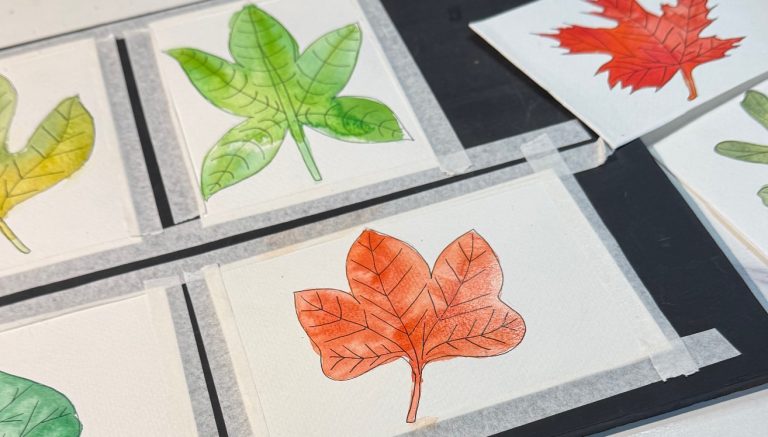
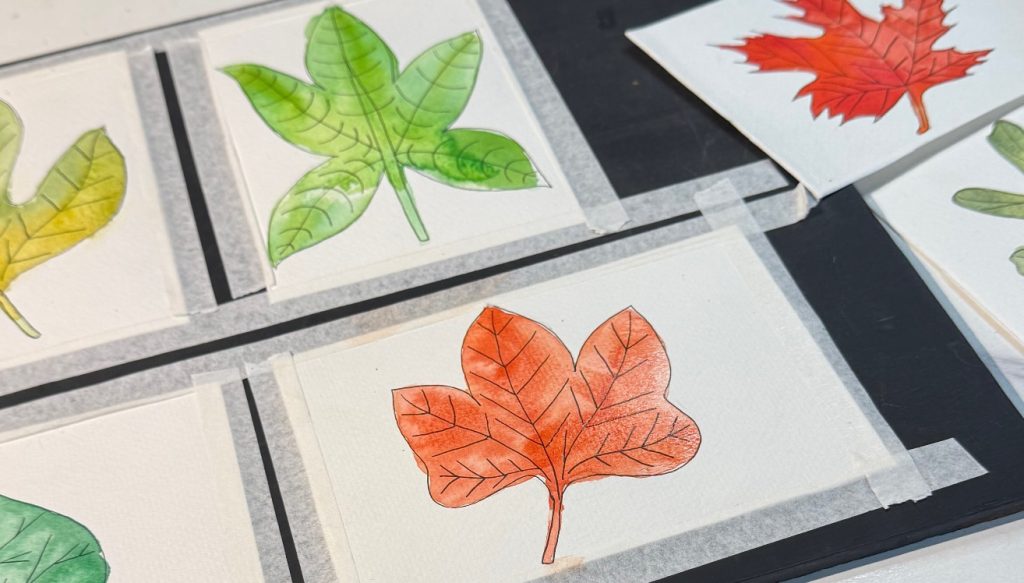
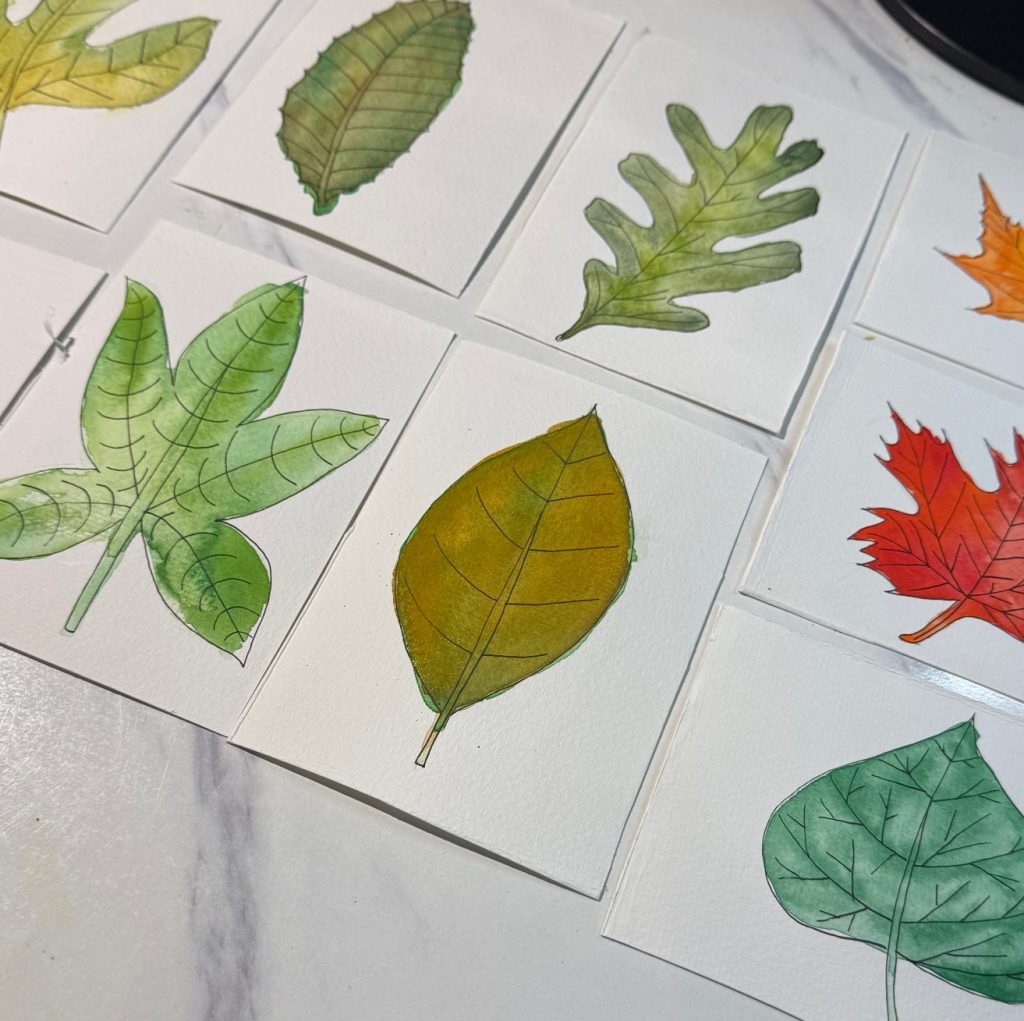
That’s exactly what happened with my recent Leaves of Virginia watercolor study. I wanted to spend some time experimenting with watercolor, so I painted a handful of different leaf shapes using greens, yellows, oranges, reds, and browns. It wasn’t meant to be a detailed botanical study. I wasn’t carefully documenting species or trying to create scientifically accurate illustrations. I was simply looking at leaves as shapes, colors, lines, and inspiration.
And that’s really all you need to create a leaf study of your own.
You Don’t Need to Know What Every Tree Is
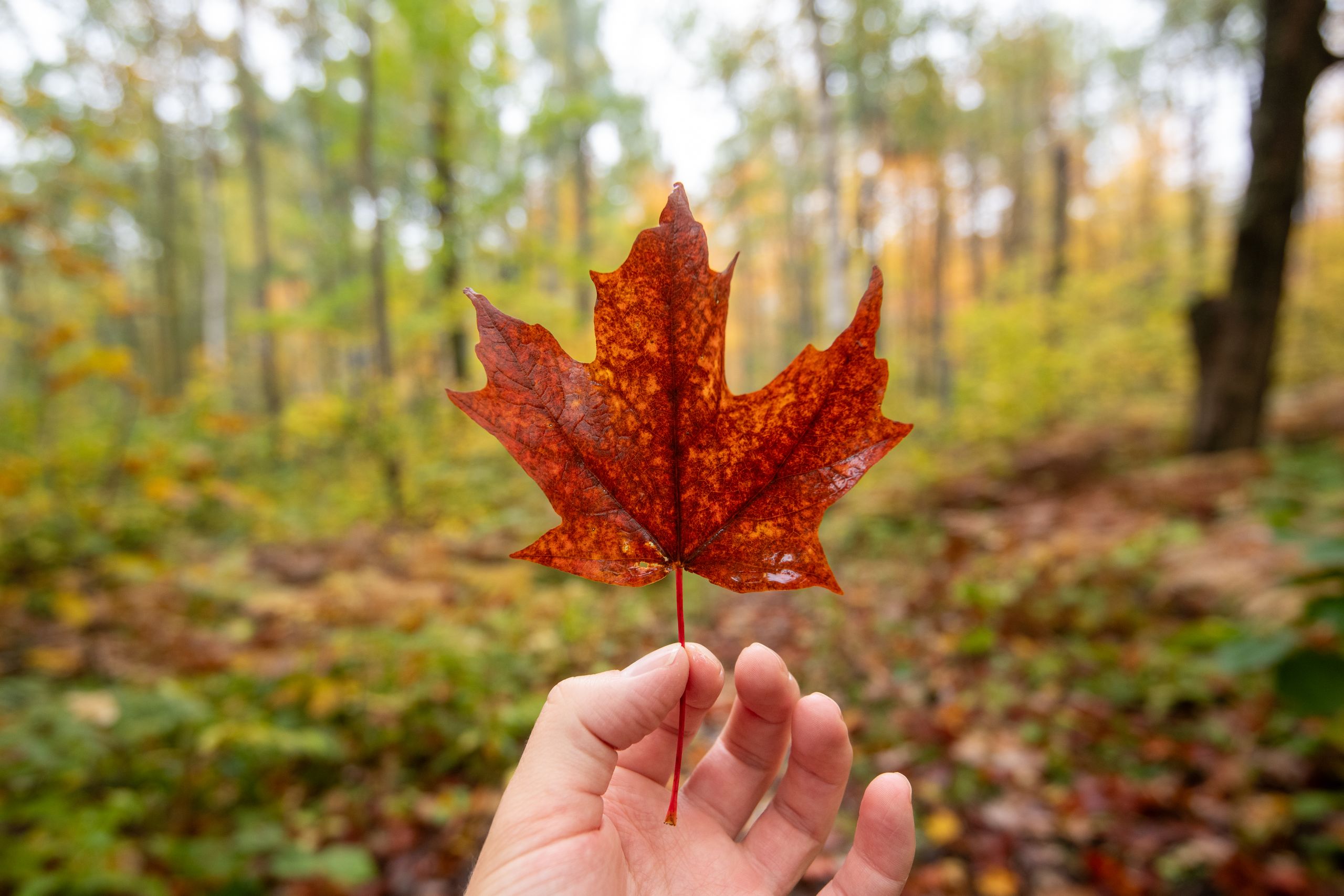
I love learning about the things I find outside, but I also think we sometimes make nature journaling more complicated than it needs to be. You don’t have to know whether you’re looking at a red maple or sugar maple before you’re allowed to find the leaf interesting.
Start with what you can actually see.
Is the leaf long and narrow or broad and round? Does it have deep lobes, little teeth along the edge, or a smooth outline? Is it still completely green, or are the edges beginning to turn? Maybe there are insect holes, brown spots, curled edges, or several colors appearing on the same leaf.
Those observations are already a study.
You can always look up the tree later if you want to know more. The first step is simply noticing that one leaf is different from another.
Take a Walk Without Making Mileage the Goal
I hike and walk quite a bit, and usually there’s some kind of destination involved. There are miles to cover, a trail to follow, or dogs who have very strong opinions about how quickly we should be moving. A field-study walk is a little different.
You don’t have to go far. In fact, your backyard, neighborhood, local park, or a short section of a familiar trail may work better than a long hike because the point isn’t getting somewhere. The point is giving yourself enough time to look around.
Walk slowly enough to notice what’s under your feet and what’s happening above you. Look at the trees that are still green and the ones that have already started changing. Notice the leaves on the branches, but also pay attention to what has fallen.
You may be surprised how much variety you can find in a very small area once you stop walking past all of it.
Look for Color Beyond Red, Orange, and Yellow
Fall gets packaged into a very tidy palette of bright red, pumpkin orange, and golden yellow, but the actual woods aren’t nearly that cooperative.
Especially early in the season, there are still plenty of greens. You’ll find olive, moss, lime, yellow-green, and leaves that are transitioning between several shades. There are muted ochres, rusty oranges, burgundies, browns, and faded yellows. Some leaves have one bright patch while the rest haven’t changed at all.
Instead of searching for the perfect fall leaf, try looking for interesting combinations. You don’t even have to paint them. Take a photo, make a few color swatches in a sketchbook, write down the colors you see, or create a digital palette later.
This is one of the reasons walking has become such a useful part of my creative process. I’m not necessarily going outside looking for an idea for a particular project. I’m collecting colors, shapes, textures, and little observations that may turn into something later.
Choose One Leaf
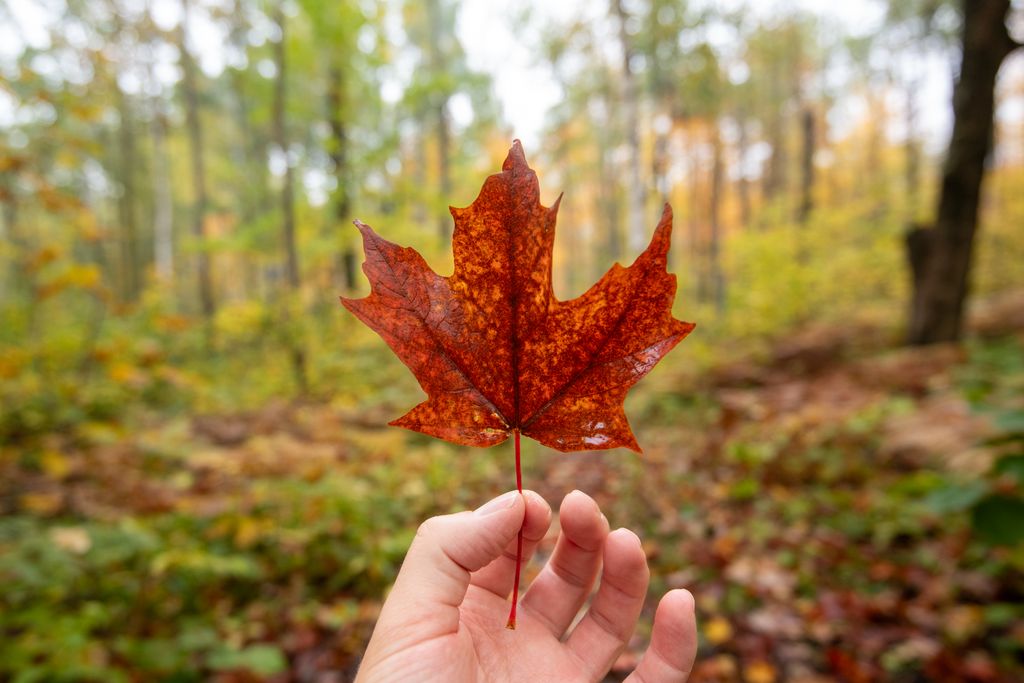
You don’t need to bring home an armload of leaves to make the walk worthwhile. Choose one that makes you stop.
Maybe it’s beautifully colored. Maybe it’s shaped differently from the others around it. Maybe half of it has been eaten by something. Maybe it’s curled, spotted, slightly battered, or decidedly unimpressive by traditional pretty-leaf standards.
Take a photograph or make a quick sketch. If collecting is permitted where you’re walking and you want to bring the leaf home, you can do that too. The important part is spending a moment actually looking at it.
Notice the overall shape first, then look closer at the veins, edges, stem, markings, and variations in color. Those little details are where a generic idea of “leaf” starts becoming this particular leaf.
Record More Than What You See
A field study doesn’t have to be limited to the object you’re studying.
What was the weather like? Was it one of those warm September days that still feels suspiciously like summer, or could you finally feel fall arriving? What sounds were around you? Birds, insects, water, wind through the trees, traffic in the distance, or absolutely nothing for once?
Pay attention to what else is growing nearby and which colors keep appearing around you. Write down something unexpected that caught your attention.
Those details help capture a place and moment rather than simply documenting an object.
That’s why the Field Notes page I created for my Leaves of Virginia study includes space for weather, colors, sounds, what caught your eye, a leaf worth remembering, and something you’re grateful for. It’s less about completing a worksheet and more about giving yourself a few prompts that make you stop and look.
Turn What You Notice Into Something
This is where the field-study idea becomes especially useful for me.
The walk doesn’t have to end when I get home.
A leaf can become a watercolor study. Its silhouette might become a motif for a seamless pattern. The colors could become a palette for another illustration. A photograph might inspire a pyrography piece months later. Several little observations from different walks could eventually turn into an entire collection.
My recent watercolor leaves are a good example. I painted them individually simply because I wanted to explore watercolor and fall leaves. Once I scanned them, though, I started seeing other possibilities. Those paintings eventually became phone wallpaper and a botanical bookmark, while the leaf study also inspired a printable coloring page called Color a Slower Season: Leaves of Virginia.
That’s one of the things I’m enjoying most about working this way. I don’t have to decide what an idea is supposed to become before I start exploring it.
Sometimes the observation comes first, and the project reveals itself later.
Make Your Own Fall Leaf Study
If you want to try this yourself, keep it simple. Go outside somewhere familiar, slow down, notice the colors around you, and choose one leaf that makes you look twice. Photograph it, sketch it, paint it, write about it, or simply record what you noticed.
You don’t need special supplies, botanical knowledge, or a perfectly curated nature journal. You certainly don’t need to turn it into a finished piece of art.
The entire exercise can simply be an excuse to spend a little more time paying attention.
And if you’d like something to take along, I created the free Wild Ridge Field Kit: Autumn Edition, Leaves of Virginia from this project. It includes my Leaf Study Field Notes, the Color a Slower Season printable coloring page, fall phone wallpaper created from my original watercolor leaves, and a printable Small Steps. Wild Spaces. botanical bookmark.
Take the Field Notes on your next walk, or just use them from your own backyard. There really isn’t a wrong way to do a field study.
Look closely. There’s always something more to see.