Would I Sell This? My Real Experience With Printify
Affiliate Disclosure: This post contains affiliate links. If you sign up or make a purchase through one of my links, I may earn a commission at no additional cost to you. I only recommend products and services I actually use or genuinely believe are worth sharing.
There is a very specific kind of trust involved in print-on-demand when you’re an artist. I can spend hours creating an illustration or surface pattern, obsess over the colors, move a leaf three pixels because apparently that is a completely reasonable use of my time, and finally upload the finished artwork to a product. From there, I hand it over to a company I’ve probably never visited, using equipment I’ve never seen, to make something with my name attached to it and send it directly to someone who bought my work.
That’s a little terrifying when you think about it.
Print-on-demand allows me to offer a much wider range of products through Wild Ridge Studio without turning my house into a warehouse. I don’t have to order 50 mugs and hope someone eventually wants them. I don’t have boxes of T-shirts stacked in a corner. I can create artwork, put it onto products that make sense for my collections, and have those products made when someone actually orders them.
But convenience isn’t enough for me. If I’m going to sell something with my artwork on it, I need to know exactly what will arrive at my customer’s door. A gorgeous digital mockup doesn’t mean much if the physical product looks like somebody made it during their lunch break and hoped nobody would notice.
So, I’ve been ordering my own products.
And I think it’s time I started talking about what actually shows up.
Welcome to “Would I Sell This?”
I’m turning my product sampling into a new series here on the blog called Would I Sell This? The premise is pretty simple: I’m going to share my actual experiences with the print-on-demand companies and products I’m using or considering for Wild Ridge Studio.
These aren’t going to be reviews based on scrolling through somebody else’s catalog or reading specifications from a product listing. I’m interested in what happens after I upload my artwork and place an order. Does the physical product resemble the mockup? Are the colors good? Is the print quality something I’m comfortable attaching my name to? Does the product itself feel worth the price I’m asking someone to pay?
And perhaps even more importantly, what happens when something goes wrong?
Because eventually something will. A package will disappear. Something will get damaged. A print won’t come out correctly. That’s simply part of selling physical products, whether you’re making everything yourself or working with a fulfillment partner. I’m not necessarily judging a company because a problem happened. I’m much more interested in what they do about it when it does.
For the first installment, we’re starting with Printify.
What I’ve Actually Ordered From Printify
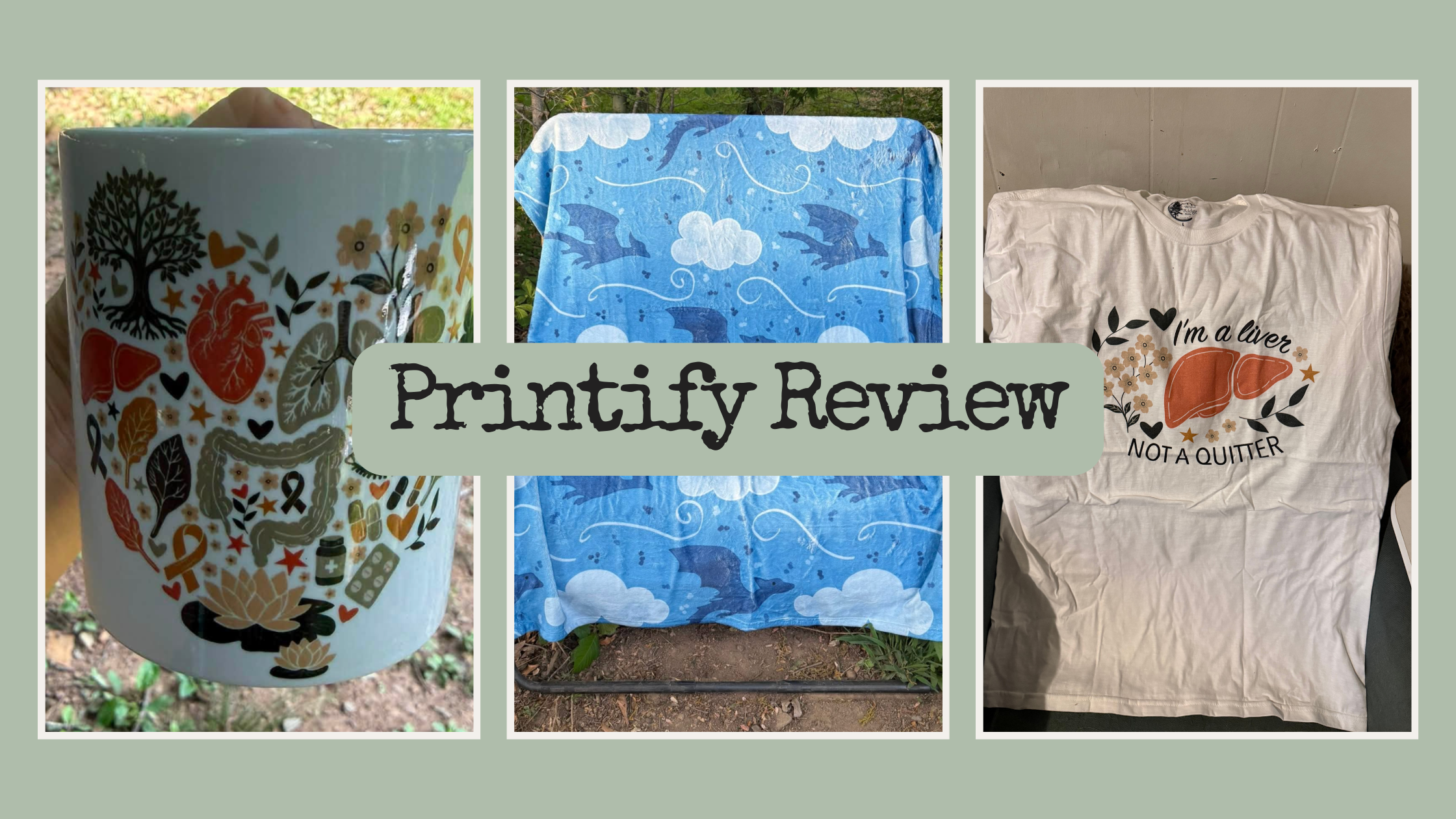
I’ve been using Printify for some of my Wild Ridge Studio products, but I didn’t just create listings, throw some mockups on my website, and cross my fingers. I’ve ordered several of the products myself because I want to see them before I confidently sell them to other people.
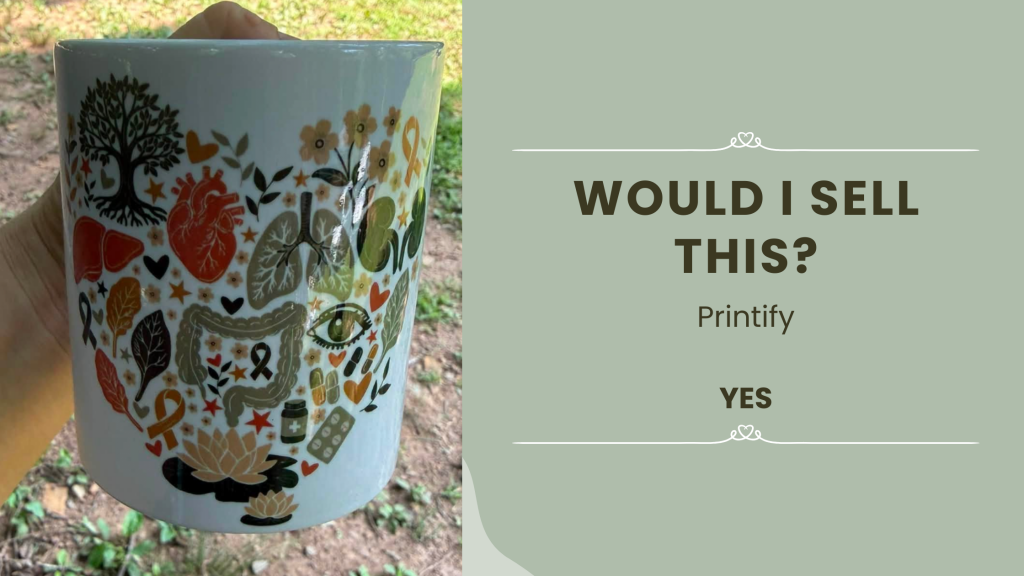
So far, I’ve personally ordered a T-shirt, a mug, and calendars.
And frankly, this is going to be a fairly uneventful review when it comes to product quality, which is exactly what I want from a print-on-demand company.
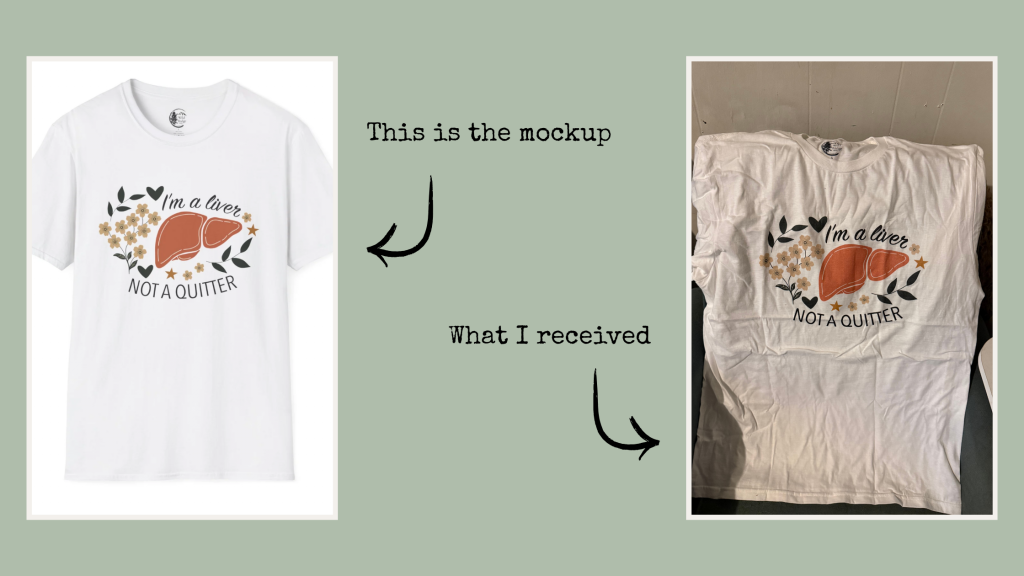
Everything I’ve sampled has arrived looking the way I expected it to look. I haven’t opened a package and wondered what happened to my artwork between my computer and the printing equipment. I haven’t received something that looked significantly different from the product mockup. I haven’t had a print-quality issue that made me uncomfortable offering the product to someone else.
That’s the standard I’m looking for.
I don’t expect every physical product to look exactly like a glowing digital image on my computer screen. Different materials reproduce artwork differently, colors can shift slightly, and printing something onto ceramic isn’t the same thing as looking at an illustration on an iPad. There are reasonable variations that come with turning digital artwork into physical products.
What matters to me is whether the finished product represents the artwork and product I thought I was ordering.
So far, my Printify samples have.
Then an Order of My Calendars Disappeared
Of course, a flawless sample order isn’t the only thing I need to know before trusting a fulfillment company with my customers.
Recently, I placed an order for one of my calendars that was being sent to a customer. The calendar was produced and shipped, but then it didn’t arrive when it should have.
This is the point where print-on-demand gets interesting.
A lost package isn’t necessarily Printify’s fault. Once a package enters the mail system, there are plenty of opportunities for it to take an unexpected vacation somewhere between the printer and the customer’s mailbox. I’ve shipped enough things over the years to know that sometimes packages go wandering.
What mattered to me was what happened when I asked for help.
I contacted Printify because the calendar hadn’t arrived. I initially went through their AI support system, which is pretty standard these days, but the bot didn’t keep me trapped in an endless circle of canned answers that didn’t address my problem. When the situation needed an actual person, I was transferred to a human support representative.
They investigated the order, and after looking into what happened, Printify issued a replacement print at no additional charge.
As I’m writing this, the replacement calendar is expected to ship Wednesday, August 12, with an expected delivery date of Wednesday, August 19. I’ll update this post once it arrives because I want these reviews to reflect the entire experience, not just the convenient parts.
But from a customer-service standpoint, this is exactly what I needed them to do.
Problems Aren’t Automatically Deal Breakers
This experience reinforced something I’ve been thinking about as I’ve expanded the product side of Wild Ridge Studio: I don’t expect a fulfillment company to operate without ever having a problem.
That’s unrealistic.
What I need is a company that has a reasonable process for fixing problems when they happen.
If a package disappears and the company investigates it and replaces it, I can work with that. If something arrives damaged and the company responds appropriately, I can work with that too. Those situations are frustrating, but they’re solvable.
The bigger concern for me would be discovering that I can’t get help when something goes wrong, or that the finished product isn’t reasonably represented by the mockup I used when deciding to sell it. That’s where a fulfillment problem stops being an inconvenience and starts becoming a business problem.
Because my customer doesn’t really care who printed the product, they bought it from me.
If something arrives looking terrible, they’re not thinking about my fulfillment partner or which printing facility produced it. They’re looking at a Wild Ridge Studio product. That means the quality of the companies I choose to work with becomes part of the quality of my own business.
That’s why I’m sampling things in the first place.
The Mockup Isn’t the Product
This may end up becoming one of the biggest themes of this series because it’s something I think artists using print-on-demand need to pay attention to.
Mockups are marketing tools.
They’re incredibly useful marketing tools, and I use them throughout my own shop because customers need to be able to visualize what artwork will look like on a mug, shirt, calendar, blanket, or whatever else I’ve decided needs woodland creatures and botanical illustrations on it.
But a mockup isn’t sitting on someone’s kitchen table. The actual product is.
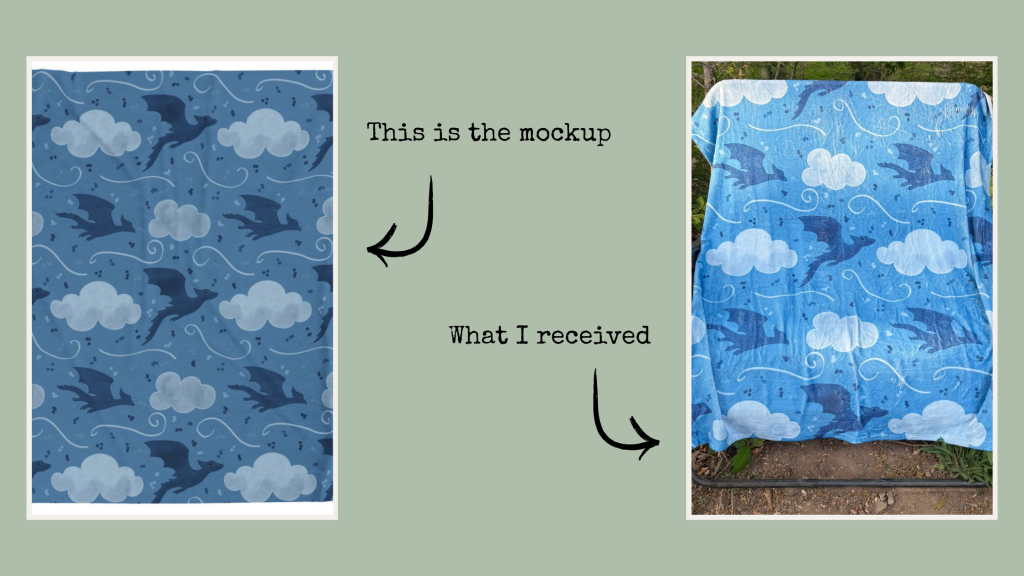
That’s why I want to compare the two whenever possible throughout this series. I’ll show what I was shown when creating the product and what actually arrived at my house. Sometimes those comparisons will probably be incredibly boring.
I hope most of them are.
“Boring” means the mug looked like the mug.
So, Would I Sell Printify Products?
Based on everything I’ve personally tested so far, yes.
I’ve ordered a T-shirt, mug, and calendars, and the products I’ve received have met my expectations. More importantly, I’ve now experienced what happens when an order doesn’t go according to plan. When the calendar shipment failed to arrive, I was able to reach support, the situation was investigated, and a replacement was issued without an additional charge.
That gives me more confidence than a perfect sample order ever could.
It doesn’t mean I’m declaring every product available through Printify perfect. Print-on-demand marketplaces can involve different products, printing methods, and print providers, and I’m only going to speak about the things I’ve actually experienced. If I haven’t ordered it, I’m not going to tell you it’s fantastic because a mockup looked pretty.
Which is the point of why I’m creating this series.
The Wild Ridge Test
In the future, every product or provider I review is going to have to answer one final question:
Would I sell this?
Not, “Is this technically acceptable?”
Not, “Could somebody probably sell this?”
Not even, “Can I make a decent profit margin on this?”
Would I be comfortable putting my artwork on it, listing it in my shop, taking someone’s money for it, and having that product arrive at their house with Wild Ridge Studio attached to the experience?
For the Printify products I’ve tested so far, the answer is yes.
The T-shirt passed. The mug passed. The calendars passed. And when one calendar went missing somewhere along its journey, their customer service passed its first real test too.
I’ll update this post once the replacement calendar reaches its destination, and I’ll keep testing the products I’m considering adding to Wild Ridge Studio. Some will probably earn an enthusiastic yes. Some might get a “yes, but you should know this first.”
And inevitably, I’m pretty sure we’re going to encounter a no.
Those might be the most useful reviews of all.
Would I Sell This? Printify verdict: YES.