How One Oak Illustration Became More Than One Thing
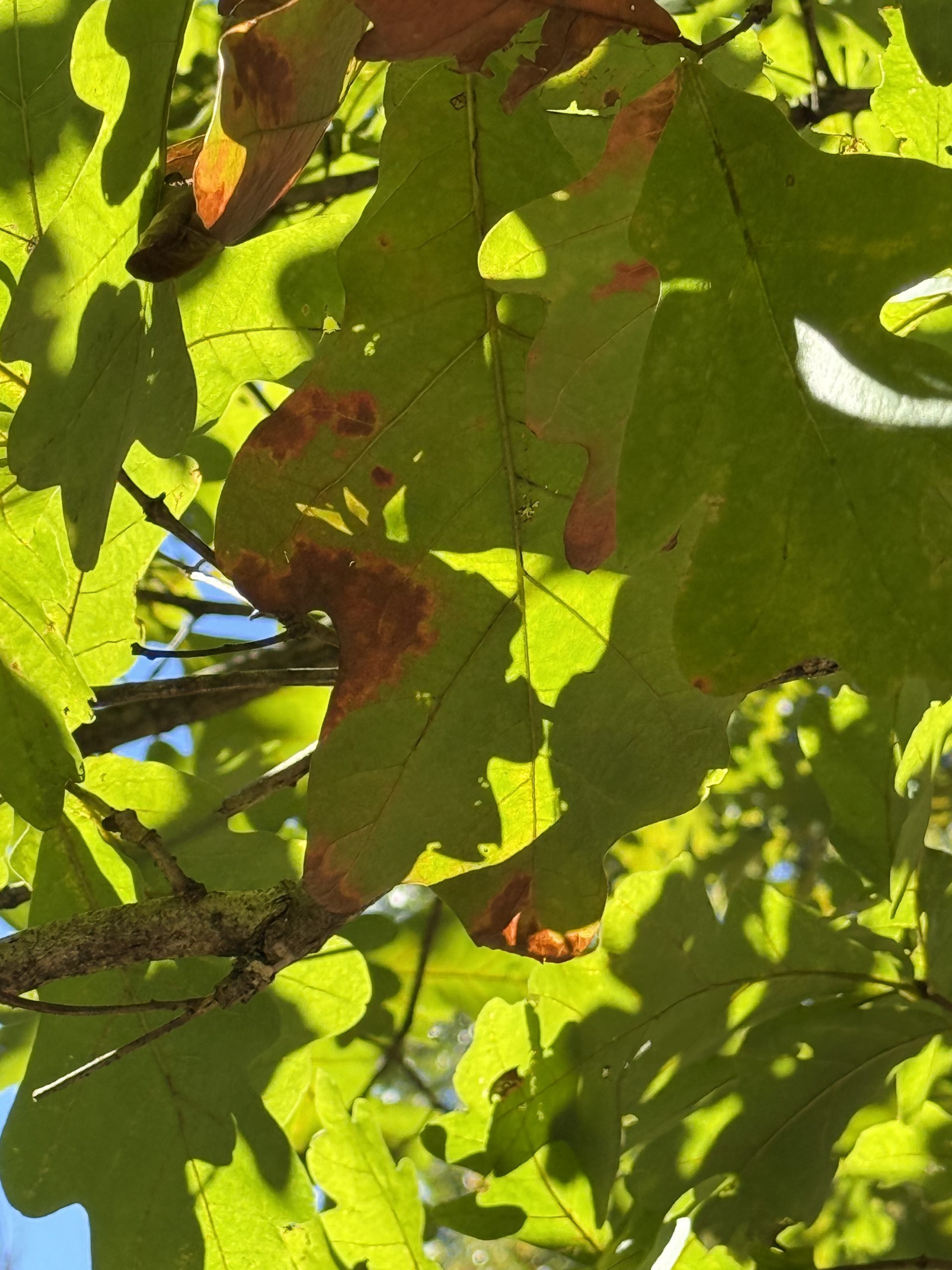
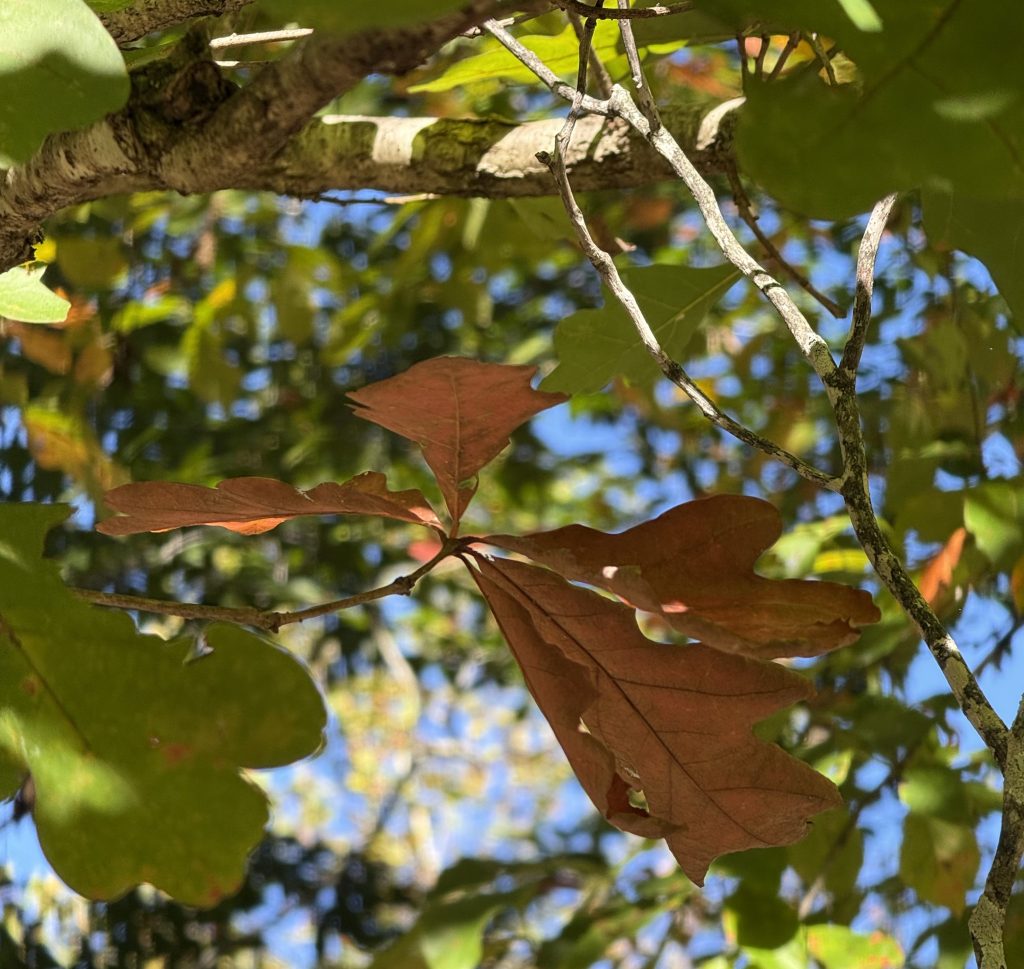
I spend a fair amount of time collecting ideas while I’m outside. Sometimes that means taking photographs of plants, trees, and interesting things growing along the trail. Other times, I come home with a particular shape or color combination stuck in my head, knowing I’ll eventually want to do something with it.
Oak trees have been a recurring subject in my artwork. I love the different shapes of their leaves, the textures of their bark, and the small details of their acorns. There’s plenty to explore without having to look particularly far.
When I began working on my Acorns + Oaks illustration, I wasn’t sitting down with a list of products I intended to make. I wanted to spend some time painting something that interested me.
That was the starting point.
It Started With Watercolor
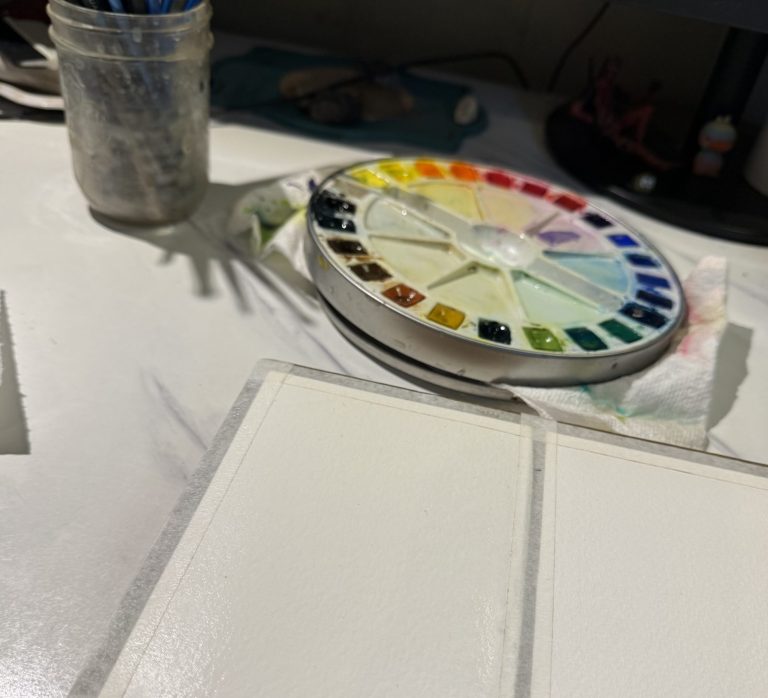
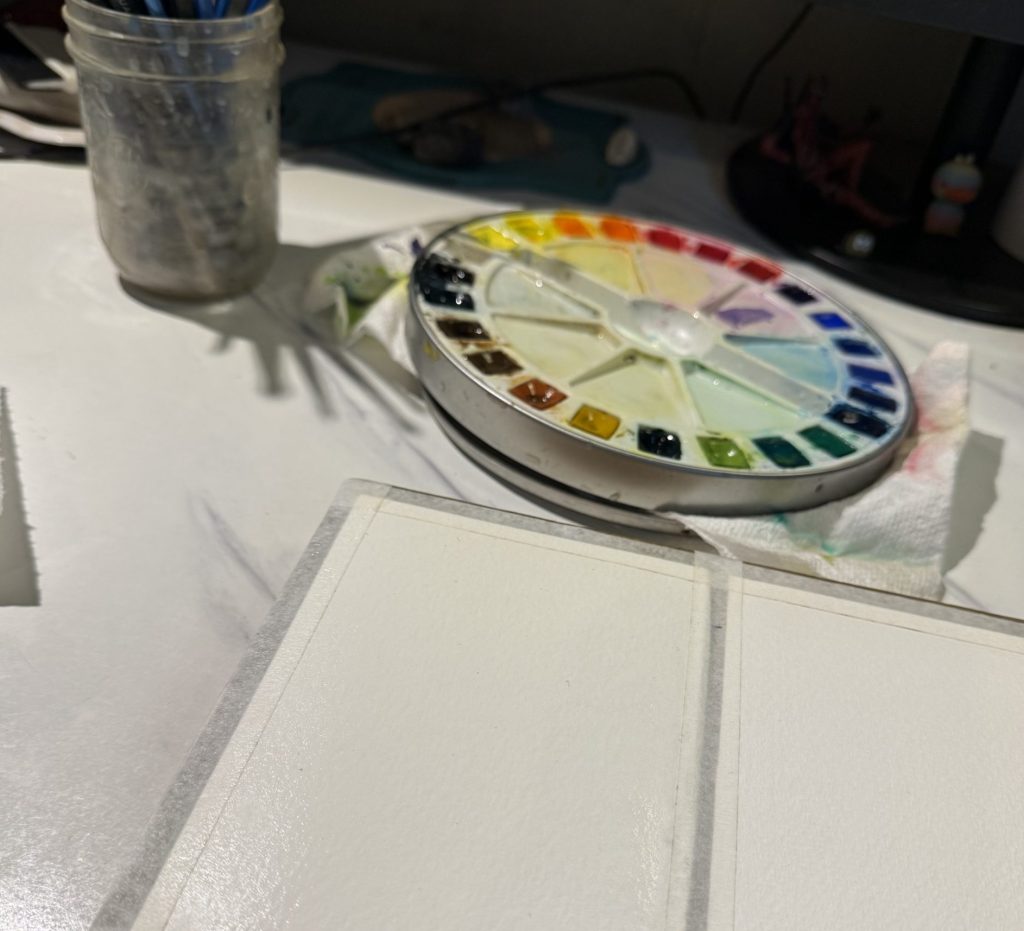
The original artwork began as a watercolor study of oak leaves and acorns, inspired by the things I notice while spending time outdoors. It became part of my Field Study work, where observation and curiosity come before deciding what something might eventually become.
I enjoy working this way because it gives me room to explore without immediately thinking about selling something. I can concentrate on the shapes, colors, and details that interest me rather than worrying about whether a particular illustration will work on a mug or look good printed on fabric.
There’s a difference between creating artwork because you’re interested in the subject and creating artwork to fill a product catalog. I do both, but I don’t want the second to completely take over the first.
Once the watercolor was finished, I scanned it so I could work with the illustration digitally. That’s a fairly normal part of my process now, whether I’m preparing a fine art print or exploring other applications.
And once the artwork was on my computer, I started noticing what else I could do with it.
The First Opportunity Wasn’t a Product
One of the first things I did with the oak artwork was prepare it for a fine art challenge.
I submitted a set of three related pieces to the 2026 Pairs and Sets Fine Art Challenge. Working with the illustrations as a collection encouraged me to think about how the individual pieces related to one another, rather than treating each one as something entirely separate.
I like creative challenges for that reason. They give me a reason to finish work, experiment with presentation, and sometimes revisit artwork I might otherwise leave sitting in a folder.
Entering a challenge doesn’t guarantee anything, of course. It doesn’t mean the artwork will sell, receive recognition, or lead to another opportunity. But it gives the work somewhere to go, and the experience of preparing a submission can be useful in its own right.
The artwork also remained available for other possibilities.
From Watercolor to Surface Pattern Design
I’ve been developing my surface pattern design skills, and one of the things I enjoy about the process is discovering how illustrations created for one purpose can behave differently when arranged into a repeating design.
For the oak artwork, I brought the scanned illustrations into Adobe Illustrator and converted the elements into vector artwork. From there, I could separate the individual motifs, move them around, change their arrangement, and experiment with how they might repeat.
This isn’t always a quick process. Watercolor illustrations have their own textures and irregularities, and translating them into something suitable for surface pattern design requires decisions about what to preserve and what to simplify.
I don’t want every illustration to lose the qualities that made me like it in the first place simply because I’m adapting it for another use.
Once I had the motifs prepared, I could begin experimenting with a seamless repeat. Oak leaves and acorns, originally arranged as a watercolor composition, became individual elements I could use to build an entirely different design.
The finished pattern could then be prepared for fabric or wallpaper through Spoonflower.
I hadn’t painted a new collection of oak leaves to make that happen. I was working with artwork I’d already created, using a different set of skills to give it another application.
And Then It Became a Book Cover
When I started thinking about the cover for The Resourceful Artist, I wanted something that felt connected to the way I actually work.
The book is about recognizing opportunities in existing artwork, skills, and knowledge. Creating an entirely new illustration for the cover was an option, but I already had artwork that suited the subject.
The oak illustration had started as a watercolor study, become part of a fine art project, and provided motifs for a surface pattern. Now it could serve another purpose.
I chose to use the oak artwork on the cover.
I like that the illustration has a history beyond the book itself. It isn’t simply decoration selected because it looks nice beside the title. It’s an example of the creative process I’m writing about.
One original piece of artwork has given me several different directions to explore, each requiring its own decisions and preparation.
And I still have the original watercolor.
Not Every Illustration Needs Five Products
Chapter 4 of The Resourceful Artist is titled “One Artwork, Five Possibilities,” but I want to be clear about something: I’m not suggesting that every piece of artwork should become five products.
Sometimes a painting is simply a painting. Sometimes I create something because I want to practice a technique, explore a subject, or enjoy a few hours making art without thinking about business.
I have plenty of artwork that hasn’t become anything beyond the original piece, and I don’t consider that a missed opportunity.
The point of the exercise is to recognize that possibilities exist.
An illustration might become a print, a greeting card, a pattern, a digital resource, or part of a larger collection. The artist gets to decide whether any of those possibilities are worth pursuing.
Each application also involves work. A seamless pattern needs to repeat properly. A greeting card needs a suitable layout. A fine art print requires attention to color and reproduction. Putting artwork on a product doesn’t automatically mean people will want to buy it.
I consider the potential audience, the production requirements, the cost, and whether I actually want to spend time developing the idea.
Some opportunities make sense. Others can remain ideas.
Making Better Use of What I’ve Already Created
One of the biggest changes in my creative business has been learning to revisit my existing artwork before assuming I need to make something new.
I have years of pyrography designs, illustrations, patterns, and experiments behind me. Some of those pieces were created for specific commissions or projects. Others came from trying a technique or following an interesting idea.
Not all of them are suitable for another application, but many are worth revisiting.
Sometimes the opportunity is obvious. Other times I need to develop a new skill before I can do anything useful with the artwork.
That’s been part of the appeal of surface pattern design for me. It has given me another way to work with illustrations while allowing me to keep exploring watercolor, pyrography, and other creative interests.
I don’t have to abandon one discipline to make room for another.
The oak illustration is a particularly good example because I can trace its journey from something I observed outdoors to a painting, a collection, a repeat pattern, and eventually the cover of a book.
None of those applications required me to stop being interested in oak trees or change the reason I wanted to paint them in the first place.
They simply gave the artwork different places to go.
And somewhere along the way, a watercolor study of leaves and acorns became a rather fitting illustration for the creative-business philosophy I’ve spent years developing.
About The Resourceful Artist
This story is one of the examples in Chapter 4, “One Artwork, Five Possibilities,” of my upcoming book, The Resourceful Artist: Make More of What You Create. Build a Business That Fits Your Life.
The book explores how artists can recognize opportunities in the artwork, skills, and knowledge they already have, while making thoughtful decisions about which opportunities fit their interests, goals, and lives.
The paperback and Kindle editions are planned for release in late November 2026.