The Creative Business I Never Planned to Build
I didn’t set out to build a creative business that involved original artwork, surface pattern design, teaching, digital products, and memberships. In fact, if you’d asked me twenty years ago what I thought I’d be doing today, I’m fairly certain none of those things would have been on my list.
I was simply interested in making things.
In 2004, I was experimenting with macramé. That led me to wooden beads, which led me to a wood-burning tool, and before long, I was decorating wooden plaques with burned designs. I wasn’t following a business plan or researching profitable niches. I was curious about a technique and wanted to see what I could do with it.
Within a few weeks, people started asking whether I could make things for them. Coworkers wanted pieces, friends told other friends, and suddenly I was taking commissions for something I’d only recently learned to do.
It was a rather unexpected introduction to selling my artwork.
One Thing Led to Another
By 2008, I was selling handmade products, including crochet and pyrography. I even spent about a year making soap and bath products, because apparently having two creative interests wasn’t quite enough.
Some of those experiments lasted longer than others. Life had a considerable say in what I could realistically pursue, particularly while managing my son’s serious medical needs. There were periods when creative work had to fit into whatever time and energy remained after everything else.
I kept making things, though. Sometimes that meant crocheting blankets, sometimes wood-burning, and sometimes trying something entirely different.
In 2011, crocheted animal hats became an unexpectedly successful part of my business. For several weeks, I was making three to five hats a day. Each took roughly an hour, and the demand was strong enough that I used the income to pay off debt.
It was a good reminder that opportunities don’t always arrive in the form we expect. I enjoyed making those hats, and for that particular period of my life, they made financial sense.
But I also learned that just because something sells well doesn’t mean I want to keep producing it indefinitely.
When I Started Focusing on One Thing
Eventually, I narrowed my creative work primarily to pyrography. By 2020, I’d stopped crocheting and was concentrating on wood-burning, selling original pieces through markets, retail shops, and my website.
There was plenty I enjoyed about that work. Pyrography is slow, deliberate, and wonderfully absorbing. I liked the process of developing an image through heat and careful mark-making, and I loved seeing people connect with the finished artwork.
The problem was that every sale of an original piece meant I had to make another one.
There were stretches when I spent eight hours a day burning wood, trying to keep up with production. Between commissions, markets, and retail inventory, my creative work had begun to resemble a manufacturing schedule.
I’d built a business around something I loved, but I was spending so much time producing that I had less room to explore anything else. And I was getting tired of it.
I didn’t want to stop being an artist. I wanted to find a different way to work.
Finding Other Possibilities in the Work
Teaching pyrography was one of the first ways I began thinking beyond selling finished pieces.
When I was learning, many of the available resources were written instructions, photographs, and patterns. I knew how frustrating it could be to piece together information when you were trying to learn something new, so I started creating the kinds of resources I would have appreciated having myself.
That eventually included written lessons, patterns, and educational materials. My free Pyrography 101 introduction became a way for people to discover the technique and find my work.
Teaching gave me another way to use knowledge I’d already developed through years of practice. I didn’t have to stop making original artwork to share what I’d learned from making it.
Later, I began exploring surface pattern design and ways to adapt my artwork for different products. I learned more about working digitally, creating repeats, and preparing designs for fabric, wallpaper, and other applications.
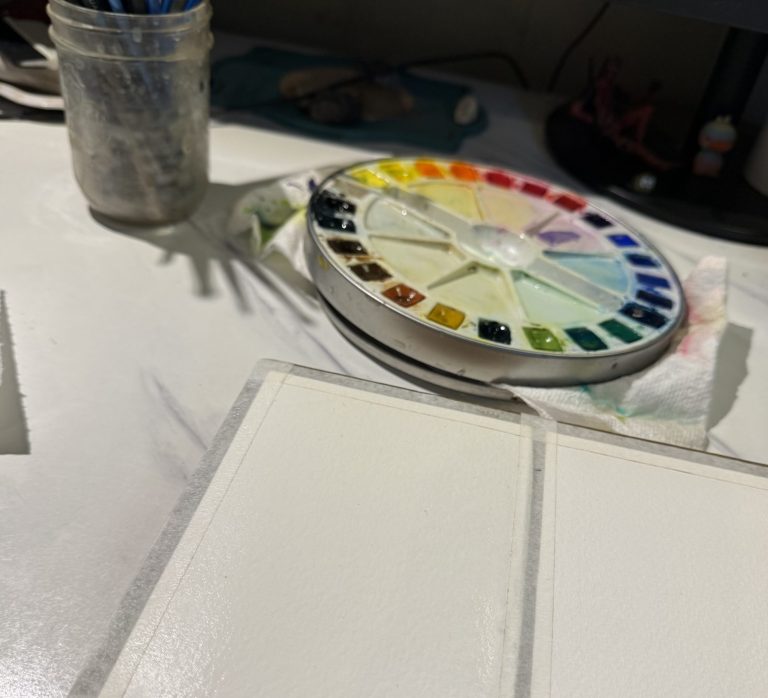
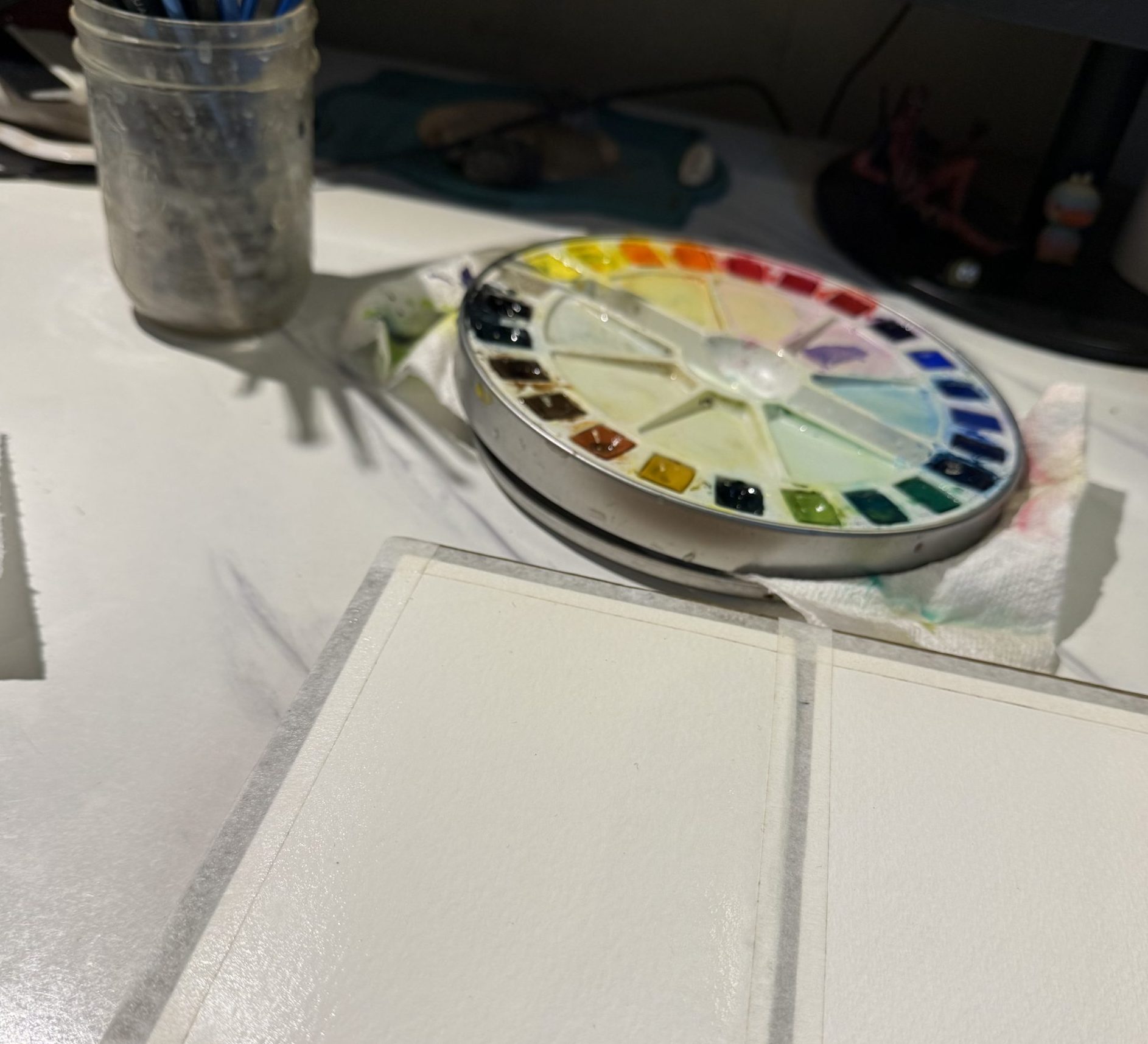
I also returned to watercolor, which gave me more freedom to experiment without worrying about whether every piece had to become a finished product.
The interesting part was discovering how these different interests could work together.
A watercolor illustration might become a fine art print, a greeting card, or part of a surface pattern collection. Artwork originally created for one purpose could be revisited months later and find another use.
I wasn’t necessarily creating more artwork. I was learning to see more possibilities in what I’d already made.
The Business Looks Different Now
Today, my creative work includes several things that would have seemed unrelated when I first picked up that wood-burning tool.
Through Wild Ridge Studio, I create artwork and products inspired largely by the natural world. I work with watercolor, pyrography, digital illustration, and surface pattern design. I also develop educational resources and workshops through Wild Ridge Learning, where I help other artists explore opportunities in their own creative work.
Some parts of my business involve physical products. Others involve digital design, teaching, or knowledge sharing. I still experiment, and I still change my mind about things.
What has changed is how I evaluate an opportunity.
I no longer assume that every promising idea deserves a place in my business. I’ve learned to consider how much time something requires, whether I actually enjoy the work involved, and whether it makes sense alongside everything else happening in my life.
I’ve also become more interested in using the resources I already have rather than constantly creating something new simply because that’s what we’re often told artists should do.
There are plenty of unfinished ideas, older illustrations, and skills I’ve developed over the years that still have potential. Some will eventually become something. Others can stay exactly as they are.
I’m quite comfortable with that.
Looking Back at the Winding Route
When I think about the different directions my creative business has taken, I can see how one experience often made the next possible.
Learning pyrography led to commissions. Selling handmade work taught me about customers, pricing, and production. Markets and retail shops taught me about inventory and presentation. Teaching helped me recognize the value of my knowledge. Exploring digital design opened opportunities to use artwork in ways I hadn’t previously considered.
None of those experiences was wasted simply because I eventually changed direction.
I sometimes wonder what my business would look like if I’d decided early on to choose one creative discipline and stick with it. I probably would have become very good at that one thing, but I would have missed a great deal of what I enjoy doing now.
The business I have today wasn’t something I carefully mapped out twenty years ago. It developed through curiosity, necessity, experimentation, and the occasional decision to stop doing something that no longer worked.
And I suspect it will look different again in another five years.
That’s part of what led me to write The Resourceful Artist.
The book brings together the lessons I’ve learned from building a creative business that has never followed a particularly straight line. It explores how artists can recognize opportunities in their existing artwork, skills, and experience while deciding which possibilities are worth pursuing.
The goal, at least for me, has never been to build the biggest creative business possible.
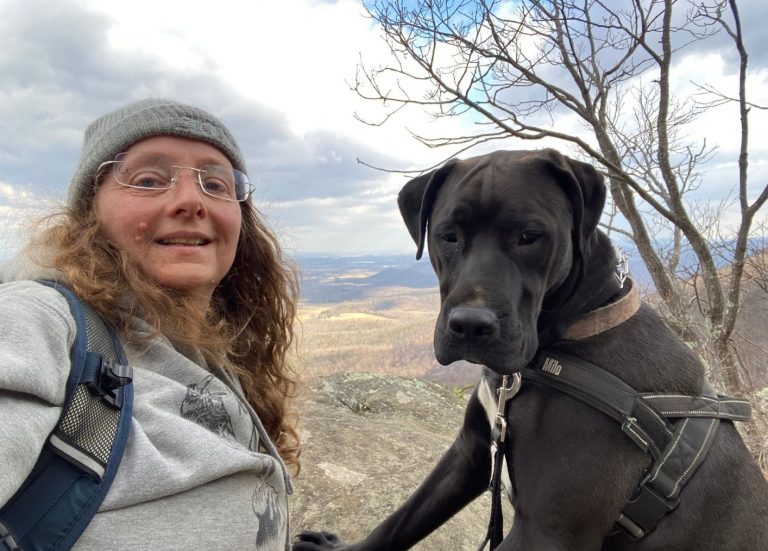
I want to keep making things, keep learning, earn a living from work I care about, and still have time to go wandering through the woods with my dogs.
That’s a business worth figuring out.
About the Book
The Resourceful Artist: Make More of What You Create. Build a Business That Fits Your Life. is coming in paperback and Kindle in late November 2026.