7 Slow Creative Things to Do This Fall
Fall has a way of making me want to make things. Maybe it’s the change in temperature, the leaves finally starting to shift from green into all those rusty reds and yellows, or simply being able to spend more time outside without feeling like I’m being cooked alive. Whatever it is, this time of year always seems to pull me toward slower creative projects.
And by slower, I don’t mean spending three weeks creating an elaborate autumn masterpiece. I mean the kind of creativity that fits into an afternoon, comes home with you after a walk, or gives you something to do while you’re drinking coffee and listening to music. Something that doesn’t need to become a product, a finished collection, or even something particularly good.
That last part may be the most important.
Here are seven simple ways to add a little more creativity to your fall without turning any of them into another thing you have to accomplish.
1. Take a Walk Without Worrying About the Miles
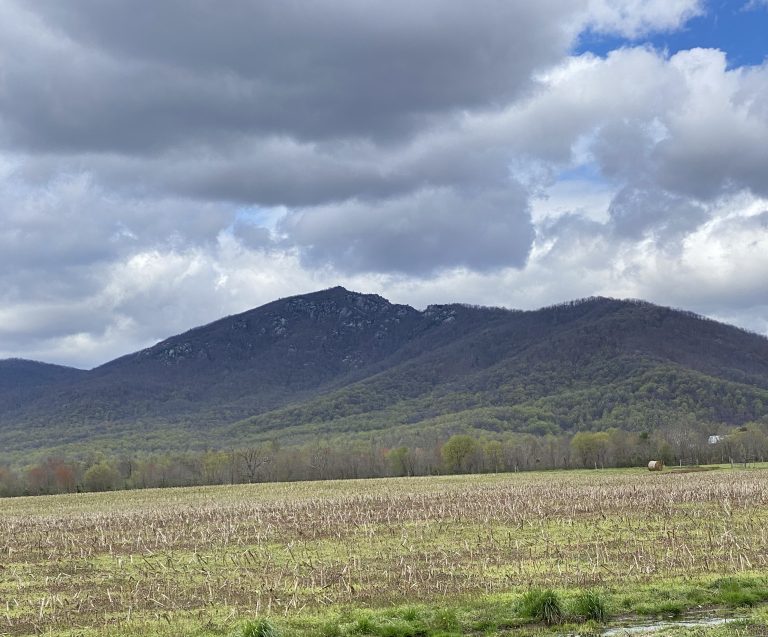
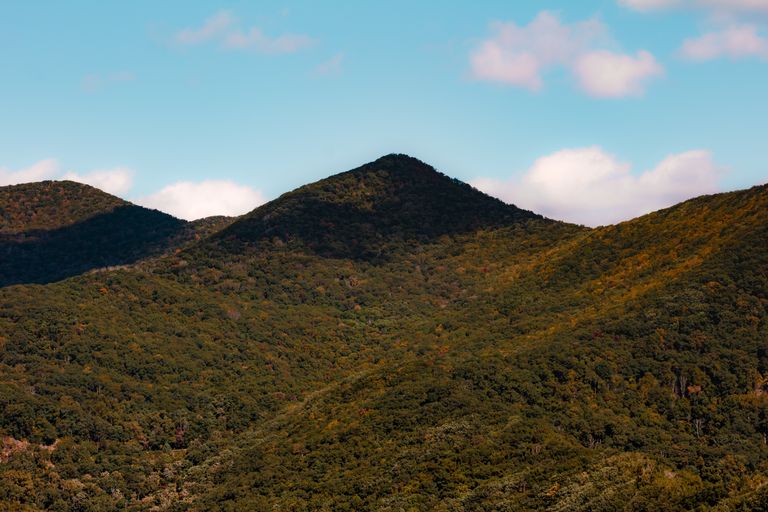
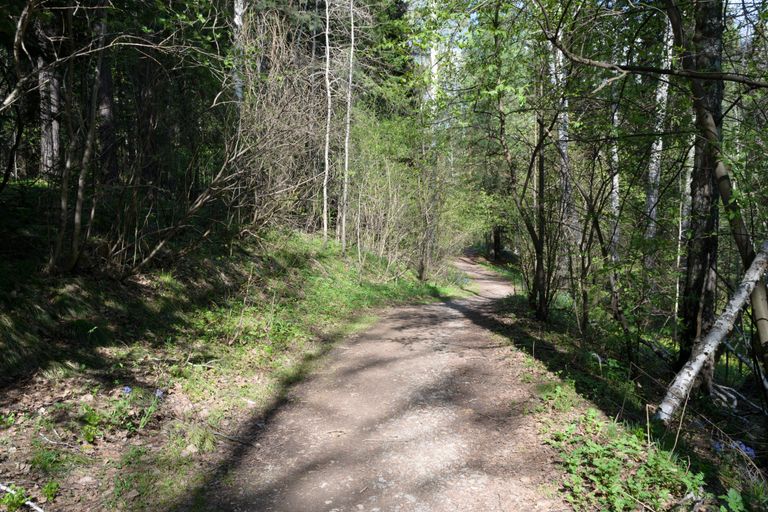
I love hiking, but not every walk needs to have a mileage goal attached to it. Every once in a while, go somewhere with the intention of looking instead of getting somewhere. That can be a trail, a park, your neighborhood, or your own backyard. Walk slowly enough to notice what is changing around you.
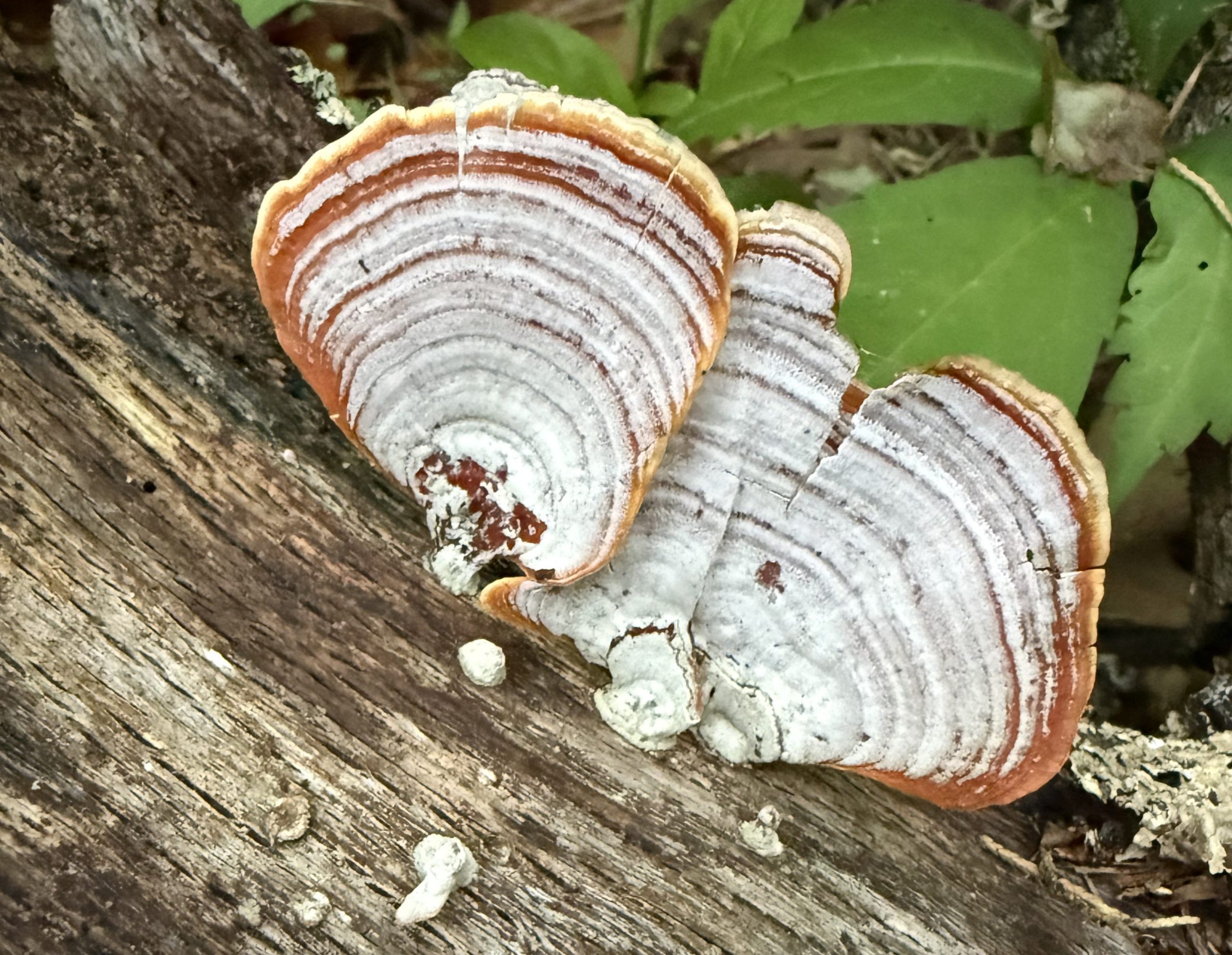
Look at the colors. Pay attention to what has fallen onto the ground. Notice seed pods, mushrooms, bark, feathers, acorns, berries, weeds, and whatever else is hanging around.
Take pictures of the things that catch your attention, even if you have absolutely no idea what you’re going to do with those pictures later.
Some of my favorite creative ideas start this way. I wasn’t necessarily looking for an art project. Something just made me stop.
2. Make a One-Page Leaf Study
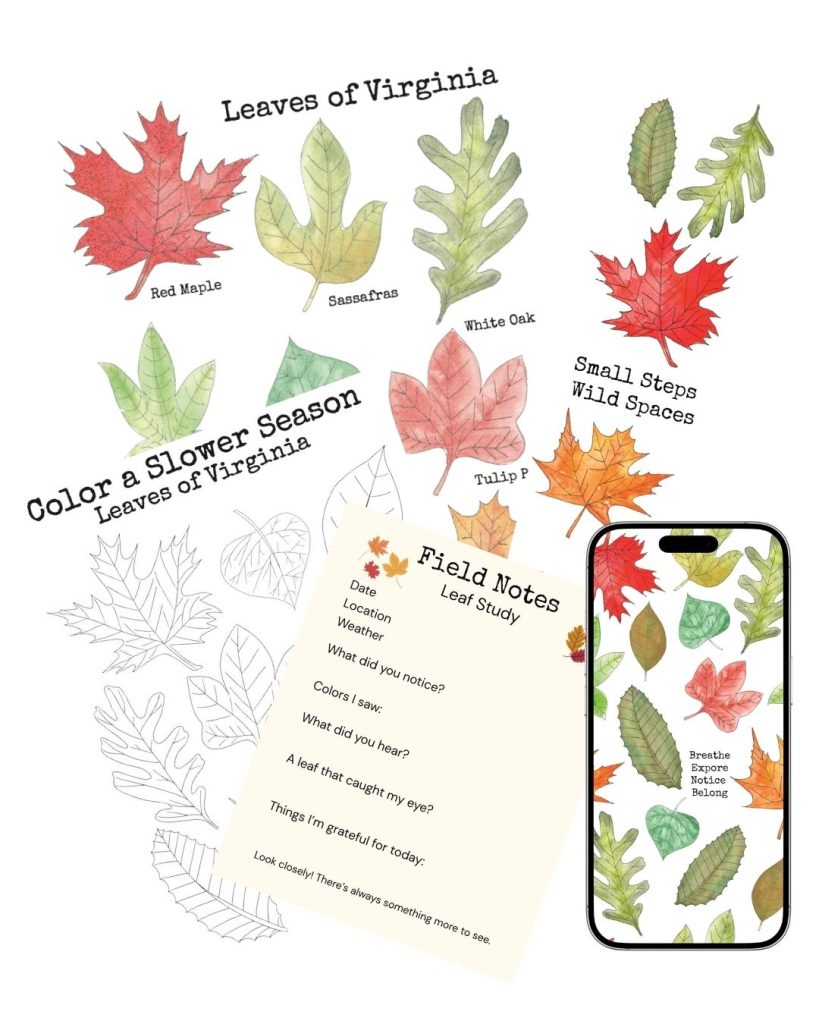
This is essentially how my recent Leaves of Virginia watercolor project began. I wanted to play with watercolor, and fall leaves gave me an easy subject. I wasn’t trying to create detailed botanical illustrations or document specific species. I was interested in the different shapes and in playing with greens, yellows, oranges, reds, and browns.
You can make your own leaf study just as simply. Choose one leaf or several different shapes and draw them, paint them, trace them, photograph them, or write a few observations about them. Look at the veins, edges, colors, markings, and imperfections rather than worrying about creating a perfect representation.
If drawing isn’t your thing, don’t draw.
Make color swatches. Take photographs. Write about what you see. Press the leaf between the pages of a heavy book if you’ve collected it somewhere that’s allowed.
The study is really just an excuse to look closer.
3. Color Something Without Making It Productive
There is something wonderfully low-stakes about coloring a picture someone else has already drawn. You don’t have to figure out the composition. You don’t need to decide what to draw. You can grab colored pencils, markers, crayons, watercolor, or whatever happens to be nearby and start adding color.
And you are allowed to do this without turning it into content.
I know. Revolutionary.
Put on an album, audiobook, or podcast, make something warm to drink, and spend half an hour coloring because you feel like it.
I created a Leaves of Virginia coloring page from my recent leaf study for exactly this kind of afternoon. It’s called Color a Slower Season, and it’s included in my free Wild Ridge Field Kit along with several other pieces from the project.
4. Build a Color Palette From Something You Find Outside
One of the easiest ways to turn a walk into creative inspiration is to start looking for color combinations.
Fall makes this especially interesting because the landscape doesn’t instantly transform from green summer into perfect orange autumn. For a while, everything overlaps.
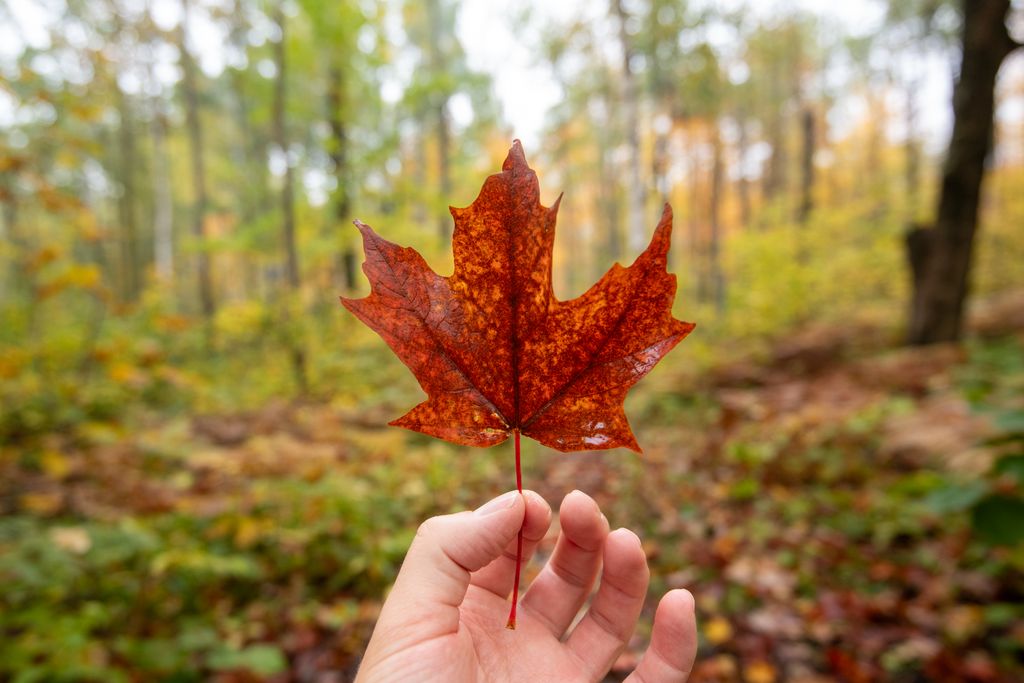
You might find a deep red leaf surrounded by mossy greens. Yellow leaves land against gray rocks. Rusty orange sits next to dark brown bark. A fading leaf might have green, yellow, red, and brown happening on the same surface.
Take a photograph and pull four or five colors from it when you get home.
You can paint the colors into a sketchbook, create a digital palette, use them in your next drawing, or simply save them for later.
I do this kind of thing because I never really know where an observation is going to end up. A color combination I notice on a walk might eventually become part of a seamless pattern, illustration, watercolor, or pyrography piece.
Nothing says you have to use it immediately.
You’re just collecting possibilities.
5. Start a Seasonal Field Notes Page
You do not need a beautifully illustrated nature journal filled with perfect handwriting and scientifically accurate drawings to record what you notice outside.
A piece of paper works.
Write down the date and weather. Record the colors you’re seeing. Make a note about what you hear. Write down something unexpected that caught your attention.
Maybe you notice the birds have gotten louder. Maybe the morning suddenly smells different. Maybe you find the first properly red leaf of the season or realize that one tree along your usual route is changing faster than everything around it.
Those small observations create a record of the season that photographs alone don’t always capture.
I made a Leaf Study Field Notes page for the first Wild Ridge Field Kit with prompts for the weather, colors, sounds, something that caught your eye, a leaf worth remembering, and something you’re grateful for. The point isn’t to complete every box correctly. It’s simply to give you a reason to stop and notice what’s there.
6. Collect Inspiration Without Deciding What It’s For
This might be my favorite one. You are allowed to collect ideas without immediately assigning them jobs.
Take the photograph. Save the leaf shape. Sketch the mushroom. Write down the phrase that popped into your head halfway through a walk. Photograph the strange pattern in some tree bark. Save the color combination you liked.
You don’t have to immediately decide that it will become Pattern Collection No. 47.
I’ve been enjoying letting my different creative practices overlap more instead of deciding beforehand whether an idea belongs to watercolor, surface pattern design, or pyrography.
My watercolor leaves are a good example. I painted them because I wanted to paint leaves. Once I scanned them, they became digital motifs. Those motifs became phone wallpaper and a bookmark, while the larger project inspired a coloring page and Field Notes.
The idea came first.
The uses showed up later.
I want more of my creative work to happen that way.
7. Make Something From What You Noticed
Eventually, take one thing you’ve collected and do something with it.
Not everything. One thing.
Paint one of the leaves you photographed. Draw the mushroom. Turn your fall color palette into a little abstract painting. Make a collage from your photographs. Burn a leaf onto a scrap of wood. Create a repeating pattern from a few sketches.
Or do something completely unrelated that was somehow sparked by the walk.
This is where spending time outside and spending time in the studio start feeding each other for me. I don’t necessarily go hiking because I need content or because I’m hunting for my next collection idea. I go because I like being outside.
But inevitably, some of it follows me home.
And when I sit down to make something later, those colors, shapes, places, and observations have a way of showing up.
Creativity Doesn’t Have to Earn Its Keep
I think this is something I’m reminding myself of as much as anyone else.
Not everything we create has to become something.
You can paint a leaf and never scan it. You can fill out a Field Notes page and never share it. You can color something and stick it in a drawer. You can take fifty photographs on a walk and discover that forty-seven of them aren’t particularly interesting.
The time wasn’t wasted.
Sometimes creativity can simply be part of how you experience a season.
And if you’d like somewhere to begin this fall, I’ve put together the free Wild Ridge Field Kit: Autumn Edition, Leaves of Virginia. It grew out of my own watercolor leaf study and includes Color a Slower Season, Leaf Study Field Notes, autumn phone wallpaper created from my original watercolor leaves, and a printable Small Steps. Wild Spaces. bookmark.
Pick one piece. Take it outside or stay home with your coffee. There are no rules here.
Just make something, notice something, or give yourself a little time to do both.