Would I Sell This? My Experience Testing a Printonic Gift Set
When I started expanding Wild Ridge Studio’s product line, gift sets seemed like a natural addition. I already create artwork for mugs, paper goods, and other products, so the idea of combining coordinating pieces into a ready-to-give package made sense. Print-on-demand also means I don’t have to keep shelves full of inventory or spend my afternoons packing boxes when I’d rather be making art.
There is a catch, though. When another company manufactures and ships something directly to my customer, I’m trusting that company with the final part of the Wild Ridge Studio experience. I can create the artwork, carefully prepare the files, and make sure everything looks right on my end, but ultimately I don’t get to inspect the product before it lands on someone’s doorstep.
That’s why I order samples.
This review is part of my Would I Sell This? series, where I’m sharing what happens when I take my artwork off the screen and put it onto actual print-on-demand products. I’m looking at the product I was shown, what actually arrived, the quality of the printing, the customer-service experience when something goes wrong, and ultimately whether I would feel comfortable selling the finished product through Wild Ridge Studio.
For this test, I ordered a gift set from Printonic. Unfortunately, after receiving the original order, contacting customer service, and receiving a reprint, I’ve decided not to move forward with Printonic gift sets at this time.
Why I Ordered a Printonic Gift Set
Gift sets caught my attention because they’re a great fit for the kind of collections I create. Instead of someone buying a single mug, I could take one of my surface patterns and create a coordinated gift around it. From a shop perspective, it offered a way to turn one collection into something that felt a little more special without requiring me to purchase and assemble inventory myself.
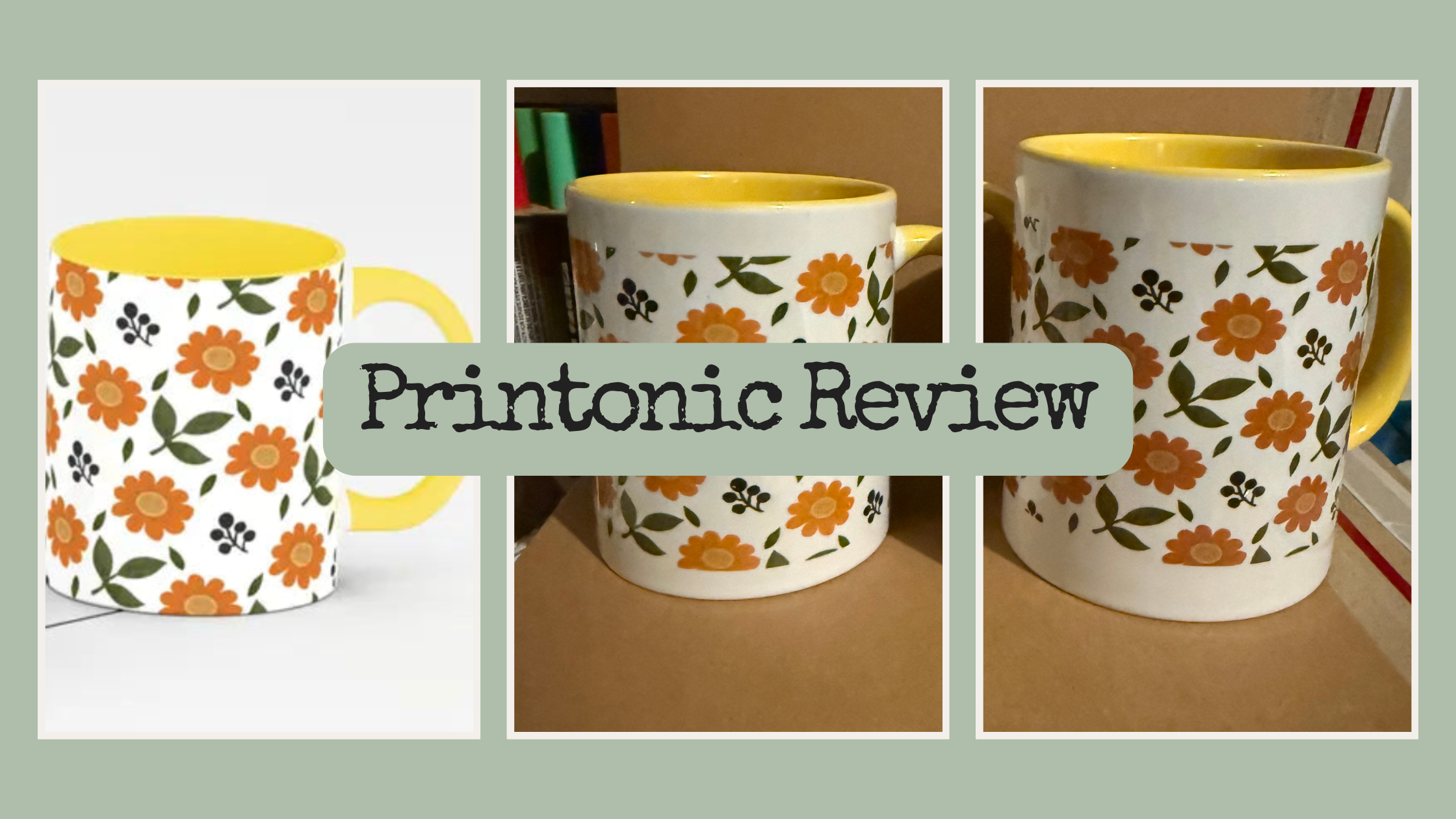
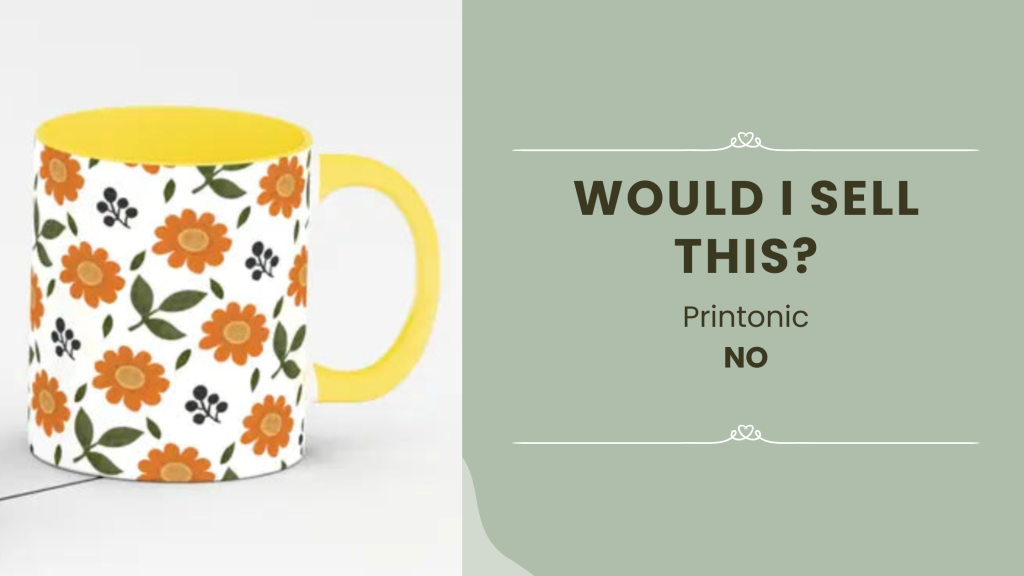
Printonic’s mockups were also appealing. For the set I tested, my orange floral pattern was shown on a yellow-accent mug with the artwork covering almost the entire printable exterior. The same pattern was applied to the other elements of the gift set, creating the coordinated presentation I had envisioned.
The mug was especially important to me because surface patterns are designed to work across a product. The scale, repetition, and amount of coverage all contribute to how the finished design looks. This wasn’t simply a matter of placing a small illustration in the center of a mug and worrying about whether it shifted slightly during printing.
The pattern itself was the design.
What Actually Arrived
When the gift set arrived, the mug immediately caught my attention, and unfortunately, not for a good reason.
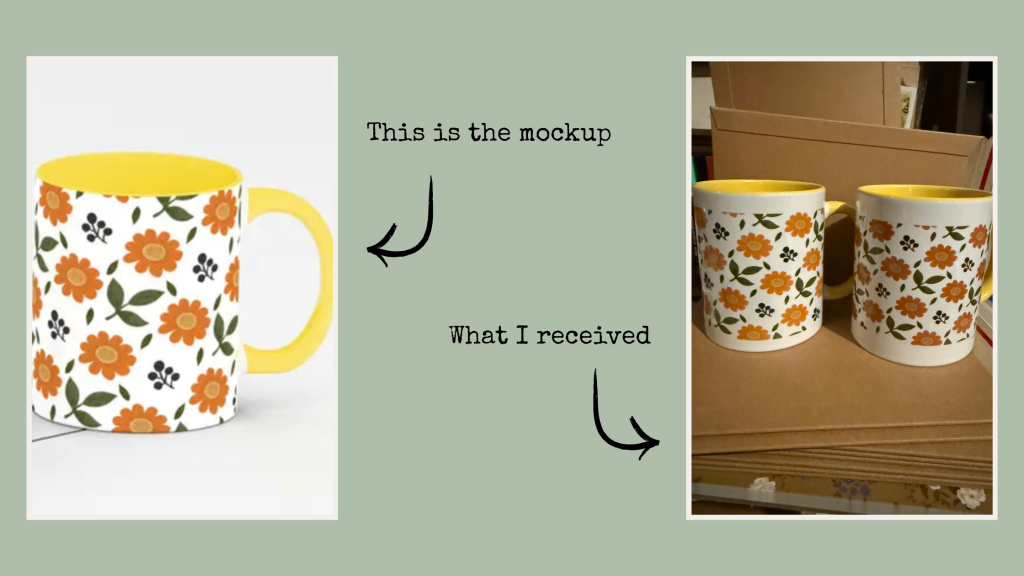
The artwork did not cover the mug as it was represented in the Printonic mockup. Instead of extending almost the full height of the exterior, my pattern was printed in a shorter band around the center. There was a substantial amount of blank white ceramic above and below the artwork.
The pattern itself printed, and this wasn’t an issue of the wrong artwork being used. The problem was the amount of print coverage. The proportions of the finished design were significantly different from what I had been shown when I created and ordered the product.
That matters because some variation between a digital mockup and a physical product is completely reasonable. I don’t expect ceramic, fabric, and paper to reproduce artwork exactly the way my iPad screen displays it. Colors can shift a little, materials behave differently, and there are manufacturing tolerances involved in producing physical goods.
But this wasn’t a subtle color shift or a design sitting a few millimeters off from the mockup. The mockup showed a nearly full-height pattern, while the mug I received had the artwork confined to the middle with large blank areas at the top and bottom.
Why the Mockup Matters
A mockup isn’t just something pretty I use to decorate a product page. When I’m working with a print-on-demand company, it’s also one of the tools I use to evaluate the product I’m creating.
If a mockup shows me that my artwork covers a particular area, that’s information I use when deciding whether the design works on that product. I might adjust the scale, placement, colors, or even decide that a particular pattern doesn’t belong on that product at all.
My customers are relying on those images too.
If I had put the Printonic mockup in my shop, someone purchasing the gift set would reasonably have expected to receive a mug resembling the one pictured. Instead, they would have received the mug that arrived at my house, and those two presentations were different enough that I wouldn’t have been comfortable explaining the discrepancy to a customer.
Ultimately, my customer isn’t doing business with my fulfillment provider. They’re doing business with Wild Ridge Studio. If something arrives looking noticeably different from the product I showed them, that’s my problem, regardless of who manufactured it.
Reporting the Problem Was More Difficult Than It Needed to Be
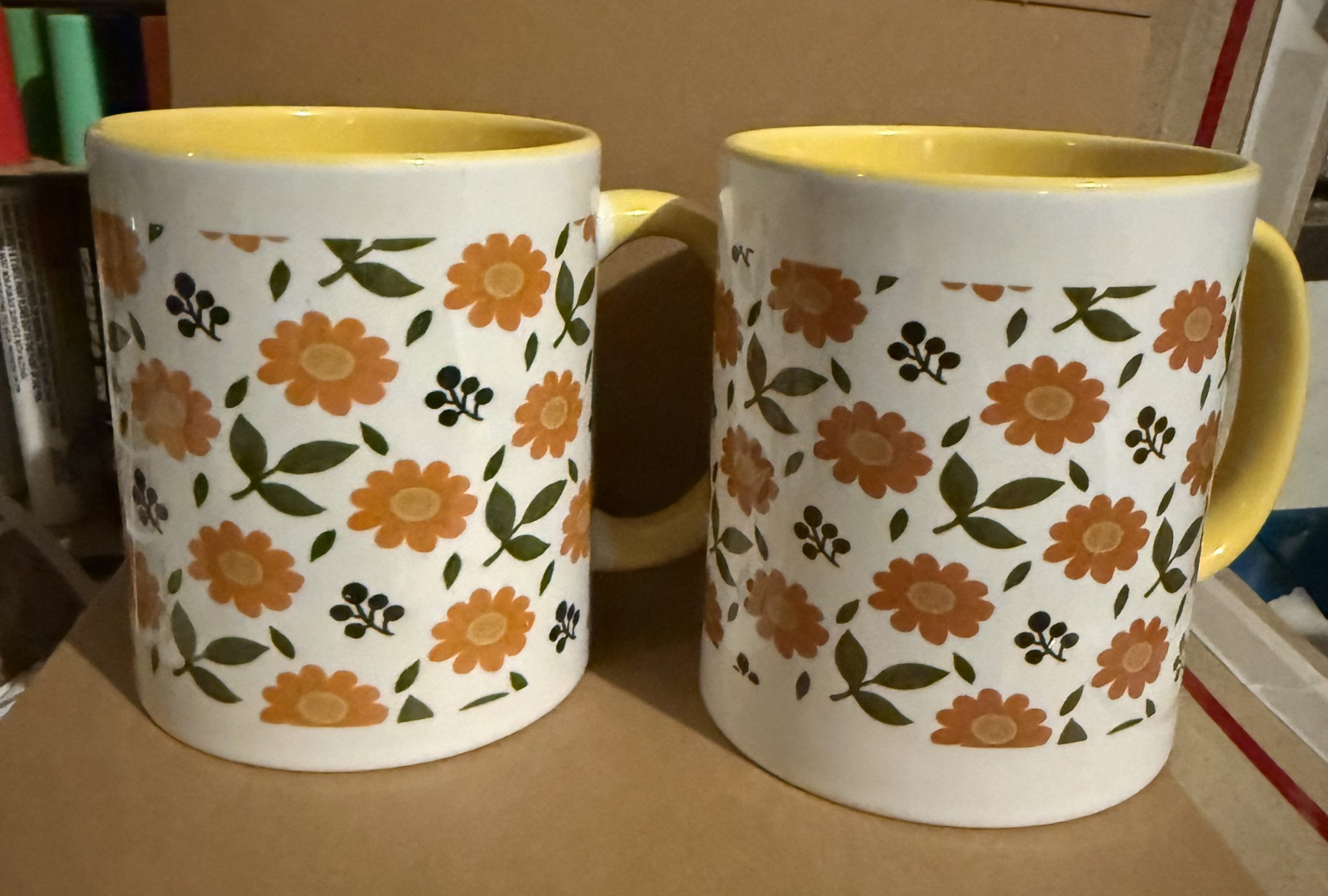
I contacted Printonic and provided photographs showing the mockup alongside the mug I had actually received. This is where the experience became more frustrating than the original printing problem.
My order had been classified in their system as an external order, which meant I couldn’t use the normal Report Issue option available on standard orders. I explained that in my emails and provided the order information, description of the problem, and photographs directly to support.
Unfortunately, the initial support responses repeatedly directed me back to the Report Issue button that I had already explained wasn’t available to me. At one point, the response acknowledged that external orders might not have access to the normal reporting process, only to circle back to instructions about reporting the problem through the order page.
That support loop mattered to me almost as much as the original product issue.
Problems happen. A bad print doesn’t automatically make me stop using a company, because I’ve worked with enough physical products to know that manufacturing and shipping will occasionally go sideways. What I need from a fulfillment partner is a straightforward way to resolve the problem when it does.
Eventually, the issue was reviewed, and Printonic issued a reprint. And I genuinely hoped that would be the end of this review.
Then the Reprint Arrived
When the replacement mug arrived, I now had something very useful for evaluating the original problem: two physical examples of the same product. Unfortunately, the reprint didn’t solve the issue.
The second mug once again had my floral pattern printed as a shorter band through the center of the mug, leaving substantial white space above and below the design. There are some differences in the exact placement between the two physical mugs, but the fundamental problem is the same.
Neither one matches the amount of coverage shown in the Printonic mockup, and that comparison ultimately made my decision fairly easy.
If the first mug had been a production error and the replacement had arrived looking like the mockup, I would have been perfectly willing to chalk the experience up to a mistake. In fact, successfully resolving a manufacturing problem can make me more comfortable with a company because I get to see how they respond when something goes wrong.
But when the replacement arrived with essentially the same print coverage as the first mug, I could no longer assume this was simply one incorrectly produced item.
At that point, I had to make my decision based on what I had actually received twice.
This Is Exactly Why I Order Samples
It would have been very easy for me to create these gift sets, use the supplied mockups in my shop, and wait for someone to order one. That’s precisely what I don’t want to do.
Ordering samples costs money, and there’s always the temptation to skip that step when a digital mockup looks great. But this experience is probably one of the best examples I can give for why I consider sampling part of product development rather than an unnecessary expense.
The sample did its job.
It showed me something I couldn’t have known from looking at the mockup alone. Then the replacement gave me a second data point and confirmed that I wasn’t comfortable offering this particular product to my customers.
That saved me from discovering the discrepancy through a customer complaint.
I’d much rather spend money testing something and decide not to sell it than make a sale and discover afterward that the product doesn’t meet my expectations. There are plenty of aspects of running an art business that I can’t control, but choosing which products make it into my shop is one I can.
Customer Service Matters Just as Much as Print Quality
One thing I’m paying particular attention to throughout this review series is customer service, because the physical product is only half of the print-on-demand equation.
I’m not looking for a fulfillment company that promises nothing will ever go wrong. I’m looking for companies that make it relatively painless to deal with something when it does.
Printonic did ultimately issue a reprint, and I think it’s important to acknowledge that. They didn’t simply tell me there was nothing they could do and close the case. A replacement product was produced and sent to me.
At the same time, getting there involved more frustration than I would want to experience while trying to solve a problem for one of my own customers. The automated support responses repeatedly pointed me toward a reporting option that wasn’t available for my order, even after I explained the problem and supplied the requested documentation.
More importantly, the replacement didn’t correct the product issue I had reported.
That combination is what affected my confidence in using the gift sets, rather than the fact that one imperfect mug showed up at my house.
Would I Sell This?
For Printonic gift sets, my answer right now is no, not at this time.
I pulled the Printonic gift sets from my shop after receiving the original sample and seeing the replacement, and I’m comfortable with that decision. Both physical mugs have substantially less pattern coverage than the product mockup showed, and I can’t confidently use a mockup to sell a product when my own test orders haven’t matched that representation.
This doesn’t mean I’m declaring every product Printonic makes bad, nor does it mean someone else couldn’t have a completely different experience. I’m reviewing what I actually ordered and received, because that’s the only experience I can fairly evaluate.
It also doesn’t mean I’ll never reconsider Printonic. Products change, production methods change, mockups get updated, and companies fix problems. If Printonic eventually changes the mug template or production process so that the physical product accurately reflects the coverage shown in the mockup, I’d be open to testing it again.
But I won’t ask my customers to be the test subjects. For now, the Printonic gift sets are staying out of Wild Ridge Studio.
The Wild Ridge Test: Printonic Gift Sets
My standard for this series is deliberately simple. I want to know whether I would feel comfortable putting my artwork on a product, listing it in my shop, accepting someone’s money for it, and having that product arrive at their home without me ever seeing it first.
With the Printonic gift set I tested, I don’t have that confidence.
The original product didn’t match the print coverage represented by the mockup. Reporting the issue was unnecessarily difficult due to how the order was classified. Printonic ultimately provided a replacement, which I appreciate, but the replacement had essentially the same discrepancy as the original.
So while the point of these reviews is to test print-on-demand products, there’s another test happening in the background every time I place an order. I’m testing whether I’m comfortable handing over a small part of the Wild Ridge Studio customer experience to another company.
For Printonic gift sets, the answer right now is no, not at this time.