Showing Up Anyway: Why Joining the Study Group Matters More Than the Course
When I signed up for Bonnie Christine’s Surface Design Immersion, I did something that surprised even me. I joined the study group.
For some people, that might sound like a normal part of taking a course. For me, it was not a small decision.
I’m an introvert by nature, and life has given me plenty of reasons to be cautious about people. Over the years, I’ve learned to build, create, and figure things out largely on my own. It’s how I built my art practice. It’s how I built my businesses. And honestly, it’s how I survived a lot of difficult chapters in my life.
Solitude has often been the place where my ideas come together and where my work gets done. My studio has always been a quiet place where I can focus, experiment, and create without noise or expectations from anyone else.
So the idea of showing up with a group of strangers every week for twelve weeks wasn’t exactly in my comfort zone.
I could have easily skipped it. I could have quietly taken the course, watched the videos, done the assignments, and kept to myself. No awkward introductions. No explaining my process. No sharing unfinished work.
And that would have been the easy way, but I also don’t do well at taking the easy route, so instead I decided to show up again, even if it’s not the most comfortable thing.
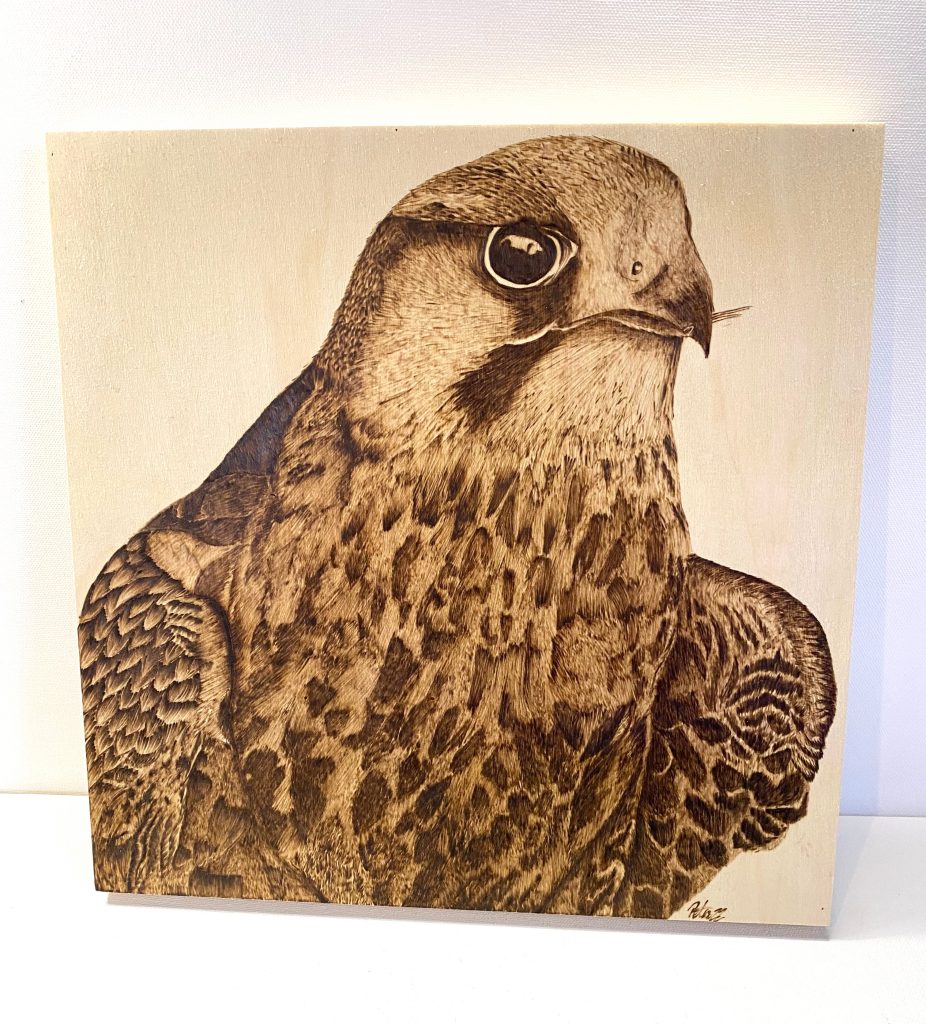
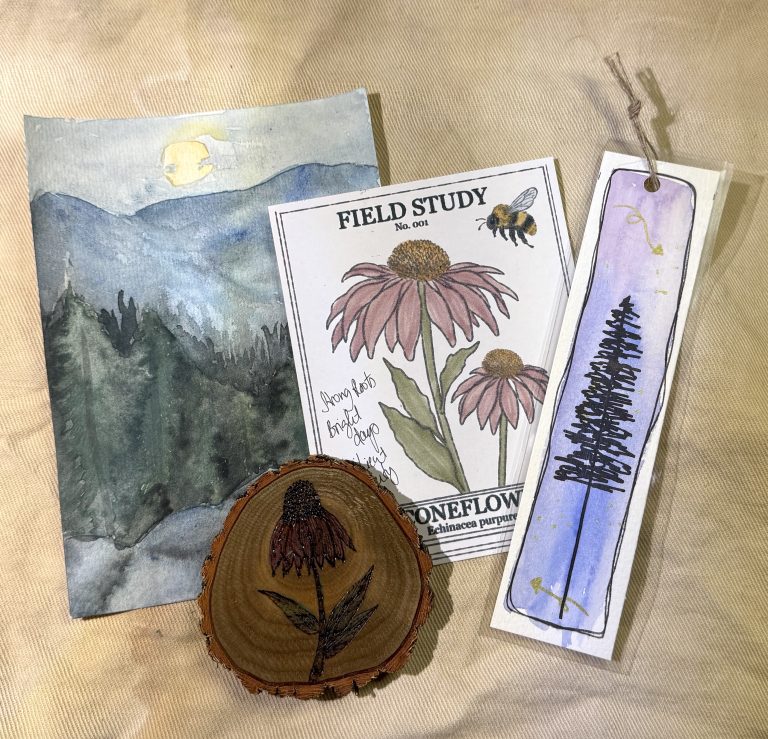
For the past twenty-five years, my creative process has been fairly instinctive. I get an idea, and I burn it into wood. That’s how pyrography works for me. I don’t always sit down with a detailed plan or a full collection mapped out ahead of time.
Sometimes I simply see something in my mind and think, “I should burn this,” and then I do.
The wood becomes the sketchbook. The burning tool becomes the pencil. The piece develops as the lines appear, responding to the grain of the wood and the rhythm of the work itself.
It’s tactile and intuitive. It’s very much about responding to the material and letting the image emerge as the piece develops.
Surface design works differently.
Instead of starting with a finished object, you start with fragments of ideas. Motifs, shapes, textures, and patterns begin to form the foundation of a larger visual system. Those pieces eventually become patterns that can live on fabric, wallpaper, stationery, home goods, and products that reach far beyond a single handmade piece.
That shift in thinking is bigger than I expected.
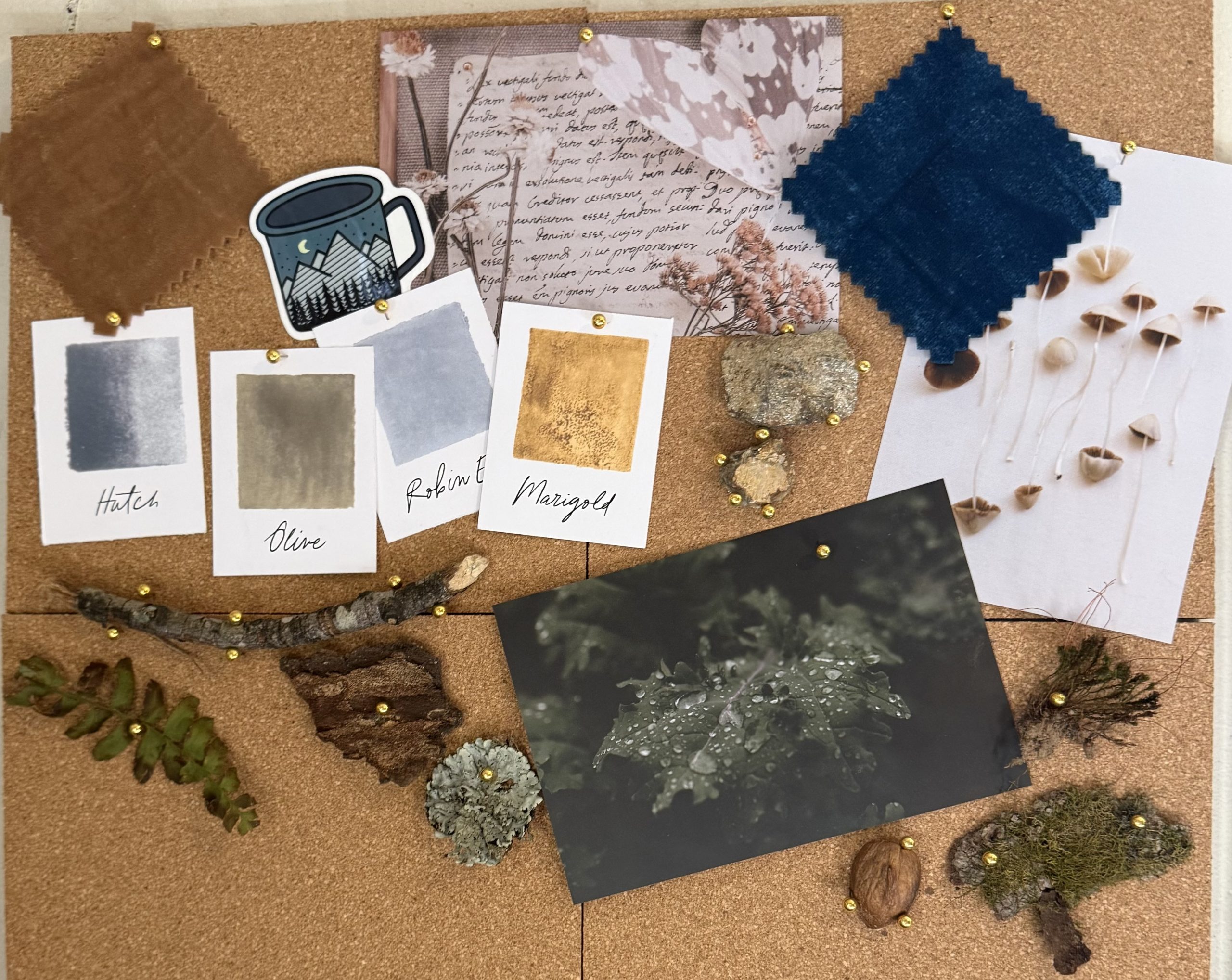
For the first time, I created a mood board. That might sound simple, but it’s something I had never really done before. In pyrography, the inspiration has always lived in my head or in the landscape around me. I would go for a walk, notice something interesting, and the idea would eventually turn into a piece of art.
Now I’m intentionally gathering inspiration. Images, colors, textures, and visual references are starting to form a direction instead of waiting for a single finished idea to appear.
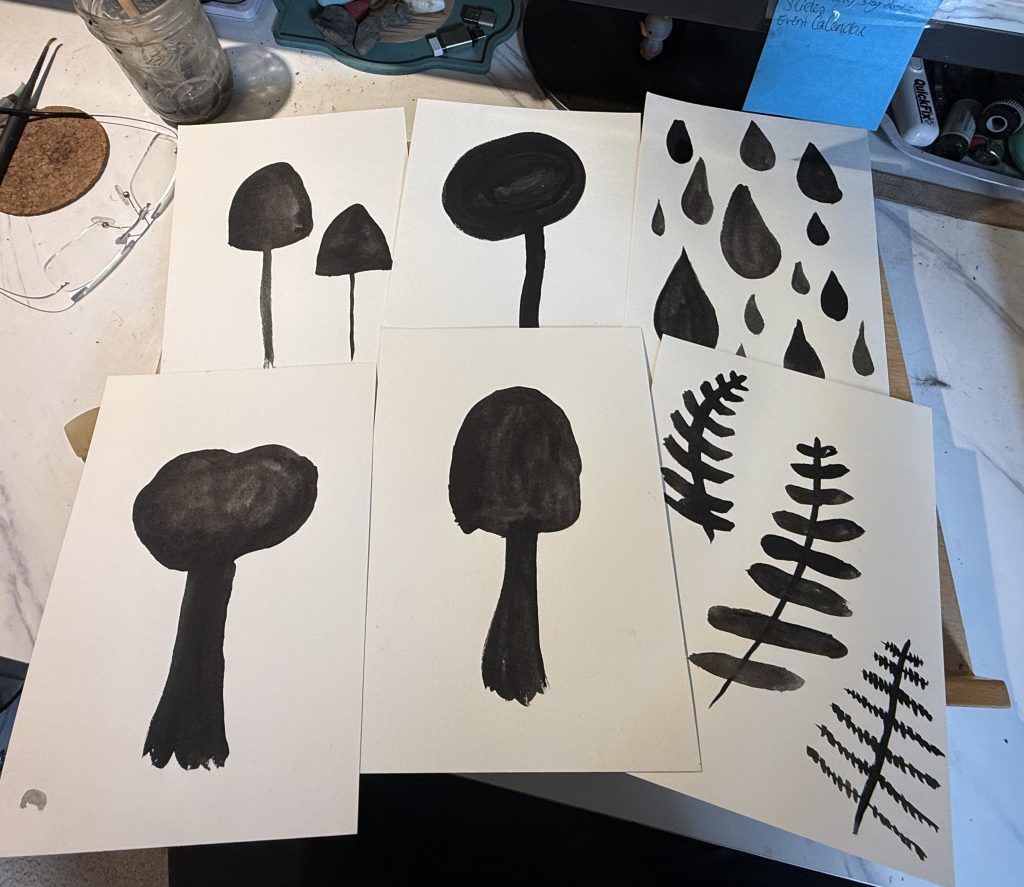
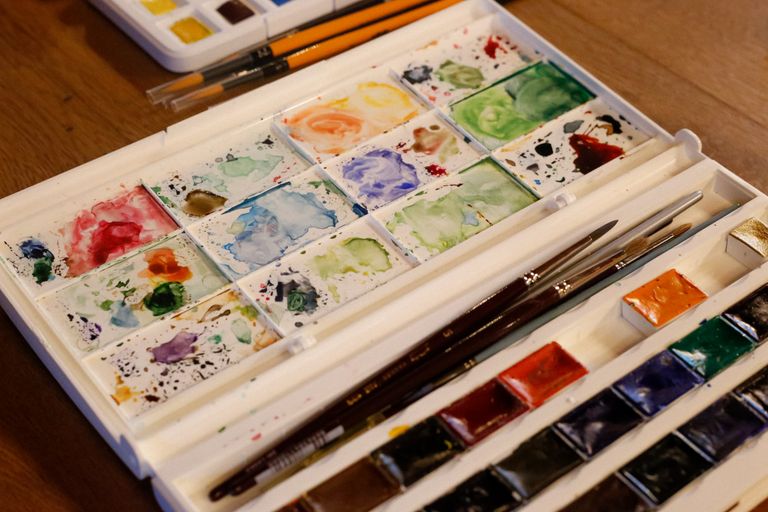
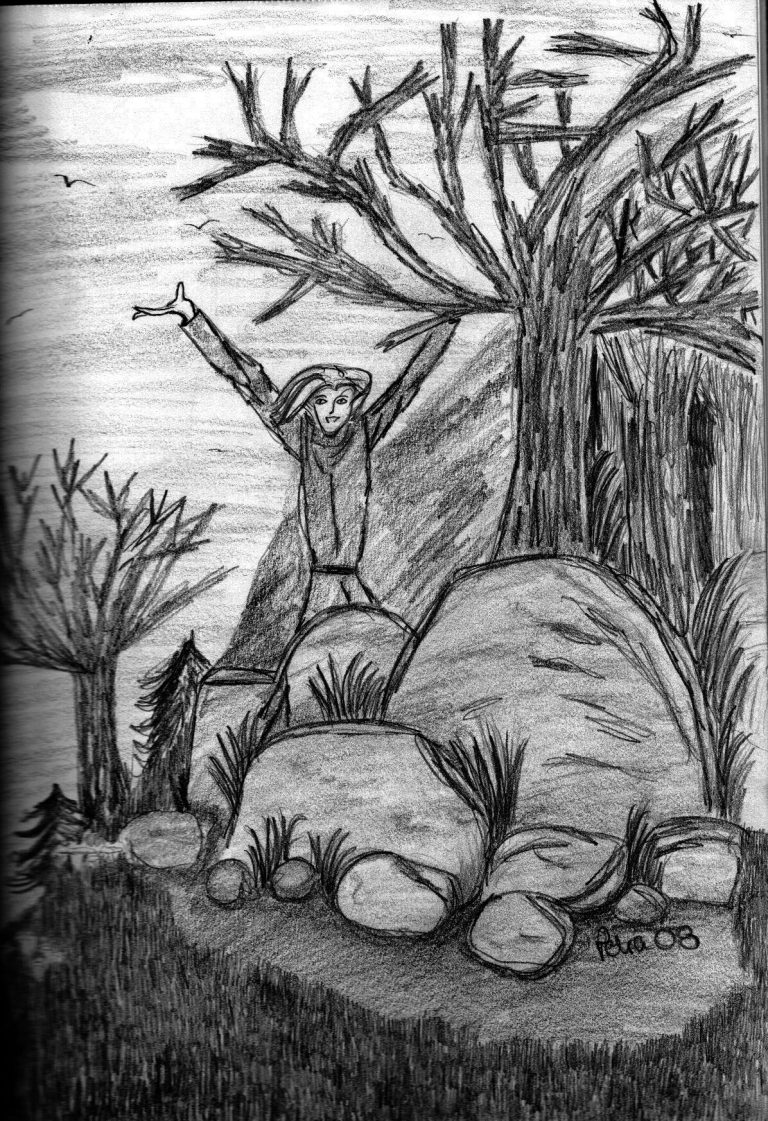
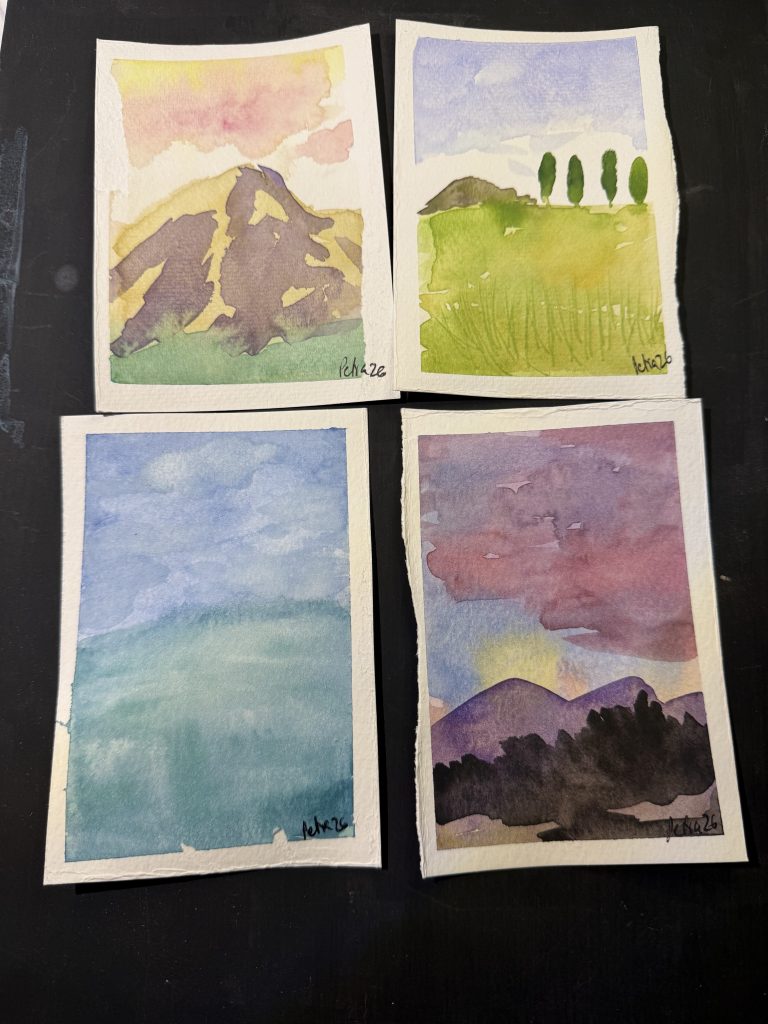
I’ve been working on rough motif sketches. Some are loose pencil drawings, others are black watercolor explorations where I’m playing with shape and texture rather than trying to make something perfect. These sketches feel raw and unfinished, and that’s exactly what they are supposed to be.
That part alone has required a shift in mindset.
Instead of rushing toward the finished piece, I’m allowing ideas to exist in their early stages. I’m exploring instead of committing immediately. I’m learning to sit with possibilities instead of final answers.
Something is exciting about that space.
This work feels big to me, not in an overwhelming way, but in a way that suggests there are far more doors than I originally realized.
The goal behind this work is also bigger than simply creating patterns.
I intend to build a surface design portfolio that allows me to pursue licensing opportunities with companies. I want my artwork to exist on products that reach people in ways that handmade pieces alone cannot. Fabric collections, stationery lines, home goods, and other products all become possible when designs can be reproduced and distributed.
At the same time, I have no intention of abandoning the handmade work that has been at the center of my creative life for decades. My pyrography practice will always remain an important part of what I do. There is something deeply meaningful about creating objects by hand and sending them out into the world one piece at a time.
Surface design simply expands the possibilities.
It allows the ideas behind my work to travel farther.
Joining the study group adds another layer to this experience.
Surface design is not just about making art in isolation. It is an industry where relationships matter. Designers often discover opportunities through each other. Artists collaborate, share resources, and recommend one another for projects.
Being part of that ecosystem means stepping out of isolation and into conversations with other creatives who are navigating the same journey.
So when I sat down with four strangers and introduced myself, I was doing more than participating in a study group.
I was choosing to be visible.
I chose to share work that is still in progress rather than waiting until everything looks polished and finished. I was choosing to admit that some parts of this process are brand new to me.
That kind of honesty is uncomfortable sometimes, but it is also where real connection begins.
The other artists in the group are coming from their own backgrounds and creative experiences. Some have been drawing for years. Others are exploring pattern design for the first time. Everyone is learning something new.
There is something powerful about being surrounded by people who are also stretching themselves creatively.
This experience reminds me that growth rarely happens inside a perfectly comfortable space.
Most meaningful creative leaps happen when we step into territory that feels unfamiliar.
Right now, that territory looks like mood boards, motif sketches, pattern planning, and weekly conversations with people I have just met.
Twelve weeks from now, I don’t know exactly what my surface design portfolio will look like. I don’t know which motifs will evolve into collections or which designs will eventually find their way onto products.
What I do know is that I showed up.
And sometimes that first step is the one that changes everything.
For someone who has spent many years building things quietly and independently, choosing to show up in a room full of possibility feels like a meaningful beginning.
There is something about this work that feels like the start of a new chapter.
Not because the old work is finished, but because the creative path just became wider.
And sometimes the most important thing a creative person can do when a new path appears is simply take the first step forward and see where it leads.
2 Comments