You’re Allowed to Be a Beginner
This past week, I decided to learn watercolor. And when I say learn watercolor, I mean I am starting pretty much from zero. I’ve made art for years, but watercolor is something I’ve never really taken the time to learn. I know my way around a wood burner, and I’ve spent plenty of time learning digital illustration and surface pattern design, but putting paint and water on paper and actually knowing what I’m doing with it? Completely different territory.
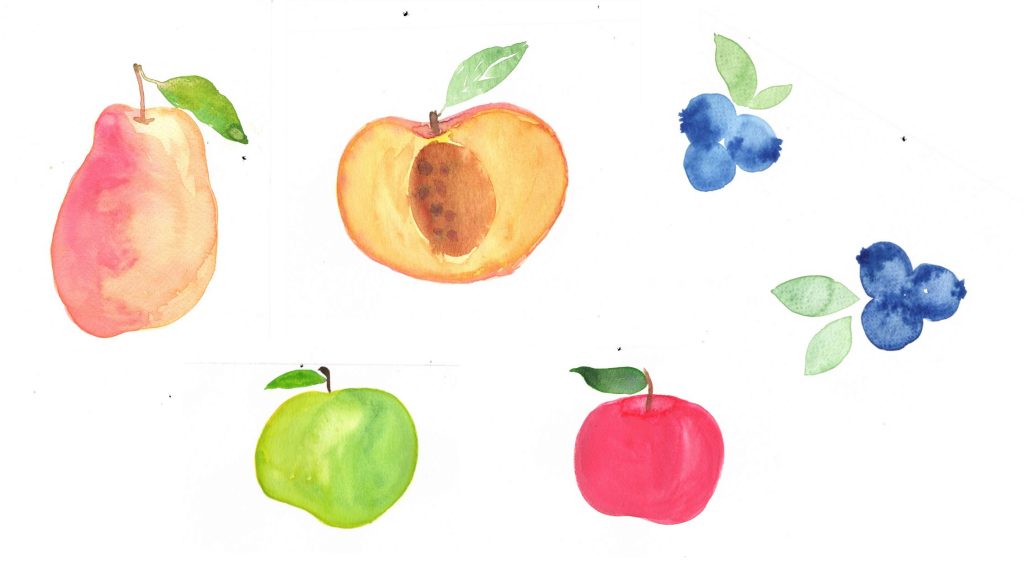
I started because I wanted to try something different. There wasn’t some big plan behind it, and I wasn’t trying to suddenly become a watercolor artist. I had the supplies, I was curious, and I figured I could either keep looking at them or actually put some paint on paper and see what happened. So I started with fruit. I painted a pear, a peach, some blueberries, and a couple of apples. Were they perfect? Of course not. But they looked like fruit, which frankly felt like a pretty solid start.
What surprised me almost immediately was how much I enjoyed being new at something. I think as adults we get really uncomfortable with being beginners. Somewhere along the way, we start to believe we should already know how to do things, especially when they’re remotely connected to what we already know. I’m an artist, so shouldn’t I automatically know how to watercolor? Except that makes absolutely no sense. Knowing how to create art in one medium doesn’t magically download the instructions for every other medium into your brain.
Kids seem to understand this much better than we do. Give a kid some paint and paper, and they’re probably not going to worry about whether they understand color theory, wet-on-wet techniques, or whether they bought the correct brushes. They’re going to paint something. Adults, meanwhile, can turn trying a new hobby into a research project before we’ve even opened the paint.
There’s also something intimidating about being new when you’re accustomed to knowing what you’re doing. I can usually look at something I want to create and have a reasonable idea of how I’m going to get there. With watercolor, I can see what I want in my head, but my hands haven’t learned how to make that happen yet. I’m still figuring out how much water to use, when to add another layer, when to stop touching something and let it dry, and how to create texture without turning everything into a muddy mess.
That could easily become frustrating, but I’ve been trying to look at it differently. Of course I don’t know what I’m doing yet. I just started.
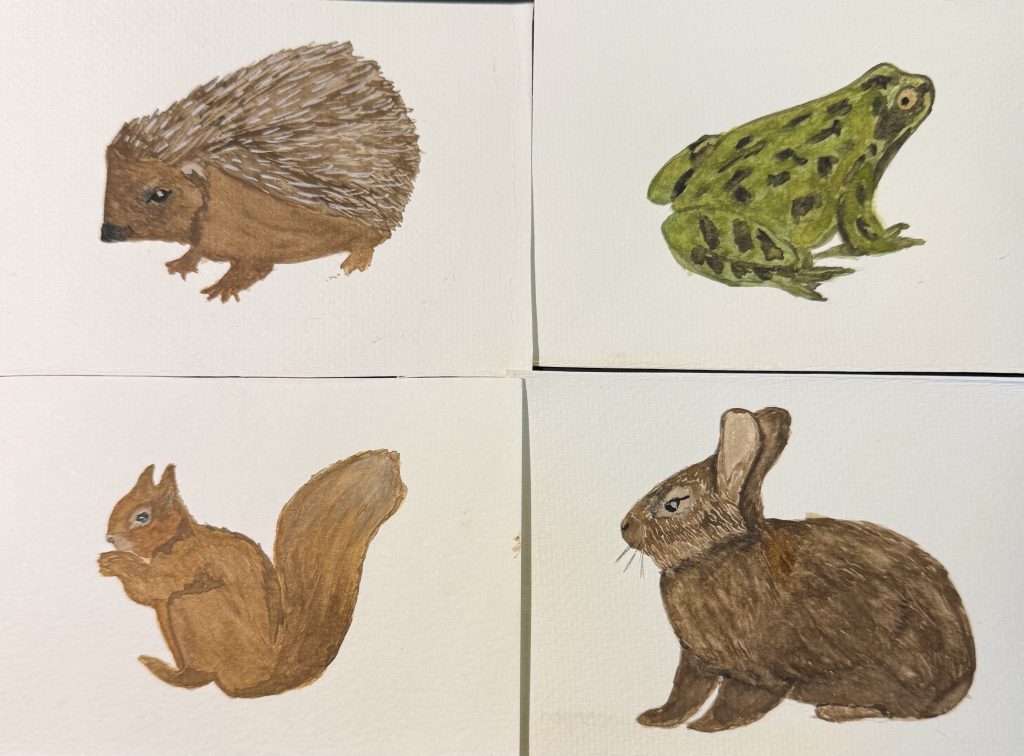
And the interesting thing is that every time I paint, I understand a little more than I did the time before. After the fruit, I started painting animals. I painted a hedgehog, a frog, a squirrel, and a rabbit, and then I added a badger and a mouse. Some turned out better than others, but with each one I could feel myself getting a little more comfortable with the paint. I started experimenting with layers and texture. I started noticing what happened when I used more water or less water. I began understanding that sometimes the best thing you can do to a watercolor painting is leave it the hell alone for a few minutes.
That’s the part of learning something new that we sometimes forget. Practice doesn’t have to mean committing to becoming an expert. It doesn’t need a thirty-day challenge, a certification, a course, a business plan, or a measurable outcome. Practice can simply mean doing the thing again. Paint another frog. Try another apple. Use a different brush. See what happens. The point isn’t necessarily mastery. Sometimes the point is becoming comfortable enough that you stop being afraid of getting it wrong.
And then, every once in a while, you surprise yourself.
That has probably been my favorite part of this little watercolor experiment. I expected my first attempts to look like first attempts, and some of them certainly do. But there have also been moments when I’ve looked down at something I painted and thought, Wait, I actually made that.
I can see plenty of things I want to improve. There are proportions that are a little wonky, areas I overworked, colors I would handle differently next time, and techniques I haven’t even begun to understand yet. But I also don’t want to immediately dismiss what I’ve created simply because I’m a beginner. I painted these after spending about a week actually trying to learn watercolor, and some of them are pretty damn good for someone who had no idea what she was doing a few days ago.
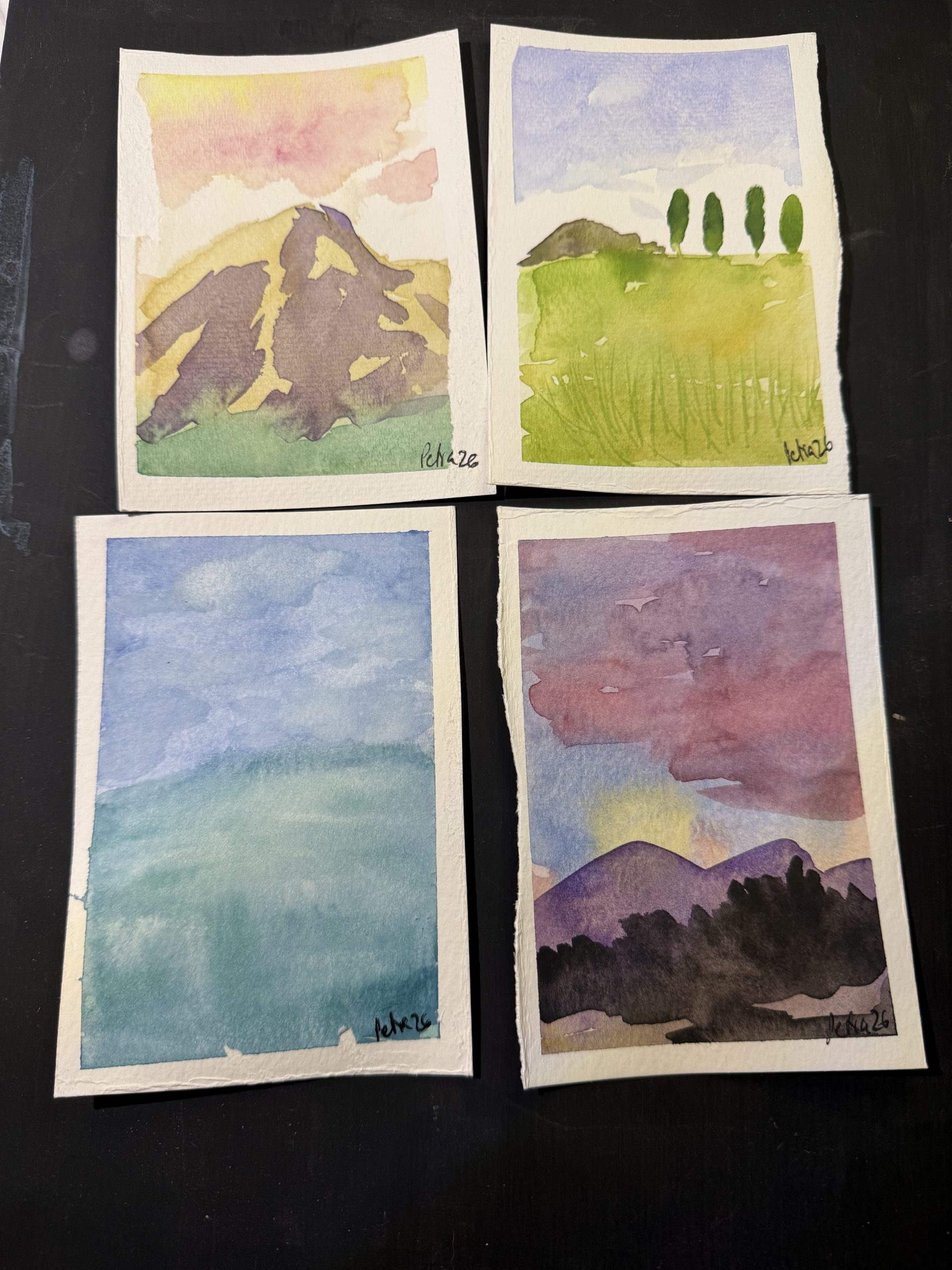
More importantly, they make me want to keep going.
I think that’s reason enough to learn something new, no matter how old you are or how long you’ve been doing something else. We don’t need to reach a point in life where everything we do has to be something we’re already good at. There should still be room to be curious, to experiment, to make questionable squirrels and unexpectedly decent pears, and to discover that maybe there’s another way of creating that we really enjoy.
Whatever the thing is that you’ve thought about trying, you don’t need to wait until you feel confident enough to start. Confidence usually comes after you’ve done the uncomfortable beginner part for a while. You start awkwardly, you practice, you figure a few things out, and eventually what felt intimidating starts to feel familiar.
And sometimes you discover that you’re capable of something you never gave yourself the chance to try before.
I think we should do more of that.